|
The Ministry of Commerce and Industry has recently
released data on India’s foreign trade which indicate continued momentum of
growth in merchandise exports and imports during October 20051.
HIGHLIGHTS l Merchandise exports in US dollar terms
grew at 27.5 per cent year-on-year (y-on-y) in October 2005. l Cumulative exports
during April-October 2005 were up by 22.1 per cent (27.9 per cent a year ago).
l Imports growth during April-October 2005 remained more or less steady at 33.0
per cent (35.4 per cent a year ago), led by both oil and non-oil imports. l
Imports of petroleum, oil and lubricants (POL) maintained a high growth (44.5
per cent) due to elevated international crude oil prices. l Indian basket crude
oil price softened to US $ 55.8 per barrel in October 2005 from US $ 59.3 per
barrel in September 2005. l Non-oil imports remained buoyant with a growth of
27.9 per cent during April-October 2005 (27.7 per cent a year ago) due to sustained
growth of industrial activities. l Trade deficit stood at US $ 23.5 billion
during April-October 2005, higher by 65.8 per cent than the previous year (US
$ 14.2 billion).
EXPORTS
India’s merchandise exports, in US dollar terms,
during April-October 2005 were substantially higher than the annual target for
the fiscal year set by the Government of India at 16 per cent (Chart I, Table
A, Statement 1 & 2). The export performance remained broad-based across
major sectors (Statement 3).
Primary products exports maintained a robust growth
(23.9 per cent) during April-September 2005, though there was some moderation
as compared with a year ago (32.4
per cent). Export of ores and minerals, especially
the iron ores, remained the mainstay (40.3 per cent) despite a sharp deceleration
as compared with the previous year (83.0 per cent).
Agricultural commodities posted a sustained growth
during April-September 2005, mainly due to the contribution of rice, coffee,
raw cotton, cashew, pulses and fruits and vegetables. Marine products exports
maintained the turnaround to 17.5 per cent growth during April-September 2005
as against a decline of 10.9 per
Table A: India’s Merchandise Trade
| |
|
(US $ million)
|
|
Items
|
2004-05 (April-October)
|
2005-06 (April-October)
|
| |
|
|
|
Exports
|
42,221
|
51,535
|
| |
(27.9)
|
(22.1)
|
|
Imports
|
56,427
|
75,045
|
| |
(35.4)
|
(33.0)
|
|
Oil
|
17,249
|
24,930
|
| |
(56.8)
|
(44.5)
|
|
Non-Oil
|
39,177
|
50,116
|
| |
(27.7)
|
(27.9)
|
|
Trade Balance
|
-14,205
|
-23,510
|
| |
|
|
|
Note: Figures in parentheses show percentage
change over the previous year.
Source: DGCI&S.
|
* Prepared in the Division of International Trade, Department of Economic
Analysis and Policy, Reserve Bank of India.
1 Previous issue of the article was published in RBI Bulletin, November 2005.
cent a year ago due to pick-up in demand from the major market of Japan.
Manufacturing goods exports grew at 16.3 per cent during April-September 2005,
a significant loss of momentum as compared with the previous year. The deceleration
was due to the seasonal pattern. Engineering goods comprising transport equipment,
machinery and parts, manufactures of metals and iron & steel were the key
drivers of growth in manufacturing exports (Box).
Within chemicals sector, basic chemicals and pharmaceuticals, rubber, glass
and paints and allied chemicals witnessed acceleration in growth while plastic
and linoleum recorded a slowdown during April-September 2005. Gems and jewellery
exports grew 23.9 per cent in April-September 2005. According to the latest
information from the Gems and Jewellery Export Promotion Council (GJEPC), exports
of gems and jewellery reached US $ 10.2 billion during April-October 2005, led
by exports of cut and polished diamonds jewellery. In the textiles segment,
readymade garments remained as the mainstay and the growth in exports (10.8
per cent) was driven by strong demand in major markets, i.e., the US and Europe.
According to the US Department of Commerce, India’s textile and apparel exports
to the US increased by 25.6 per cent in US dollar terms and 20.3 per cent in
volume terms during January-September 2005.
Exports of petroleum products posted 58.0 per cent growth during April-September
2005 on top of 76.0 per cent a year ago, mainly due to sharp pick-up
in demand for refinery products in UK, South Korea, Singapore, UAE, the US,
Netherlands, Brazil and SriLanka.
Box: India’s Exports of Engineering Goods
During the last three years, India’s merchandise exports have witnessed a notable
shift in terms of commodity composition, led by engineering goods. The rapid
growth of engineering goods exports at an annual average of 33.2 per cent during
the last three-years is attributable to the growing competitiveness and the
increasing technological sophistication of India’s manufacturing exports (Chart
I). In an environment of increasing openness of the economy and supportive policy
framework since the early 1990s, exports of engineering goods have accelerated
from US $ 1.2 billion (9.5 per
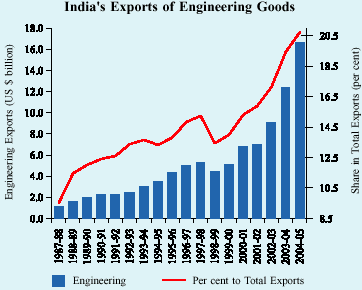
cent of total merchandise exports) in 1987-88 to US $ 16.7 billion in 2004-05
(20.7 per cent of total merchandise exports). In 2004-05, India’s manufacturing
exports witnessed a record compositional shift as engineering goods emerged
as the largest item of manufacturing exports, surpassing the textiles and gems
and jewellery exports (Table 1).
Within engineering goods, transport equipment emerged as the key driver of
export growth in 2005-06 (April-September), attributable to the increasing global
competitive advantage of India’s automotive industry. According to the Automobile
Components Manufacturing Association of India (ACMA), the Indian auto component
industry is characterised with the largest three wheeler market, second largest
two wheeler market, fourth largest
Table 1: India’s Manufacturing Exports
| |
Composition (per cent to total)
|
| |
|
|
|
|
|
|
Commodity Group
|
1987-88
|
1993-94
|
2002-03
|
2003-04
|
2004-05
|
| |
|
|
|
|
|
|
Leather
|
11.8
|
7.8
|
4.6
|
4.5
|
3.9
|
|
Chemicals
|
9.7
|
14.3
|
18.5
|
19.5
|
20.4
|
|
Engineering
|
14.1
|
18.2
|
22.4
|
25.6
|
28.3
|
|
Textiles
|
36.8
|
32.9
|
28.9
|
26.4
|
21.7
|
|
Gems & jewellery
|
24.6
|
24.0
|
22.4
|
21.8
|
23.6
|
|
Handicrafts
|
2.1
|
1.9
|
2.0
|
1.0
|
0.6
|
|
Others
|
1.0
|
0.9
|
1.2
|
1.3
|
1.6
|
| |
|
|
|
|
|
|
Source:
DGCI&S
|
|
|
|
|
|
tractor market and fifth largest commercial vehicle market in the World and
fourth largest passenger vehicle market in Asia.
Since the mid-1990s, India’s automotive industry has witnessed rapid transformation
from a low-volume and fragmented sector into a highly competitive sector characterised
with world-class technology, large and assured volumes and strict delivery schedules
in response to the demand from global vehicle manufacturers. Several Indian
companies have entered into technological collaborations and equity partnerships
with world leaders in automotive components. Some of the global vehicle manufacturers
have set up subsidiaries for components manufacturing facilities in India taking
into account lower labour cost and availability of highly skilled workforce.
Furthermore, India’s automotive components industry is highly diversified with
a capacity to produce as many as 150 different products. The recent surge in
engineering exports notwithstanding, the technology intensity of India’s exports
as compared with emerging economies in East Asia and Latin America has the potential
for substantial growth (Table 2). In terms of global positioning of the automotive
industry, the share of India’s exports in the global automotive market remains
small (Table 3). According to the ACMA, the industry has the potential to grow
to the level of US $ 20-25 billion by 2015. In order to achieve the target,
the automotive components industry has to accelerate measures toward improving
quality and competitive position in the global market.
Source: (1) Auto Policy 2002, Government of India.
(2) Status of India’s Automotive Industry, Automobile
Table 2: Technology Intensity of Exports in Emerging
Economies
|
Country
|
Share of
|
Machinery & Transport
|
| |
Equipment in Countries’
|
| |
Total Exports in 2003 (per cent)
|
| |
|
|
|
Brazil
|
|
23.2
|
|
China
|
|
42.8
|
|
India*
|
|
20.7
|
|
Korea
|
|
61.3
|
|
Malaysia
|
|
56.8
|
|
Mexico
|
|
56.9
|
|
Philippines
|
|
76.1
|
|
South Africa
|
|
20.7
|
|
Thailand
|
|
43.8
|
|
Turkey
|
|
26.5
|
|
Source: International
Trade Statistics, 2004, WTO.
|
|
* Share of Engineering Exports in India’s Total exports in 2004-05, DGCI&S.
|
Table 3: Exports of Automotive Products of Emerging Economies
|
Country
|
2003
|
| |
Value (US $ billion)
|
|
World
|
723.6
|
|
Brazil
|
6.5
|
|
China
|
3.6
|
|
India*
|
1.7
|
|
Korea
|
22.4
|
|
Mexico
|
30.1
|
|
Russia
|
1.8
|
|
South Africa
|
3.0
|
|
Thailand
|
4.0
|
|
Turkey
|
4.9
|
| |
|
|
Source:
Handbook of Trade Statistics 2004, UNCTAD.
|
|
* Refers to DGCI&S data on Transport Equipment in 2003-04.
|
Manufacturing Association of India, (3) India: Automotive Component Industry, Swiss Business Hub, New Delhi, July, 2004
Destination-wise, Latin America was the fastest growing region for India’s exports during April-September 2005, followed by East Asia, Africa, South Asia and the European Union. Singapore, China, Korea, Hong Kong, the Netherlands, France and the UK were the major markets for India’s exports (Statement 4). India’s exports to the US witnessed a deceleration during April-September 2005 as compared with a year ago.
IMPORTS
Imports continued to post a high growth during April-October 2005, led by the expansion in both oil and non-oil imports in an environment of buoyant economy.
OIL IMPORTS
The rise in petroleum, oil and lubricants (POL) imports (44.5 per cent) in April-October 2005 was due to the impact of elevated international crude oil prices. The average crude oil price (Indian basket)2 was US $ 55.8 per barrel in October 2005, recording a sharp 45.2 per cent rise over a year ago (Table B). According to the DGCI&S, imports of crude petroleum products (in volume terms) declined by 0.8 per cent during April-September
2 Indian basket comprises 57 per cent 'sour' variety benchmarked by Dubai crude and 43 per cent of 'sweet' variety benchmarked by UK Brent crude.
Table B: Trends in Crude Oil Prices
| |
|
|
|
| |
|
|
|
(US $/barrel)
|
| |
|
Dubai
|
UK Brent
|
US-WTI
|
Indian basket
|
|
1995-96
|
|
16.2
|
17.5
|
18.8
|
16.7
|
|
2000-01
|
|
25.9
|
28.1
|
30.3
|
26.8
|
|
2001-02
|
|
21.8
|
23.2
|
24.1
|
22.4
|
|
2002-03
|
|
25.9
|
27.6
|
29.2
|
26.6
|
|
2003-04
|
|
26.9
|
29.0
|
31.4
|
27.8
|
|
2004-05
|
|
36.4
|
42.2
|
45.0
|
38.9
|
|
Oct-04
|
|
37.6
|
49.8
|
53.3
|
42.8
|
|
Oct-05
|
|
53.7
|
58.5
|
62.4
|
55.8
|
|
Apr-Oct 2004 (Average)
|
35.0
|
40.1
|
42.9
|
37.2
|
|
Apr-Oct-05 (Average)
|
51.8
|
56.9
|
58.7
|
54.0
|
|
Source: IMF International
Financial Statistics, October 2005.
|
2005 as against an increase of 12.7 per cent a year ago. According to the Ministry
of Petroleum and Natural Gas,
Petroleum Planning and Analysis Cell – Oil Industry Current Statistics,
domestic consumption of petroleum products showed a marginal decline (0.2 per
cent) during April-September 2005. According to the Ministry of Petroleum and
Natural Gas, Monthly Statistics of Production, September 2005, domestic
crude oil production, which fell 6.7 per cent in April-September 2005, was 27.0
per cent lower than planned production.
NON-OIL IMPORTS
Non-oil imports sustained the momentum of growth at 27.9 per cent during April-October
2005 (27.7 per cent a year ago) in tune with the strong growth of industrial
activities (Chart II & Statement 4).
The import growth of capital goods remained firm during April-October 2005
due to manufactures of metals, machine tools, machinery (except electrical and
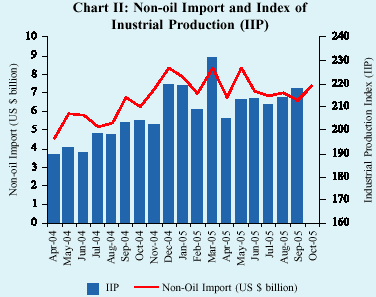
electronics) and transport equipments. The expansion of capital goods imports,
accompanied by a strong growth of domestic production of capital goods (11.8
per cent) in April-September 2005, reflects the continued build-up in capacity
of the industrial sector. According to the Business Outlook Survey April-September
2005, Confederation of Indian Industries, a majority of businesses (83 per cent)
were looking for higher investment and capacity expansion.
Gold and silver imports witnessed a sharp acceleration, posting a growth of
47.2 per cent in April-September 2005 (36.3 per cent a year ago). According
to the World Gold Council (WGC), total global gold demand increased by 7 per
cent in volume terms and 18 per cent in US dollar terms during Q3 of 2005. The
sharp increase in investment demand for gold (56.0 per cent in the Q3 of 2005)
in major developed markets in anticipation of higher inflation due to higher
international oil prices was the key driver of expansion in gold demand. In
India, demand for gold in the Q3 of 2005 paused for a breath after a surge in
growth in the first half of 2005, when total consumer demand rose 55 per cent
compared to the first half of 2004. Overall India’s demand for gold in 2005
(up to the third quarter) was 39 per cent (in tonnage terms) higher than in
the corresponding period of 2004 (jewellery up 37 per cent and retail investment
up 47 per cent).
Imports of mainly export related items registered a higher growth (32.0 per
cent) in April-September 2005 than the previous year due to pearls, precious
and semiprecious stones (37.2 per cent) and chemicals (24.0 per cent). Among
bulk goods, imports of fertiliser, non-ferrous metals, metalliferrous ores and
scraps and iron and steel registered steep rise during April-September 2005.
Among bulk consumption goods, however, imports of edible oils in US dollar terms
registered a decline in April-September 2005, attributable to the low volume
growth and the softening in international edible oil prices.
During April-September, China emerged as the largest source of India’s imports
followed by Switzerland, the US, Belgium, Germany, UAE and Australia (Statement
6).
TRADE DEFICIT
Trade deficit stood at US $ 23.5 billion during April-October 2005, higher
by 65.8 per cent than the previous year (US $ 14.2 billion). The expansion of
non-oil imports (US $ 11.0 billion) accounted for a major share of trade deficit
during April-October 2005. The non-oil trade balance showed a deficit of US
$ 5.1 billion during April-September 2005 as compared with a deficit of US $
0.5 billion a year ago.
GLOBAL DEVELOPMENTS
The global economy witnessed robust expansion in terms of growth of output
and trade during the third quarter (Q3) of 2005 amidst steady growth of the
US, high growth in China and broadening of economic recovery in Japan. According
to the International Monetary Fund’s International Financial Statistics,
October 2005, world exports in US dollar terms increased by 14.1 per cent
(20.9 per cent a year ago), accompanied by a volume growth of 6.7 per cent (11.2
per cent previous year) during January-June 2005. Emerging and developing economies
maintained higher export growth in US dollar terms (19.0 per cent) than industrial
economies (9.9 per cent) during January-June 2005.
According to the US Bureau of Economic Analysis, the US real gross domestic
product (GDP) increased 3.8 percent in the Q3 of 2005 after increasing 3.3 percent
in the previous quarter, reflecting the negligible impact of hurricanes. The
current account deficit in the US widened in September 2005 as merchandise exports
increased by 11.0 per cent during January-September 2005 (13.2 per cent a year
ago) and imports grew higher at 13.1 per cent (15.7 per cent a year ago).
China continued to post strong GDP growth (9.4 per cent) in the Q3 of 2005
due to high export growth (34.0 per cent) and sustained domestic demand led
by fixed asset investment. In September 2005, import growth picked up strongly
while export growth moderated slightly leading to a marginal decline in the
trade surplus.
In Japan, quarterly real GDP growth improved to 2.1 per cent during Q2 of 2005
from 1.3 per cent during Q1 of 2005, driven by strong domestic demand and improvement
in exports (Bank of Japan, Monthly Report of Recent Economic and Financial Developments,
October 2005). Real exports rose 3.3 percent in the Q3 of 2005 on a quarter-on-quarter
basis as compared with 1.5 percent in the Q2 of 2005. According to the Bank
of Japan, from the second half of fiscal 2005 through fiscal 2006, Japan’s economy
is likely to experience a sustained period of expansion at a pace slightly above
its potential on the back up of continuing expansion in the global economy,
sustained growth of corporate sector in terms of profits and fixed investment
and supportive household demand.
In Korea, economic activity witnessed a significant momentum with real GDP
growth improving to 4.4 percent y-on-y in the Q3 of 2005 (4.7 per cent a year
ago) as compared with 3.3 per cent in the Q2 of 2005 (5.5 per cent a year ago),
led by robust domestic demand and an improvement in export growth.
In the euro area, prospects for growth remained uncertain due to an unexpected
fall in industrial output in September 2005, after a rising trend witnessed
in the previous three consecutive months. According to the European Central
Bank, Monthly Bulletin, November 2005, the balance of payments data up
to August 2005 indicated continuing upward trend in exports and a faster growth
of import largely due to higher oil prices. There was a substantial decline
in the 12-month cumulated current account surplus of the euro area to euro 5.2
billion in August 2005 from euro 47.3 billion a year earlier. Notably, exports
showed a strong volume growth in August 2005. According to the ECB, despite
moderate growth in the first half of 2005, the latest information on macroeconomic
fundamentals indicated a gradual recovery in economic activity from the second
half of 2005.
According to the latest data from the International Energy Agency (IEA),
Monthly Oil Market Report, November 2005, global oil demand at 83.3 million
barrels a day is likely to post an annual growth of 1.5 per cent in 2005, lower
than 3.7 per cent growth recorded in 2004. In the Q4 of 2005, global oil demand
is expected to increase 3.1 per cent as compared with an increase of 0.7 per
cent during the previous quarter (Q3 of 2005). According to the Organisation
for Petroleum Exporting Countries (OPEC), international oil prices witnessed
a bearish trend during October 2005 amidst positive developments in the US refining
industry, the resolution of a strike at Europe’s biggest refinery, slowing Asian
demand over the last couple of weeks and the mild winter in the US. Despite
the recent declines, refinery margins remain healthy and could lend support
to crude demand. As the US market continues to be short of middle distillate
products, a cold snap could reverse the current bearish sentiment, providing
support for both product and crude prices in the near future.
Statement 1 : India's Foreign Trade
for the month of October 2005
| |
|
|
|
|
|
|
| |
|
|
|
|
|
|
|
|
|
|
|
Year |
|
Export |
Import |
Trade Balance |
| |
|
Total |
Oil |
Non-Oil |
Total |
Oil |
Non-Oil |
Total |
Oil |
Non-Oil |
| |
|
|
|
|
|
|
|
|
|
|
| |
|
|
|
Rupees crore |
|
|
|
|
| |
|
|
|
|
|
|
|
|
|
|
|
2003-04 |
25,456 |
1,234 |
24,221 |
31,855 |
8,139 |
23,716 |
-6,399 |
-6,905 |
505 |
| |
|
|
|
|
|
|
|
|
|
|
| |
|
|
|
|
|
|
|
|
|
|
|
2004-05 R |
29,015 |
3,372 |
25,643 |
39,520 |
12,197 |
27,323 |
-10,505 |
-8,825 |
-1,680 |
| |
|
(14.0) |
(173.2) |
(5.9) |
(24.1) |
(49.9) |
(15.2) |
|
|
|
| |
|
|
|
|
|
|
|
|
|
|
|
2005-06 P |
36,225 |
.. |
.. |
50,945 |
17,778 |
33,167 |
-14,720 |
|
|
| |
|
(24.8) |
|
|
(28.9) |
(45.8) |
(21.4) |
|
|
|
| |
|
|
|
|
|
|
|
|
|
|
| |
|
|
|
US dollar million |
|
|
|
|
| |
|
|
|
|
|
|
|
|
|
|
|
2003-04 |
5,609 |
272 |
5,337 |
7,018 |
1,793 |
5,225 |
-1,410 |
-1,521 |
111 |
| |
|
|
|
|
|
|
|
|
|
|
| |
|
|
|
|
|
|
|
|
|
|
|
2004-05 R |
6,338 |
737 |
5,601 |
8,632 |
2,664 |
5,968 |
-2,295 |
-1,928 |
-367 |
| |
|
(13.0) |
(170.8) |
(5.0) |
(23.0) |
(48.6) |
(14.2) |
|
|
|
| |
|
|
|
|
|
|
|
|
|
|
|
2005-06 P |
8,083 |
.. |
.. |
11,367 |
3,967 |
7,400 |
-3,284 |
|
|
| |
|
(27.5) |
|
|
(31.7) |
(48.9) |
(24.0) |
|
|
|
| |
|
|
|
|
|
|
|
|
|
|
| |
|
|
|
|
|
|
|
|
|
|
| |
|
|
|
SDR million |
|
|
|
|
| |
|
|
|
|
|
|
|
|
|
|
|
2003-04 |
3,916 |
190 |
3,726 |
4,901 |
1,252 |
3,649 |
-985 |
-1,062 |
78 |
| |
|
|
|
|
|
|
|
|
|
|
| |
|
|
|
|
|
|
|
|
|
|
|
2004-05 R |
4,283 |
498 |
3,785 |
5,834 |
1,801 |
4,033 |
-1,551 |
-1,303 |
-248 |
| |
|
(9.4) |
(162.1) |
(1.6) |
(19.0) |
(43.8) |
(10.5) |
|
|
|
| |
|
|
|
|
|
|
|
|
|
|
|
2005-06 P |
5,591 |
.. |
.. |
7,863 |
2,744 |
5,119 |
-2,272 |
|
|
| |
|
(30.5) |
|
|
(34.8) |
(52.4) |
(26.9) |
|
|
|
| |
|
|
|
|
|
|
|
|
|
|
|
P : Provisional. R : Revised. .. Not available. Source :DGCI & S.
Note : Figures in brackets relate to percentage variation over the corresponding previous period. |
Statement 2 : India's Foreign Trade
|
Year |
|
Exports |
Imports |
Trade Balance |
| |
|
|
|
|
|
|
|
|
|
|
|
| |
|
Total |
|
Oil |
Non-Oil |
Total |
Oil |
Non-Oil |
Total |
Oil |
Non-Oil |
| |
|
|
|
|
|
|
|
|
|
|
|
| |
|
|
|
|
April-March |
|
|
|
|
| |
|
|
|
|
Rupees crore |
|
|
|
|
| |
|
|
|
|
|
|
|
|
|
|
|
|
2002-2003 |
255,137 |
|
12,469 |
242,668 |
297,206 |
85,367 |
211,839 |
-42,069 |
-72,898 |
30,829 |
| |
|
(22.1) |
|
(23.4) |
(22.0) |
(21.2) |
(27.9) |
(18.7) |
|
|
|
| |
|
|
|
|
|
|
|
|
|
|
|
|
2003-2004 R |
293,367 |
|
16,397 |
276,969 |
359,108 |
94,520 |
264,588 |
-65,741 |
-78,123 |
12,382 |
| |
|
(15.0) |
|
(31.5) |
(14.1) |
(20.8) |
(10.7) |
(24.9) |
|
|
|
| |
|
|
|
|
|
|
|
|
|
|
|
|
2004-2005 P |
361,879 |
|
30,542 |
331,337 |
490,532 |
134,094 |
356,438 |
-128,652 |
-103,552 |
-25,101 |
| |
|
(23.4) |
|
(86.3) |
(19.6) |
(36.6) |
(41.9) |
(34.7) |
|
|
|
| |
|
|
|
|
|
|
|
|
|
|
|
| |
|
|
|
|
US $ million |
|
|
|
|
| |
|
|
|
|
|
|
|
|
|
|
|
|
2002-2003 |
52,719 |
|
2,577 |
50,143 |
61,412 |
17,640 |
43,773 |
-8,693 |
-15,063 |
6,370 |
| |
|
(20.3) |
|
(21.6) |
(20.2) |
(19.4) |
(26.0) |
(17.0) |
|
|
|
| |
|
|
|
|
|
|
|
|
|
|
|
|
2003-2004 R |
63,843 |
|
3,568 |
60,274 |
78,149 |
20,569 |
57,580 |
-14,307 |
-17,001 |
2,694 |
| |
|
(21.1) |
|
(38.5) |
(20.2) |
(27.3) |
(16.6) |
(31.5) |
|
|
|
| |
|
|
|
|
|
|
|
|
|
|
|
|
2004-2005 P |
80,540 |
|
6,798 |
73,743 |
109,173 |
29,844 |
79,329 |
-28,633 |
-23,047 |
-5,586 |
| |
|
(26.2) |
|
(90.5) |
(22.3) |
(39.7) |
(45.1) |
(37.8) |
|
|
|
| |
|
|
|
|
|
|
|
|
|
|
|
| |
|
|
|
|
SDR million |
|
|
|
|
| |
|
|
|
|
|
|
|
|
|
|
|
|
2002-2003 |
39,785 |
|
1,944 |
37,841 |
46,345 |
13,312 |
33,033 |
-6,560 |
-11,367 |
4,807 |
| |
|
(14.6) |
|
(15.8) |
(14.6) |
(13.8) |
(20.0) |
(11.5) |
|
|
|
| |
|
|
|
|
|
|
|
|
|
|
|
|
2003-2004 R |
44,663 |
|
2,496 |
42,167 |
54,672 |
14,390 |
40,282 |
-10,009 |
-11,894 |
1,885 |
| |
|
(12.3) |
|
(28.4) |
(11.4) |
(18.0) |
(8.1) |
(21.9) |
|
|
|
| |
|
|
|
|
|
|
|
|
|
|
|
|
2004-2005 P |
54,070 |
|
4,563 |
49,506 |
73,292 |
20,036 |
53,257 |
-19,222 |
-15,472 |
-3,750 |
| |
|
(21.1) |
|
(82.8) |
(17.4) |
(34.1) |
(39.2) |
(32.2) |
|
|
|
| |
|
|
|
|
|
|
|
|
|
|
|
| |
|
|
|
|
April-October |
|
|
|
|
| |
|
|
|
|
Rupees crore |
|
|
|
|
| |
|
|
|
|
|
|
|
|
|
|
|
|
2003-2004 |
153,046 |
|
8,973 |
144,073 |
193,262 |
51,012 |
142,250 |
-40,216 |
-42,039 |
1,823 |
| |
|
|
|
|
|
|
|
|
|
|
|
| |
|
|
|
|
|
|
|
|
|
|
|
|
2004-2005 R |
192,378 |
|
16,697 |
175,681 |
257,103 |
78,595 |
178,508 |
-64,725 |
-61,898 |
-2,827 |
| |
|
(25.7) |
|
(86.1) |
(21.9) |
(33.0) |
(54.1) |
(25.5) |
|
|
|
| |
|
|
|
|
|
|
|
|
|
|
|
|
2005-2006 P |
225,802 |
|
.. |
.. |
328,813 |
109,230 |
219,583 |
-103,011 |
|
|
| |
|
(17.4) |
|
|
|
(27.9) |
(39.0) |
(23.0) |
|
|
|
| |
|
|
|
|
|
|
|
|
|
|
|
| |
|
|
|
|
US $ million |
|
|
|
|
| |
|
|
|
|
|
|
|
|
|
|
|
|
2003-2004 |
33,008 |
|
1,935 |
31,073 |
41,681 |
11,002 |
30,680 |
-8,674 |
-9,067 |
393 |
| |
|
|
|
|
|
|
|
|
|
|
|
| |
|
|
|
|
|
|
|
|
|
|
|
|
2004-2005 R |
42,221 |
|
3,664 |
38,557 |
56,427 |
17,249 |
39,177 |
-14,205 |
-13,585 |
-620 |
| |
|
(27.9) |
|
(89.4) |
(24.1) |
(35.4) |
(56.8) |
(27.7) |
|
|
|
| |
|
|
|
|
|
|
|
|
|
|
|
|
2005-2006 P |
51,535 |
|
.. |
.. |
75,045 |
24,930 |
50,116 |
-23,510 |
|
|
| |
|
(22.1) |
|
|
|
(33.0) |
(44.5) |
(27.9) |
|
|
|
| |
|
|
|
|
|
|
|
|
|
|
|
| |
|
|
|
|
SDR million |
|
|
|
|
| |
|
|
|
|
|
|
|
|
|
|
|
|
2003-2004 |
23,576 |
|
1,382 |
22,194 |
29,771 |
7,858 |
21,913 |
-6,195 |
-6,476 |
281 |
| |
|
|
|
|
|
|
|
|
|
|
|
| |
|
|
|
|
|
|
|
|
|
|
|
|
2004-2005 R |
28,811 |
|
2,501 |
26,310 |
38,504 |
11,770 |
26,734 |
-9,693 |
-9,270 |
-423 |
| |
|
(22.2) |
|
(80.9) |
(18.5) |
(29.3) |
(49.8) |
(22.0) |
|
|
|
| |
|
|
|
|
|
|
|
|
|
|
|
|
2005-2006 P |
35,012 |
|
.. |
.. |
50,985 |
16,937 |
34,048 |
-15,973 |
|
|
| |
|
(21.5) |
|
|
|
(32.4) |
(43.9) |
(27.4) |
|
|
|
| |
|
|
|
|
|
|
|
|
|
|
|
|
P : Provisional. R : Revised. .. Not available.
Notes :1.Figures in brackets relate to percentage variation over the corresponding period of the previous year.
2.Data conversion has been done using period average exchange rates.
Source :DGCI & S. |
Statement 3 : India's Exports of Principal Commodities
| |
|
|
|
|
|
|
|
(US $ million) |
| |
|
|
|
|
|
|
|
|
| |
|
|
|
April-September |
Percentage Variation |
|
Commodity Group |
|
|
|
|
|
|
| |
|
|
|
2003-04 |
2004-05 |
2005-06 P |
(3)/(2) |
(4)/(3) |
| |
|
|
|
|
|
|
|
|
|
1 |
|
|
|
2 |
3 |
4 |
5 |
6 |
| |
|
|
|
|
|
|
|
|
|
I. |
Primary Products |
|
3,922.6 |
5,193.6 |
6,433.6 |
32.4 |
23.9 |
| |
|
|
|
(14.3) |
(14.4) |
(14.7) |
|
|
| |
A. |
Agricultural & Allied Products |
3,067.5 |
3,628.5 |
4,238.2 |
18.3 |
16.8 |
| |
|
of which : |
|
(11.2) |
(10.1) |
(9.7) |
|
|
| |
1. |
Tea |
|
155.5 |
201.4 |
179.3 |
29.5 |
-11.0 |
| |
2. |
Coffee |
|
116.0 |
114.3 |
155.9 |
-1.5 |
36.5 |
| |
3. |
Rice |
|
458.4 |
500.1 |
816.5 |
9.1 |
63.3 |
| |
4. |
Wheat |
|
227.9 |
226.5 |
109.2 |
-0.6 |
-51.8 |
| |
5. |
Cotton Raw incl. Waste |
|
7.8 |
47.4 |
119.3 |
509.1 |
151.7 |
| |
6. |
Tobacco |
|
113.6 |
132.8 |
124.8 |
16.9 |
-6.0 |
| |
7. |
Cashew incl. CNSL |
|
159.1 |
240.7 |
277.0 |
51.3 |
15.1 |
| |
8. |
Spices |
|
141.7 |
209.4 |
205.4 |
47.8 |
-1.9 |
| |
9. |
Oil Meal |
|
78.5 |
306.1 |
290.2 |
289.8 |
-5.2 |
| |
10. |
Marine Products |
|
625.2 |
557.0 |
654.3 |
-10.9 |
17.5 |
| |
11. |
Sugar & Mollases |
|
189.3 |
15.8 |
15.9 |
-91.7 |
0.8 |
| |
B. |
Ores & Minerals |
|
855.1 |
1,565.1 |
2,195.4 |
83.0 |
40.3 |
| |
|
of which : |
|
(3.1) |
(4.3) |
(5.0) |
|
|
| |
1. |
Iron Ore |
|
300.6 |
870.8 |
1,314.1 |
189.7 |
50.9 |
| |
2. |
Processed Minerals |
|
277.3 |
358.9 |
463.2 |
29.5 |
29.0 |
| |
|
|
|
|
|
|
|
|
|
II. |
Manufactured Goods |
|
21,089.3 |
26,863.1 |
31,243.6 |
27.4 |
16.3 |
| |
|
of which : |
|
(76.9) |
(74.6) |
(71.2) |
|
|
| |
A. |
Leather & Manufactures |
978.8 |
1,160.1 |
1,201.9 |
18.5 |
3.6 |
| |
B. |
Chemicals & Related Products |
4,073.8 |
5,212.7 |
6,086.4 |
28.0 |
16.8 |
| |
|
1. Basic Chemicals, Pharmaceuticals & Cosmetics |
2,581.1 |
3,003.4 |
3,643.3 |
16.4 |
21.3 |
| |
|
2. Plastic & Linoleum |
|
664.3 |
1,242.6 |
1,271.0 |
87.1 |
2.3 |
| |
|
3. Rubber, Glass, Paints & Enamels etc., |
672.1 |
757.5 |
876.8 |
12.7 |
15.8 |
| |
|
4. Residual Chemicals & Allied Products |
156.3 |
209.3 |
295.3 |
33.9 |
41.1 |
| |
C. |
Engineering Goods |
|
5,219.4 |
7,337.0 |
8,966.6 |
40.6 |
22.2 |
| |
|
of which : |
|
|
|
|
|
|
| |
|
1. Manufactures of metals |
1,040.0 |
1,482.3 |
1,784.0 |
42.5 |
20.4 |
| |
|
2. Machinery & Instruments |
1,256.2 |
1,545.8 |
1,940.9 |
23.1 |
25.6 |
| |
|
3. Transport equipments |
750.7 |
1,332.4 |
2,027.0 |
77.5 |
52.1 |
| |
|
4. Iron & steel |
|
1,061.4 |
1,479.6 |
1,538.4 |
39.4 |
4.0 |
| |
|
5. Electronic goods |
|
746.2 |
866.2 |
818.8 |
16.1 |
-5.5 |
| |
D. |
Textiles and Textile Products |
5,482.9 |
6,392.4 |
6,639.6 |
16.6 |
3.9 |
| |
|
1. Cotton Yarn, Fabrics, Made-ups, etc., |
1,411.7 |
1,635.9 |
1,587.2 |
15.9 |
-3.0 |
| |
|
2. Natural Silk Yarn, Fabrics Madeups etc.(incl.silk waste) |
160.4 |
193.8 |
200.2 |
20.8 |
3.3 |
| |
|
3. Manmade Yarn, Fabrics, Made-ups, etc., |
778.4 |
972.1 |
817.0 |
24.9 |
-16.0 |
| |
|
4. Manmade Staple Fibre |
|
26.7 |
21.4 |
33.4 |
-19.9 |
56.1 |
| |
|
5. Woolen Yarn, Fabrics, Madeups etc. |
25.4 |
33.1 |
39.3 |
29.9 |
18.9 |
| |
|
6. Readymade Garments |
|
2,688.9 |
3,091.5 |
3,423.9 |
15.0 |
10.8 |
| |
|
7. Jute & Jute Manufactures |
|
116.0 |
125.6 |
142.0 |
8.2 |
13.1 |
| |
|
8. Coir & Coir Manufactures |
|
34.1 |
47.5 |
58.6 |
39.2 |
23.4 |
| |
|
9. Carpets |
|
241.3 |
271.6 |
338.0 |
12.6 |
24.4 |
| |
|
(a) Carpet Handmade |
|
231.1 |
263.6 |
329.5 |
14.1 |
25.0 |
| |
|
(b) Carpet Millmade |
|
0.0 |
0.0 |
0.0 |
|
|
| |
|
(c) Silk Carpets |
|
10.2 |
8.0 |
8.5 |
-21.7 |
6.1 |
| |
E. |
Gems & Jewellery |
|
4,799.5 |
6,182.0 |
7,661.4 |
28.8 |
23.9 |
| |
F. |
Handicrafts |
|
241.2 |
200.4 |
207.3 |
-16.9 |
3.4 |
| |
|
|
|
|
|
|
|
|
|
III. |
|
Petroleum Products |
|
1,663.1 |
2,926.7 |
4,623.9 |
76.0 |
58.0 |
| |
|
|
|
(6.1) |
(8.1) |
(10.5) |
|
|
| |
|
|
|
|
|
|
|
|
|
IV. |
|
Others |
|
736.6 |
1,011.7 |
1,582.7 |
37.4 |
56.4 |
| |
|
|
|
(2.7) |
(2.8) |
(3.6) |
|
|
| |
|
|
|
|
|
|
|
|
|
Total Exports |
|
27,411.6 |
35,995.1 |
43,883.9 |
31.3 |
21.9 |
| |
|
|
|
|
|
|
|
|
|
P : Provisional.
Note:Figures in brackets relate to percentage to total exports for the period.
Source :DGCI & S. |
Statement 4 : Destination of India’s
Exports
| |
|
|
|
|
|
|
|
(US $ million) |
|
Group/Country |
April-September |
Percentage Variation |
| |
|
|
|
|
|
|
|
|
| |
|
|
|
2003-04 |
2004-05 |
2005-06 P |
(3)/(2) |
(4)/(3) |
| |
|
|
|
|
|
|
|
|
| |
1 |
|
|
2 |
3 |
4 |
5 |
6 |
| |
|
|
|
|
|
|
|
|
|
I. |
O E C D Countries |
13,351.6 |
16,400.9 |
19,391.6 |
22.8 |
18.2 |
| |
A. |
E U |
|
6,137.3 |
7,621.3 |
9,384.4 |
24.2 |
23.1 |
| |
|
Of which: |
|
|
|
|
|
| |
|
1. |
Belgium |
841.0 |
1,145.8 |
1,272.0 |
36.2 |
11.0 |
| |
|
2. |
France |
542.5 |
767.4 |
974.6 |
41.5 |
27.0 |
| |
|
3. |
Germany |
1,125.4 |
1,257.3 |
1,451.1 |
11.7 |
15.4 |
| |
|
4. |
Italy |
756.7 |
934.5 |
1,026.0 |
23.5 |
9.8 |
| |
|
5. |
Netherland |
582.2 |
654.9 |
971.0 |
12.5 |
48.3 |
| |
|
6. |
U K |
1,313.4 |
1,592.8 |
2,162.6 |
21.3 |
35.8 |
| |
B. |
North America |
5,682.4 |
6,933.9 |
7,823.2 |
22.0 |
12.8 |
| |
|
1. |
Canada |
358.4 |
400.6 |
434.9 |
11.8 |
8.6 |
| |
|
2. |
U S A |
5,324.0 |
6,533.3 |
7,388.3 |
22.7 |
13.1 |
| |
C. |
Asia and Oceania |
1,095.6 |
1,223.3 |
1,484.7 |
11.7 |
21.4 |
| |
|
Of which: |
|
|
|
|
|
| |
|
1. |
Australia |
266.9 |
326.8 |
371.9 |
22.4 |
13.8 |
| |
|
2. |
Japan |
783.6 |
853.5 |
1,032.5 |
8.9 |
21.0 |
| |
D. |
Other O E C D Countries |
436.3 |
622.4 |
699.3 |
42.7 |
12.4 |
| |
|
Of which: |
|
|
|
|
|
| |
|
1. |
Switzerland |
186.7 |
238.3 |
220.9 |
27.7 |
-7.3 |
|
II. |
O P E C |
|
3,884.9 |
5,594.3 |
6,196.4 |
44.0 |
10.8 |
| |
|
Of which: |
|
|
|
|
|
| |
|
1. |
Indonesia |
510.9 |
558.5 |
510.5 |
9.3 |
-8.6 |
| |
|
2. |
Iran |
438.8 |
548.3 |
480.9 |
25.0 |
-12.3 |
| |
|
3. |
Iraq |
9.1 |
64.9 |
41.9 |
612.4 |
-35.5 |
| |
|
4. |
Kuwait |
121.5 |
197.7 |
229.3 |
62.6 |
16.0 |
| |
|
5. |
Saudi Arabia |
482.0 |
659.2 |
842.1 |
36.8 |
27.7 |
| |
|
6. |
U A E |
1,920.4 |
3,098.6 |
3,446.2 |
61.4 |
11.2 |
|
III. |
Eastern |
Europe |
681.1 |
817.8 |
842.7 |
20.1 |
3.0 |
| |
Of which: |
|
|
|
|
|
| |
1. |
Romania |
15.1 |
33.4 |
38.9 |
121.3 |
16.4 |
| |
2. |
Russia |
341.9 |
285.3 |
317.1 |
-16.5 |
11.2 |
|
IV. |
Developing Countries |
9,406.9 |
12,953.5 |
17,327.4 |
37.7 |
33.8 |
| |
Of which: |
|
|
|
|
|
| |
A. |
Asia |
|
7,436.2 |
10,188.0 |
13,361.0 |
37.0 |
31.1 |
| |
|
a) |
S A A R C |
1,827.5 |
1,988.3 |
2,344.8 |
8.8 |
17.9 |
| |
|
|
1. Bangladesh |
781.0 |
688.1 |
701.1 |
-11.9 |
1.9 |
| |
|
|
2. Bhutan |
47.5 |
44.8 |
45.2 |
- |
0.7 |
| |
|
|
3. Maldives |
21.6 |
20.9 |
31.0 |
-3.1 |
48.4 |
| |
|
|
4. Nepal |
294.4 |
388.1 |
367.1 |
31.8 |
-5.4 |
| |
|
|
5. Pakistan |
69.2 |
246.5 |
273.4 |
256.5 |
10.9 |
| |
|
|
6. Sri Lanka |
613.9 |
599.9 |
927.0 |
-2.3 |
54.5 |
| |
|
b) |
Other Asian Developing Countries |
5,608.7 |
8,199.6 |
11,016.2 |
46.2 |
34.4 |
| |
|
|
Of which: |
|
|
|
|
|
| |
|
|
1. People’s Rep of China |
912.2 |
1,587.6 |
2,404.5 |
74.0 |
51.5 |
| |
|
|
2. Hong Kong |
1,451.3 |
1,672.1 |
2,215.4 |
15.2 |
32.5 |
| |
|
|
3. South Korea |
268.6 |
454.5 |
706.8 |
69.2 |
55.5 |
| |
|
|
4. Malaysia |
381.6 |
537.1 |
465.5 |
40.8 |
-13.3 |
| |
|
|
5. Singapore |
702.1 |
1,669.1 |
2,652.2 |
137.7 |
58.9 |
| |
|
|
6. Thailand |
332.2 |
370.0 |
466.3 |
11.4 |
26.0 |
| |
B. |
Africa |
1,349.7 |
1,861.9 |
2,501.3 |
37.9 |
34.3 |
| |
|
Of which: |
|
|
|
|
|
| |
|
1. |
Benin |
24.2 |
21.1 |
63.4 |
-12.9 |
200.9 |
| |
|
2. |
Egypt Arab Republic |
149.8 |
186.9 |
270.0 |
24.8 |
44.5 |
| |
|
3. |
Kenya |
93.1 |
197.4 |
212.6 |
112.0 |
7.7 |
| |
|
4. |
South Africa |
212.8 |
470.5 |
695.8 |
121.2 |
47.9 |
| |
|
5. |
Sudan |
40.2 |
109.2 |
149.4 |
171.4 |
36.8 |
| |
|
6. |
Tanzania |
72.8 |
79.4 |
94.4 |
9.0 |
19.0 |
| |
|
7. |
Zambia |
18.2 |
18.7 |
30.0 |
2.3 |
60.7 |
| |
C. |
Latin American Countries |
621.0 |
903.6 |
1,465.2 |
45.5 |
62.1 |
|
V. |
Others |
|
62.9 |
32.7 |
47.8 |
-47.9 |
46.0 |
|
VI. |
Unspecified |
24.2 |
195.9 |
77.9 |
710.3 |
-60.2 |
|
Total |
Exports |
27,411.6 |
35,995.1 |
43,883.9 |
31.3 |
21.9 |
| |
|
|
|
|
|
|
|
|
|
P :Provisional. Source: DGCI & S. |
Statement 5 : India's Imports of Principal Commodities
| |
|
|
|
|
|
|
|
(US $ million) |
| |
|
|
|
|
|
|
|
|
|
Commodity Group |
April-September |
Percentage Variation |
| |
|
|
|
|
|
|
|
|
| |
|
|
|
2003-04 |
2004-05 |
2005-06 P |
(3)/(2) |
(4)/(3) |
| |
1 |
|
|
2 |
3 |
4 |
5 |
6 |
| |
|
|
|
|
|
|
|
|
|
I. |
Bulk Imports |
13,574.6 |
20,126.7 |
28,684.0 |
48.3 |
42.5 |
| |
|
|
|
(39.0) |
(41.8) |
(43.9) |
|
|
| |
|
|
|
|
|
|
|
|
| |
A. |
Petroleum, Petroleum Products |
9,214.1 |
14,584.1 |
20,952.1 |
58.3 |
43.7 |
| |
|
& Related Material |
(26.5) |
(30.3) |
(32.1) |
|
|
| |
|
|
|
|
|
|
|
|
| |
B. |
Bulk Consumption Goods |
1,720.1 |
1,489.1 |
1,402.6 |
-13.4 |
-5.8 |
| |
|
1. |
Wheat |
0.0 |
0.0 |
0.0 |
— |
— |
| |
|
2. |
Cereals & Cereal Preparations |
8.8 |
12.6 |
13.1 |
43.8 |
4.1 |
| |
|
3. |
Edible Oil |
1,456.8 |
1,228.1 |
1,041.8 |
-15.7 |
-15.2 |
| |
|
4. |
Pulses |
254.3 |
192.3 |
208.2 |
-24.4 |
8.3 |
| |
|
5. |
Sugar |
0.2 |
56.1 |
139.6 |
— |
— |
| |
|
|
|
|
|
|
|
|
| |
C. |
Other Bulk Items |
2,640.4 |
4,053.5 |
6,329.3 |
53.5 |
56.1 |
| |
|
1. |
Fertilisers |
349.6 |
536.0 |
816.2 |
53.3 |
52.3 |
| |
|
|
a) Crude |
69.9 |
138.3 |
119.0 |
97.9 |
-13.9 |
| |
|
|
b) Sulphur & Unroasted Iron Pyrites |
31.4 |
64.7 |
39.8 |
106.1 |
-38.5 |
| |
|
|
c) Manufactured |
248.3 |
333.0 |
657.4 |
34.1 |
97.4 |
| |
|
2. |
Non-Ferrous Metals |
385.9 |
572.2 |
741.2 |
48.3 |
29.5 |
| |
|
3. |
Paper, Paperboard & Mgfd. incl. Newsprint |
295.5 |
319.1 |
408.3 |
8.0 |
27.9 |
| |
|
4. |
Crude Rubber, incl. Synthetic & Reclaimed |
132.3 |
188.9 |
200.5 |
42.8 |
6.2 |
| |
|
5. |
Pulp & Waste Paper |
197.2 |
231.5 |
251.8 |
17.4 |
8.8 |
| |
|
6. |
Metalliferrous Ores & Metal Scrap |
601.8 |
1,090.1 |
1,669.8 |
81.1 |
53.2 |
| |
|
7. |
Iron & Steel |
678.2 |
1,115.8 |
2,241.5 |
64.5 |
100.9 |
| |
|
|
|
|
|
|
|
|
|
II. |
Non-Bulk Imports |
21,202.4 |
27,998.7 |
36,632.6 |
32.1 |
30.8 |
| |
|
|
|
(61.0) |
(58.2) |
(56.1) |
|
|
| |
|
|
|
|
|
|
|
|
| |
A. |
Capital Goods |
7,306.0 |
9,625.4 |
12,365.6 |
31.7 |
28.5 |
| |
|
1. |
Manufactures of Metals |
305.2 |
399.9 |
506.4 |
31.0 |
26.6 |
| |
|
2. |
Machine Tools |
190.7 |
238.0 |
420.6 |
24.8 |
76.7 |
| |
|
3. |
Machinery except Electrical & Electronics |
2,092.3 |
2,721.8 |
3,926.6 |
30.1 |
44.3 |
| |
|
4. |
Electrical Machinery except Electronics |
381.2 |
532.3 |
588.4 |
39.6 |
10.5 |
| |
|
5. |
Electronic Goods incl. Computer Software |
3,542.2 |
4,810.0 |
5,499.4 |
35.8 |
14.3 |
| |
|
6. |
Transport Equipments |
627.8 |
720.7 |
1,073.1 |
14.8 |
48.9 |
| |
|
7. |
Project Goods |
166.5 |
202.6 |
351.2 |
21.7 |
73.3 |
| |
|
|
|
|
|
|
|
|
| |
B. |
Mainly Export Related Items |
5,608.2 |
7,181.2 |
9,477.7 |
28.0 |
32.0 |
| |
|
1. |
Pearls, Precious & Semi-Precious Stones |
3,037.3 |
3,904.0 |
5,356.5 |
28.5 |
37.2 |
| |
|
2. |
Chemicals, Organic & Inorganic |
1,822.4 |
2,383.6 |
2,955.5 |
30.8 |
24.0 |
| |
|
3. |
Textile Yarn, Fabric, etc. |
589.6 |
666.5 |
896.2 |
13.0 |
34.5 |
| |
|
4. |
Cashew Nuts, raw |
159.0 |
227.1 |
269.5 |
42.8 |
18.7 |
| |
|
|
|
|
|
|
|
|
| |
C. |
Others |
8,288.1 |
11,192.1 |
14,789.4 |
35.0 |
32.1 |
| |
|
of which : |
|
|
|
|
|
| |
|
1. |
Gold & Silver |
3,217.0 |
4,385.4 |
6,456.8 |
36.3 |
47.2 |
| |
|
2. |
Artificial Resins & Plastic Materials |
498.0 |
639.9 |
962.9 |
28.5 |
50.5 |
| |
|
3. |
Professional Instruments etc. except electrical |
565.8 |
662.0 |
822.0 |
17.0 |
24.2 |
| |
|
4. |
Coal, Coke & Briquittes etc. |
710.4 |
1,413.5 |
1,310.0 |
99.0 |
-7.3 |
| |
|
5. |
Medicinal & Pharmaceutical Products |
289.1 |
338.3 |
413.8 |
17.0 |
22.3 |
| |
|
6. |
Chemical Materials & Products |
287.7 |
396.3 |
429.0 |
37.8 |
8.3 |
| |
|
7. |
Non-Metallic Mineral Manufactures |
148.7 |
200.1 |
267.0 |
34.6 |
33.4 |
|
Total Imports |
34,777.0 |
48,125.4 |
65,316.6 |
38.4 |
35.7 |
| |
|
|
|
|
|
|
|
|
|
MEMO ITEMS |
|
|
|
|
|
| |
Non-Oil Imports |
25,562.9 |
33,541.4 |
44,364.6 |
31.2 |
32.3 |
| |
Non-Oil Imports excl. Gold & Silver |
22,345.9 |
29,156.0 |
37,907.8 |
30.5 |
30.0 |
| |
Mainly Industrial Inputs* |
19,811.8 |
26,671.9 |
35,025.8 |
34.6 |
31.3 |
| |
|
|
|
|
|
|
|
|
|
P : Provisional. * Non oil imports net of gold and silver, bulk consumption goods, manufactured fertilizers and professional instruments.
Note : Figures in brackets relate to percentage to total imports for the period.
ource :DGCI & S. |
Statement 6 : Sources of India's Imports
| |
|
|
|
|
|
|
|
(US $ million) |
| |
|
|
|
|
|
|
|
|
|
Group/Country |
April-September |
Percentage Variation |
| |
|
|
|
|
|
|
|
|
| |
|
|
|
2003-04 |
2004-05 |
2005-06 P |
(3)/(2) |
(4)/(3) |
| |
1 |
|
|
2 |
3 |
4 |
5 |
6 |
| |
|
|
|
|
|
|
|
|
|
I. |
O E C D Countries |
13,052.3 |
16,353.8 |
21,624.8 |
25.3 |
32.2 |
| |
A. |
E U |
|
6,491.3 |
7,844.2 |
10,075.1 |
20.8 |
28.4 |
| |
|
Of which: |
|
|
|
|
|
| |
|
1. |
Belgium |
1,738.2 |
2,072.0 |
2,509.3 |
19.2 |
21.1 |
| |
|
2. |
France |
489.3 |
548.1 |
676.8 |
12.0 |
23.5 |
| |
|
3. |
Germany |
1,258.1 |
1,655.1 |
2,505.2 |
31.6 |
51.4 |
| |
|
4. |
Italy |
495.4 |
593.7 |
760.6 |
19.8 |
28.1 |
| |
|
5. |
Netherland |
246.8 |
328.4 |
480.1 |
33.1 |
46.2 |
| |
|
6. |
U K |
1,470.5 |
1,482.0 |
1,834.3 |
0.8 |
23.8 |
| |
B. |
North America |
2,540.6 |
3,038.4 |
3,787.5 |
19.6 |
24.7 |
| |
|
1. |
Canada |
270.7 |
263.6 |
391.2 |
-2.6 |
48.4 |
| |
|
2. |
U S A |
2,269.9 |
2,774.8 |
3,396.4 |
22.2 |
22.4 |
| |
C. |
Asia and Oceania |
2,124.7 |
2,991.9 |
3,818.1 |
40.8 |
27.6 |
| |
|
Of which: |
|
|
|
|
|
| |
|
1. |
Australia |
958.3 |
1,597.2 |
2,232.6 |
66.7 |
39.8 |
| |
|
2. |
Japan |
1,125.6 |
1,338.6 |
1,520.6 |
18.9 |
13.6 |
| |
D. |
Other O E C D Countries |
1,895.6 |
2,479.3 |
3,944.0 |
30.8 |
59.1 |
| |
|
Of which: |
|
|
|
|
|
| |
|
1. |
Switzerland |
1,785.5 |
2,366.8 |
3,774.4 |
32.6 |
59.5 |
|
II. |
O P E C |
|
2,196.6 |
3,925.9 |
5,191.6 |
78.7 |
32.2 |
| |
Of which: |
|
|
|
|
|
| |
1. |
Indonesia |
1,006.6 |
1,218.3 |
1,203.2 |
21.0 |
-1.2 |
| |
2. |
Iran |
|
125.3 |
159.5 |
306.1 |
27.3 |
91.9 |
| |
3. |
Iraq |
|
0.0 |
0.5 |
0.8 |
— |
— |
| |
4. |
Kuwait |
67.3 |
96.9 |
140.7 |
43.9 |
45.1 |
| |
5. |
Saudi Arabia |
286.5 |
529.7 |
658.5 |
84.9 |
24.3 |
| |
6. |
U A E |
576.9 |
1,606.0 |
2,452.5 |
178.4 |
52.7 |
|
III. |
Eastern |
Europe |
765.1 |
1,113.9 |
1,747.6 |
45.6 |
56.9 |
| |
Of which: |
|
|
|
|
|
| |
1. |
Romania |
31.3 |
83.1 |
164.8 |
165.5 |
98.2 |
| |
2. |
Russia |
437.6 |
592.7 |
934.5 |
35.4 |
57.7 |
|
IV. |
Developing Countries |
9,442.9 |
12,081.5 |
15,671.1 |
27.9 |
29.7 |
| |
Of which: |
|
|
|
|
|
| |
A. |
Asia |
|
7,021.0 |
9,575.8 |
12,467.6 |
36.4 |
30.2 |
| |
|
a) |
S A A R C |
274.0 |
378.2 |
561.1 |
38.1 |
48.4 |
| |
|
|
1. Bangladesh |
42.7 |
19.7 |
35.8 |
-53.8 |
81.6 |
| |
|
|
2. Bhutan |
24.8 |
28.9 |
39.3 |
16.6 |
36.0 |
| |
|
|
3. Maldives |
0.1 |
0.2 |
0.7 |
— |
— |
| |
|
|
4. Nepal |
111.4 |
162.5 |
179.7 |
45.8 |
10.6 |
| |
|
|
5. Pakistan |
32.3 |
41.2 |
74.4 |
27.4 |
80.5 |
| |
|
|
6. Sri Lanka |
62.6 |
125.7 |
231.2 |
100.8 |
83.9 |
| |
|
b) |
Other Asian Developing Countries |
6,747.1 |
9,197.6 |
11,906.5 |
36.3 |
29.5 |
| |
|
|
Of which: |
|
|
|
|
|
| |
|
|
1. People’s Rep of China |
1,767.4 |
2,992.5 |
4,251.7 |
69.3 |
42.1 |
| |
|
|
2. Hong Kong |
639.4 |
734.6 |
1,045.9 |
14.9 |
42.4 |
| |
|
|
3. South Korea |
1,162.1 |
1,417.9 |
1,794.7 |
22.0 |
26.6 |
| |
|
|
4. Malaysia |
941.1 |
1,017.1 |
1,040.2 |
8.1 |
2.3 |
| |
|
|
5. Singapore |
803.8 |
1,113.5 |
1,336.6 |
38.5 |
20.0 |
| |
|
|
6. Thailand |
283.7 |
357.8 |
524.6 |
26.1 |
46.6 |
| |
B. |
Africa |
1,721.6 |
1,661.3 |
2,101.4 |
-3.5 |
26.5 |
| |
|
Of which: |
|
|
|
|
|
| |
|
1. |
Benin |
42.6 |
51.6 |
55.7 |
21.3 |
8.0 |
| |
|
2. |
Egypt Arab Republic |
63.0 |
84.6 |
128.8 |
34.2 |
52.3 |
| |
|
3. |
Kenya |
18.1 |
20.4 |
23.0 |
12.2 |
12.8 |
| |
|
4. |
South Africa |
1,088.7 |
831.7 |
1,221.3 |
-23.6 |
46.8 |
| |
|
5. |
Sudan |
15.3 |
13.8 |
14.3 |
-9.2 |
3.2 |
| |
|
6. |
Tanzania |
21.6 |
28.3 |
17.8 |
31.1 |
-37.1 |
| |
|
7. |
Zambia |
10.8 |
9.5 |
20.3 |
— |
112.3 |
| |
C. |
Latin American Countries |
700.3 |
844.4 |
1,102.0 |
20.6 |
30.5 |
|
V. |
Others |
|
3.7 |
6.3 |
13.9 |
67.8 |
120.9 |
|
VI. |
Unspecified |
9,316.4 |
14,644.1 |
21,067.7 |
57.2 |
43.9 |
|
Total |
Imports |
34,777.0 |
48,125.4 |
65,316.6 |
38.4 |
35.7 |
|
P : Provisional.
Note: Country-wise break-up of imports of petroleum and petroleum products amounting to US $ 9,214.1 million during April-September 2003
(26.5 per cent of total imports) US $ 14,584.1 million during April-September 2004 (30.3 per cent of total imports) and US $ 20,952.1 million
during April-September 2005 (32.1 per cent of total imports) which are included in total imports is not available.
Source: DGCI & S. |
|