The international regulatory community has made significant strides in drawing up a blue print for regulatory
reforms which strives to tackle the perceived fault lines in the pre-crisis regulatory set up. The big ask for
emerging market economies (EMEs) like India is that the requirements for higher capital come precisely at
a time when the growth impetus and greater financial inclusion are expected to result in higher credit offtake.
Careful phasing in of the enhanced international requirements will be warranted though the comfortable
capital adequacy position of banks in India and the rigorous pre-crisis regulatory framework means that the
banking system may not be unduly stretched in adjusting to the higher capital requirements. At the individual
bank level, some banks will have to raise additional capital. However, given an extended time frame for
implementation of the Basel III measures, it should not present any significant challenge. The use of a
macroprudential toolkit has achieved reasonable degree of success in India in countering the potential adverse
impact of asset price fluctuations and high credit growth in some sectors on banks’ balance sheets. However,
important issues need to be addressed if the effectiveness of such policies is to be sustained. Interconnectedness
between various segments of the financial markets and between financial market participants has emerged
as an important element of macroprudential supervision. Closer supervision of institutions which are highly
interconnected in payment and settlement systems or through inter-bank liabilities may be warranted.
Adoption of international norms will be challenging and will require concerted efforts and suitable calibration
to domestic conditions. The regulation of financial conglomerates (FC) will need to be improved drawing
upon international policy developments. The introduction of the financial holding company structure could
be a step towards better ring fencing banks from the risks of associated group companies relative to the parent
led model in which it is the bank which carries the risks, including reputational risks arising from the
activities of the subsidiaries/associates. Enhancing the regulatory framework for Non Banking Financial
Companies (NBFCs), plugging regulatory gaps in this sector, addressing the emergent issues relating to the
microfinance sector and tackling the very complex issue of the road map for foreign banks in India present
important challenges. The payment and settlement system infrastructure continued to function smoothly.
Some soft spots remain – concentration of payment and settlement transactions amongst a few participants,
concentration of risks in Central Counterparties (CCPs) and the fact that some critical settlement systems
remain outside the purview of the Payment and Settlement Systems Act, 2007. Safety net arrangements are
in place though some deficiencies and vulnerabilities remain.
5.1 Financial stability depends, in part, on a robust
and well-managed financial infrastructure. Reforms in
financial policies, improvements in financial market
infrastructure and reorganisation of regulatory
architecture are all part of a package of measures aimed
at ensuring the stable supply of financial services to
the real economy and at removing the fault lines which
permitted the cyclical build up of risks, several of
which were thrown into sharp relief during the global
financial crisis.
5.2 The first part of this chapter outlines the
unfolding financial sector reforms agenda internationally and highlights the challenges ahead with respect to
implementing them in India. The second part discusses
the issues thrown up by the single most critical lesson
of the crisis – that of the importance of macroprudential
supervision for systemic risk management, and presents
the results of an empirical exercise highlighting the
interconnectedness in the Indian banking sector. The
emerging trends in regulatory architecture globally are
then discussed and some specific issues/gaps in the
Indian context highlighted. Finally, the key
developments in financial market infrastructure and
in the arrangements for financial safety nets are
presented alongwith the critical issues thereof.
Financial Sector Policies
5.3 In the period since the publication of the first FSR
in March 2010, there has been significant progress in
crystallising the global regulatory reforms agenda which
was set in motion with a view to fortify the financial
system, correct the incentive framework and ensure its
long term stability. While there is considerable emergent
international consensus on the requirement for more
stringent regulatory norms, there is a simultaneous
realisation that, given the current health of the banking
and financial system and of the global economy, a well
calibrated transition is mandatory to ensure that the still
fragile, global recovery is not impeded.
5.4 The Basel Committee on Banking Supervision
(BCBS) has announced a series of measures to strengthen
prudential or firm level regulation which will help in
raising the resilience of the individual financial
institutions. The Committee has also announced a series
of reform measures with a macroprudential focus to
address system-wide risks. The Financial Stability Board
(FSB) has coordinated a range of regulatory reforms
including measures to address the moral hazard risk
associated with Systemically Important Financial
Institutions (SIFIs), ensure supervisory intensity and
effectiveness, reduce reliance on credit rating agencies,
improve compensation practices and effect reforms in
the OTC derivative markets. Some progress has also been
made in achieving convergence in international
accounting standards.
5.5 The previous issue of the FSR had outlined the
various policy initiatives taken prior to and during the
financial crisis which enabled the Indian financial
system to remain resilient in the face of the
disturbances to financial stability internationally. The
strong regulatory and supervisory framework put in
place in the country for financial institutions, especially
banks, financial markets and financial infrastructure
imply that adjusting to many of the reform measures
being contemplated internationally may not unduly
stress the system. In fact, several measures that are
now being thought about internationally have already
been designed into the Indian regulatory architecture.
Nevertheless, the proposed reforms agenda calls for a
shift in certain policy approaches.
Capital Adequacy Framework – BCBS proposals
5.6 Collectively, the new global standards to address
both firm-specific and broader, systemic risks have been
referred to as “Basel III”. Basel III comprises the following
building blocks, which have been agreed and issued by
the Basel Committee and the Governors and Heads of
Supervision between July 2009 and September 2010 :
-
Raising the quality of capital to ensure banks are
better able to absorb losses on both a going concern
and a gone concern basis;
-
Increasing the risk coverage of the capital
framework, in particular for trading activities,
securitisations, exposures to off-balance sheet (OBS)
vehicles and counterparty credit exposures arising
from derivatives;
-
Raising the level of the minimum capital
requirements, including an increase in the
minimum common equity requirement from 2 per
cent to 4.5 per cent and a capital conservation buffer
of 2.5 per cent, bringing the total common equity
requirement to 7 per cent ;
-
Introducing an internationally harmonised leverage
ratio to serve as a backstop to the risk-based capital
measure and to contain the build-up of excessive
leverage in the system;
-
Raising standards for the supervisory review process
(Pillar 2) and public disclosures (Pillar 3), together with
additional guidance in the areas of sound valuation
practices, stress testing, liquidity risk management,
corporate governance and compensation;
-
Introducing minimum global liquidity standards
consisting of both a short term liquidity coverage
ratio and a longer term, structural net stable funding
ratio; and
-
Promoting the build up of capital buffers in good
times that can be drawn down in periods of stress,
including both a capital conservation buffer and a
countercyclical buffer to protect the banking sector
from periods of excess credit growth.
5.7 A timetable for the transition to the new
standards1 has also been announced based on, inter alia, the findings of a Quantitative Impact Study
conducted by the Basel Committee. National
implementation of the Basel III capital requirements
in respect of common equity will begin on 1 January
2013 and is expected to be completed by 2015.
Thereafter, the calibration of the capital conservation
buffers will commence, reaching the final level at the
end of 2018.
The proposed capital rules – the banking system not
likely to be unduly stretched but some banks may
face some challenge
5.8 The Basel III proposals reflect the lessons from
the crisis and are expected to be “quite game
changing”2 . In particular, for emerging economies like
India, the implementation comes at a time when credit
demand is expected to pick up given, inter alia, the
compulsions of robust growth, the investment needs
of infrastructure and the demand ushered in by
increasing financial inclusion. Simultaneously meeting
the requirements of additional capital buffers and the
sharply growing credit needs of the economy at an
affordable cost will be no easy task. However, the
comfortable capital adequacy position of the banks in
India (CRAR at over 14 per cent and core CRAR at over
10 per cent as on September 30, 2010) under Basel II
norms means that the Basel III requirements, once fully
calibrated, are not likely to be very much higher than
the current position.
5.9 Nevertheless, there remain important
challenges. First, there could be some impact when the
new standards are adopted due to shifting of some
deductions such as intangible assets and deferred tax
assets from Tier I and Tier II capital to common equity.
A quick estimate of the impact of the requirements
under Basel III on the capital adequacy ratio of banks
in India indicates, however, that, on application of the
Basel III deductions for common equity, the common
equity ratio will remain above 7 per cent.
5.10 Notwithstanding the current position at the
aggregate level, the capital adequacy ratios for a few
individual banks may fall short of the Basel lII norms
in the coming years, which means capital may need to
be augmented. However, as the phase in time allowed is long enough, these banks should be able to adjust to
the enhanced requirements comfortably.
5.11 A further impact is likely to result from the
proposed changes aimed at increasing the risk coverage
of the capital adequacy framework. The proposed
changes in respect of the counterparty credit risk
framework are likely to have implications for the capital
adequacy ratios of banks in India, especially those with
large OTC derivative positions. However, the impact
from the changes proposed to securitisation exposures
and trading book positions may not be very significant.
Leverage ratio not expected to be a binding constraint
5.12 Leverage of Indian banks remains moderate and
is unlikely to be affected by the Basel Committee’s
present proposals in this respect. However, some
concerns arise with respect to the treatment of the
statutory liquidity ratio (SLR) portfolio of the banks. As
the portfolio is a regulatory mandated part of the bank’s
balance sheet, there is a strong argument in favour of
excluding the portfolio from calculations of leverage.
The argument is further strengthened by the fact that
this portfolio carries only moderate risk. Proposed
international norms do not, however, permit this and
require that no assets, including cash, should be
excluded from the measurement of the leverage ratio.
Liquidity position comfortable – but some challenges
remain
5.13 Most Indian banks follow a retail business model
and do not depend much on short term / overnight
wholesale funding. They also have a substantial amount
of liquid assets which should enable them to meet the
new standards for liquidity. Hence, many of the new
requirements under Basel III are not expected to unduly
stretch banks in India.
5.14 There remains an issue about the extent to which
SLR holdings can be taken into consideration for the
purpose of calculating the liquidity ratios. As these
holdings are required to be maintained on an ongoing
basis, there could be an argument that they should not
be reckoned at all. However, it may be reasonable to
reckon at least part of the SLR holdings in calculating
the liquidity ratio under stress conditions, as the SLR holdings are primarily government bonds against which
the Reserve Bank provides liquidity.
5.15 Banks in India may have to deal with the complex
job of formulating and predicting liquidity stress
scenarios with reasonable accuracy and consistency
according to the requirements of the new liquidity
standards. Given that Indian markets have not
experienced the levels of stress that global markets
were subjected to, predicting stress scenarios is going
to require a qualitative judgemental call. Adding to the
difficulty would be the constraints in availability of
accurate and granular data in a timely manner.
Calibration of buffers requires careful judgement
about the macroeconomy
5.16 The calibration of the proposed countercyclical
buffers requires important judgements about the state
of the macroeconomy. This implies understanding the
stage of the business cycles at the aggregate and sectoral
levels, which presents some difficulties. The deviation
of credit-GDP ratio from its long term trend is generally
used for the purpose, but this metric has not proved to
be a reliable indicator in emerging markets like India
where it tends to rise for structural reasons – higher
credit off take due to higher growth and greater
financial inclusion. In fact, a study undertaken by the
Reserve Bank shows that the credit to GDP ratio has
not historically been a good indicator of build up of
systemic risk in the banking system. Even the sectoral
countercyclical policy measures undertaken by the
Reserve Bank in the last decade or so have relied on a
number of qualitative and quantitative indicators -
deteriorating underwriting standards revealed by onsite
inspection of banks, signs of under pricing of risks in
the real estate sector, emerging trend of second homes
for investment purposes, anecdotal evidence in respect
of build up of inventories of completed properties and
steep increase in land prices – many of them not easily
quantifiable.
The NBFC sector is expanding rapidly even as
regulatory norms are tightened
5.17 Tightening the regulation of the banking sector
increases the incentives for regulatory arbitrage by
moving business to non-banking financial institutions (NBFIs). This is particularly so in the current
environment in India when NBFCs (in particular, the
non-deposit taking systemically important NBFCs) are
expanding rapidly and both interconnectedness and
product competition across types of institutions are
intensifying. Regulatory reforms in the non-banking
sector as well as enhanced supervision to indentify and
plug scope for regulatory arbitrage would be critical in
ensuring that the proposed reforms achieve their
objective of creating a more resilient financial sector.
Several initiatives have been taken to tighten the
regulatory framework for the non-banking financial
sector which include, inter alia, increasing application
of prudential norms as applicable to banks to the
shadow banking sector3 .
Assessing the impact of the reforms package
5.18 Not surprisingly, there has been considerable
attention on the final form of the proposed reforms,
their implications, pros and cons and impact on global
growth. Three recent studies, two by the Bank for
International Settlements (BIS) and one by the Institute
for Industrial Finance (IIF), a Washington based private
sector body, have arrived at different estimates of the
impact of the reforms on growth, both in the short and
long term.
5.19 According to the BIS study, there could be a
modest impact of the transition towards higher capital
standards on aggregate output, especially if the higher
requirements are phased in gradually (a percentage point
increase in the bank’s ratio would lead to a decline in
annual growth rate by an average of 0.04 per cent over a
four and a half year period). The IIF study concludes
that the implementation of regulatory reforms would
subtract an annual average of about 0.6 per cent from
the path of real GDP for the G3 (US, Euro Area and Japan)
over a five year period and an average of 0.3 per cent
over a ten year period. The differences in estimates are
partly a result of differing assumptions as also a
consequence of the weak database and the fact that many
relationships in the financial markets and between the
financial and the real markets are non-linear.
5.20 The Reserve Bank has also made a preliminary
assessment of the increased capital requirements on
the country’s growth path and will calibrate the phase in of the standards to ensure that any sacrifice of growth
is within acceptable limits.
Managing the moral hazard posed by SIFIs
5.21 The financial crisis brought to the centre stage
the need to ensure that large and complex financial
institutions (LCFIs) are subject to regulatory and
supervisory requirements which are commensurate
with the degree of risk they pose to the financial
system. The crisis underscored the moral hazard
associated with such “too big or too interconnected to
fail” entities – markets /investors believe that the LCFI
will be bailed out in the event of distress, thus requiring
a lower rate of return on debt issued by them which
translates into a “funding advantage” for such entities
and providing incentives for higher risk taking4 . The
problem is exacerbated as most jurisdictions do not
have in place adequate legal frameworks to deal with
distressed large and interconnected financial firms. As
the 12th Geneva Report on the World Economy states,
“The end game – resolution of failing institutions - is
not well defined at a cross border level and often within
countries as well”.
5.22 International efforts at reforming policies related
to SIFIs have proceeded towards addressing three
specific issues: (i) reducing the probability and impact
of failure via higher prudential requirements including
higher capital requirements, better supervisory
practices, potential limitation on the size, breadth and
intra-group connectivity; (ii) improving resolution
capacity; and (iii) strengthening core financial
infrastructures and markets to address
interconnectedness and lessen the risk of contagion in
case of failure.
5.23 The work involved, however, necessitates
answers to some very complex questions. In the first
place, there is the ticklish issue of assessing the
systemic importance of a financial institution.
International opinion5 is veering towards a
combination of factors, primarily size (relative or
absolute), interconnectedness (i.e. linkages with the
rest of the system e.g. through interbank lending or as
an important counterparty in a key market) and substitutability (the extent to which other components
of the system can provide the same services in the event
of a failure). These factors can, at best, constitute the
basic criteria for measuring the systemic importance
of an institution and the final decision will need to
incorporate institutional factors - both quantitative and
qualitative.
5.24 The specifics of higher prudential requirements
for SIFIs, including the magnitude of higher loss
absorption capacity are still under preparation. Work
is ongoing for improving the resolution capacity of
firms, putting in place firm specific recovery and
resolution plans (RRPs) and developing an effective
resolution regime for cross border financial
institutions.
5.25 A related issue involves the imposition of a levy
or tax on the financial sector to ensure that the sector
pays for the costs associated with any government
intervention. A few countries have announced or are
considering such taxes and the IMF has made a series
of recommendations in the matter. However, there is
no international consensus on the issue and while the
tax payer should not have to pay for the rescue of the
financial sector, an ex ante financial sector levy cannot
be a one size fits all solution. In India, in particular,
proactive regulation, caps on leverage and cash reserve
ratio (CRR)/SLR prescriptions can reduce the need for
any bail out.
Increasing the loss absorbency of regulatory capital
5.26 A separate set of proposals internationally aim
at the introduction of new tools that ensure that
uninsured creditors also face credible threats of
incurring losses should a financial institution run into
difficulties. Contingent capital and bail-in capital are
two variants of such tools (Box 5.1).
Architecture for the supervision of SIFIs in India –
robust but some challenges remain
5.27 The previous FSR had outlined in detail the
existing arrangements for regulation and supervision
of large financial institutions (FCs) in India. The
financial system in India is largely dominated by banks, and in most cases they are also the parents of the
identified FCs. The current supervisory structure
envisages a two-pronged approach encompassing offsite
surveillance and periodic interface with the
conglomerates, which has proved quite robust in
assessing the risks faced by these institutions. Going
forward, however, improvements in the regulation
and supervision of these large financial firms may
be warranted.
Box: 5.1 : Restructuring the Liability Structure of a Bank’s Balance Sheet: Contingent Capital and
Bail-ins - Perspective and Issues
There has been considerable international interest in redesigning
the liability structure of banks’ balance sheets,
primarily to deal with funding issues and reducing moral
hazard of too big to fail institutions. The underlying idea is
that there should be enough loss absorbing capacity on the
liability side of the balance sheet to absorb all losses without
tax payers’ support, and the loss absorption should occur in a
way which does not shock the system or disrupt essential
business activities such as lending. While the focus in this
regard has been on finding methods to lengthen bank debt
maturities and calibrating a Net Stable Funding Ratio (NSFR),
many other proposed measures have also found a place in the
policymakers toolbox. Among them, two measures that have
generated substantial global debate are Contingent Capital and
Bail-ins. Contingent capital, also known as CoCos, has already
made its way into regulatory framework whereas bank
creditors’ bail-in is in a nascent stage of development.
CoCos’ are a form of debt that converts to equity when a bank
faces financial distress. In principle, they are debt instruments
in normal times that automatically convert into common equity
when a pre-specified stress related trigger is breached. The
triggers can be linked to the deterioration in the condition of
the specific banking institution and/or to the banking system
as a whole. However, using contingent capital during tough
times does not necessarily imply actual cash being transferred
to the bank, but could simply mean a change in its existing
liability structure. On the other hand, bank creditors’ bail-in,
though similar to contingent capital in its objective, is
functionally different as it would possibly apply to a larger
part of banks’ liabilities and could encompass future as well
as existing debt. Bail-ins essentially turn the whole capital
structure into contingent capital. The modalities of bail-ins
are still under discussion and could take various forms, for
instance, a simple haircut and/or a mandatory conversion of
senior debt into equity. The current working assumption is
that haircut to senior creditors will be imposed only after
common equity and subordinated debt are wiped out.
Therefore, bail-ins are expected to take place close to the point
of non-viability of the bank, which may raise some issues as
to the feasibility of bail-ins.
While conceptually both contingent capital and bail-ins appear
to be simple yet stout instruments, implementing them is far
from easy. An important factor for contingent capital securities
to prove effective as a buffer is that the conversion triggers
need to be set at the appropriate level. However, this
appropriate level is difficult to determine before a crisis
actually hits. Published capital ratios can be lagging indicators
of financial strength and can be calculated more conservatively
by one bank than another. The second issue relates to pricing
of contingent capital instruments, which is key to have an
investor base. It is almost impossible to see a significant drying
up of liquidity near the trigger, which will have an influence
on the price. Moreover, the behaviour and psychology of all stakeholders near the trigger point is not clear and hard to
model. Hence, the pricing of contingent capital is not an easy
task. The third issue emanating from contingent capital is the
fixed income seeking investors, mostly insurance companies,
that they attract. This increases interconnectedness since a
transmission channel is created that transfers risk from the
banking sector to the insurance sector. The conversion of
contingent capital may result in losses for the insurers and
although conversion may help to resolve a banking crisis, it
could create an insurance crisis or a run on certain mutual
funds that invest in contingent capitals. Moreover, after
conversion, some fixed income investors may end up with
equity shares which their investment mandates do not allow
them to hold. As a consequence, they will be forced to sell
these shares, potentially at fire sale prices. This is likely to
put additional pressure on the share price of the bank that
could further accentuate investors’ losses. Similar issues are
also associated with bail-in instruments. The most obvious
impact would be an increase in the cost of funding for the
banking sector as a whole, as the bail-in instruments will have
to be priced significantly higher to attract investors. Bail-ins
can be effective tools for resolution or recapitalisation of a
failing institution. This can be achieved by either having a
resolution regime that empowers regulators to impose losses
on various categories of fund providers or by having categories
of fund providers which are contractually committed in
advance to absorb losses (via write-down or conversion to
equity) so as to achieve recapitalisation. The first instance
would require enactment of new legislation which give
regulators the resolution powers to impose write-down or
conversion on specified categories of non-capital fund
providers. On the other hand, using a contractual route would
require that a certain minimum proportion of RWAs should
be funded by securities which include convertibility or bail-in
procedures within their contractual terms.
Irrespective of the many challenges involved in implementing
both contingent capital and bail-ins, they are policy alternatives
that can dramatically reduce systemic risk by protecting
depositors, transaction payments and key customer activities
and by reducing cost of big bank failure and risk of runs.
Contingent capital and Bail-in could work together, if purpose
of each are made clear. Contingent capital could be used to
force early action, create management incentives and address
smaller crises, while bail-ins would be the army in reserve,
that would be used to eliminate tail risk and help contingent
capitals to be more convincing.
References :
a) Contingent Capital: an in-depth discussion- Stan Maes and
Wim Schoutens
b) Contingent Capital With A Capital Ratio Trigger- Paul
Glasserman and Behzad Nouri
Differential prudential norms may be warranted,
going forward
5.28 First, the current approach towards FCs is
focussed primarily on more intensive supervision and
no differentiated prudential requirements have been
considered necessary. International regulatory
requirements may also not immediately mandate
separate prudential requirements for the large domestic
firms which are not Global SIFIs. None of the Indian
banks are likely to be considered Global SIFIs.
Regardless, policies for domestic SIFIs will need to be
strengthened drawing on international policy
developments in this respect.
A bank holding company structure may ring fence
risks better
5.29 The second issue relates to the organisational
structure of FCs in India. Deregulation and financial
consolidation have led to the development of Financial
Holding Companies – allowing commercial banking,
insurance, investment banking and other financial
activities to be conducted under the same corporate
umbrella. In India, however, the parent led model is
predominant and any expansion of the activities of a
bank can take place either within the bank (Universal
Bank) or by way of setting up of subsidiaries / associates/
joint ventures (Bank Subsidiary Model). In this kind of
a model, it is the bank which carries the risks, including
reputational risks arising from the activities of the
subsidiaries/associates. The bank also holds the
responsibility of corporate governance in the group. The
model may also require banks to set aside a substantial
amount of equity to ensure that the subsidiaries are
well capitalised. Relative to this, a holding company
structure is likely to reduce the risks carried by the
bank. A Working Group has been constituted in the
Reserve Bank to recommend a roadmap for the introduction of a bank holding company structure
together with the required legislative amendment/
framework.
Orderly resolution of FCs could be legally and
operationally difficult
5.30 There are several legal and operational
difficulties with respect to the infrastructure in place
for the orderly resolution of institutions, more so for
complex financial institutions. As discussed in
paragraph 5.123 of this Chapter, there are limited
resolution options available with the Reserve Bank and
with Deposit Insurance and Credit Guarantee
Corporation (DICGC), the deposit insurer.
Interconnectedness with the non-banking sector
continues to be critical
5.31 The fourth and most critical issue related to the
operations of FCs in India, as also globally, arises from
the inter-connectedness with the non-banking financial
sector. While NBFCs (both deposit taking and large nondeposit
taking entities) are regulated by the Reserve
Bank, other entities are regulated by, inter alia,
Insurance Regulatory and Development Authority
(IRDA), Securities and Exchange Board of India (SEBI)
and National Housing Bank (NHB). A coordination
mechanism in the form of High Level Co-ordination
Committee on Financial Markets (HLCC-FM) (the
HLCCFM Technical Committee on RBI Regulated
Entities to be precise) has been designated as the interregulatory
forum for having an overarching view of the
FC monitoring mechanism. The Indian financial system
is largely a bank dominated one. Outside of the banking
sector, however, the capital and liquidity regulatory
framework is less rigorous though tightening of the
regulatory framework for the sector is an ongoing
exercise (paragraph 5.17 of this Chapter).
Compensation
Compensation was always regulated in India – finetuning
the framework underway
5.32 The particulars of the way towards risk-adjusted
compensation are far from clear. Yet, the details of
how compensation is earned are essential to sound
practices. Post crisis, therefore, compensation has
become one of the important areas for reforms. In India, the compensation of CEOs of banks has always
been regulated - fixed by the Government in case of
public sector banks and requiring approval of the
Reserve Bank in case of the private sector and foreign
banks6 . Notwithstanding, in line with steps taken by
the global community, the Reserve Bank has also had
a re-look at the current compensation practices of
banks. In July 2010, the Reserve Bank issued draft
guidelines on compensation practices of private sector
banks and foreign banks for public comments. The
draft guidelines stipulate norms covering all
employees of banks, risk takers as well as risk control
staff. They cover various aspects of the compensation
framework, viz., governance, risk alignment and
disclosure, and are in broad conformity with the FSB
principles on compensation7 . The final guidelines will
be issued taking into account the comments received
from all stakeholders.
Credit Rating Agencies (CRAs)
Reducing reliance on CRAs – the way forward
5.33 The Financial Stability Board, in a bid to reduce
the ‘cliff effects’ from CRA ratings that can amplify
procyclicality and cause systemic disruption, has
endorsed a set of principles to reduce authorities’ and
financial institutions’ reliance on CRAs. The principles
cover five types of financial market activity: prudential
supervision of banks; policies of investment managers
and institutional investors; central bank operations;
private sector margin requirements; and disclosure
requirements for issuers of securities. National and
regional authorities internationally have already started
taking steps to lessen such reliance or are considering
ways to do so. There remain, however, several issues
with reducing such reliance.
Identifying objective alternatives to CRAs presents
difficulties
5.34 In India, the Reserve Bank has been emphasizing
that banks should carry out their own assessment and
not rely on ratings exclusively. However, the removal
or replacement of CRA ratings in regulations, and the
associated reduction in market reliance, cannot happen
overnight. In many cases, it will require the development of alternative measures of
creditworthiness and of additional risk management
capacity, which will take some time. In particular, the
reliance of banks on external ratings for arriving at their
capital requirements using the Standardised Approach
under Basel II is likely to continue in many
jurisdictions, including India. Very few banks can be
expected to migrate to the Internal Ratings Based
approach. Also, in order to strengthen investors’ ability
to make their own credit assessments, the quality and
quantum of disclosure by issuers of securities would
also have to improve significantly.
Regulatory regimes for CRAs being strengthened
internationally
5.35 The crisis, inter alia, underscored the need for
an effective regulatory oversight regime of CRAs. Postcrisis,
a number of national and regional initiatives have
been taken or are underway to strengthen the oversight
of CRAs. The emerging challenge from these initiatives
is the need to avoid inconsistencies or frictions arising
out of differences among the new CRA regulations in
different jurisdictions.
Functioning of CRAs in India robust, but the
regulatory framework needs to be strengthened
5.36 There was no prima facie cause for concern in
the functioning of the rating agencies in India even in
the context of the financial crisis. However, there
remains a need to ensure that the CRAs comply with
extant codes of conduct and that generic issues such
as accountability, transparency and conflicts of interest,
which are also being grappled with at the international
level, are taken care of. The rating requirements in India
are essentially driven by regulatory policies applicable
to exposures of the regulated entities to various asset
classes. While the Securities and Exchange Board of
India (Credit Rating Agencies) Regulations, 1999
empower SEBI to regulate CRAs operating in India,
SEBI‘s jurisdiction over the CRAs only extends to their
activities in securities market and dealings of CRAs
specifically in instruments categorized as ”securities”
as defined under the Securities Contract (Regulation)
Act, 1956 and does not cover the activities governed by other regulators. It is thus imperative that the
accreditation process of rating agencies in respect of
such activities coming under other regulators and the
rating methodology employed for such activities is
looked into by the regulator concerned. In respect of
banks, the Reserve Bank does accredit CRAs as
External Credit Assessment Institutions based on a
rigorous evaluation.
5.37 The entire gamut of issues relating to the
regulatory infrastructure in place for CRAs was examined
by a ‘Committee on Comprehensive Regulation of Credit
Rating Agencies’ formed at the behest of the HLCCFM.
The Committee flagged some of the above areas of
potential concern relating to the functioning of CRAs
and has highlighted the need for strengthening the
regulatory architecture in this respect.
5.38 Given the continuing criticality of CRAs in the
financial sector, the regulators would also need to work
towards further strengthening the rating framework.
The system needs to shift away from issue-rating to
issuer rating - the rating assigned to a particular instrument
cannot be taken as reflective of the credit risk
of the issuing entity. The rating agencies are supposed
to adopt a through the cycle approach while assigning
ratings. The regulators, nevertheless, need to use
the risk weights applicable to the external ratings dynamically
as per their assessment of systemic risk on a
sectoral basis.
International accounting standards
Roadmap for convergence with international
standards announced
5.39 A Core Group appointed by the Ministry of
Corporate Affairs (MCA) has, since the publication of
the first FSR, released phased road maps for
convergence with International Financial Reporting
Standards (IFRSs) for corporates and banks in India.
While scheduled commercial banks are required to
converge with the IFRS with effect from April 01, 2013,
a phased arrangement for Urban Co-operative Banks
(UCBs) and NBFCs has been suggested depending on
the size of the entity and on whether the NBFC is listed
or not. Regional Rural Banks (RRBs), UCBs and NBFCs
with a relatively smaller net worth will continue to
follow the notified Indian accounting standards.
Critical accounting standards are currently moving
targets and may pose difficulties
5.40 The Indian banking system will need to address
certain issues in implementing the convergence with
the IFRSs. First, the very crucial IFRS 9 relating to
Financial Instruments, is still evolving and the final
standard is unlikely to be available before the middle
of 2011. Thereafter, the Institute for Chartered
Accountants of India (ICAI) will need to promulgate the
converged standard for India. The migration to the ‘fair
value’ regime in certain cases and the adoption of
expected loss approach to loan loss provisioning could
pose significant challenges as extensive guidance may
not be available in India in terms of market practices
or benchmarks. Converging to the standards would
require considerable skill upgradation and modification
in the IT systems of banks. The Reserve Bank has
constituted a Working Group to address the
implementation issues and facilitate formulation of
operational guidelines for the convergence.
Macroprudential analysis and systemic risk
management
A macroprudential approach to policy – the critical
lesson from the crisis
5.41 Explicit pursuit of macroeconomic and financial
stability can be said to be the single most significant
take away from the recent crisis. The post crisis
framework for the regulation of the financial sector has
come to encompass two distinct, but highly interrelated
constructs - that of macroprudential policy and of
systemic risk management. Macroprudential policy
requires calibration of financial policies /regulatory and
supervisory arrangements from a systemic perspective
rather than from the perspective of individual
institutions. Systemic risk per se is a complex concept
with there being little agreement about a precise
definition amongst policy makers and academicians
(Box 5.2).
Both time and cross sectional aspects of
macroprudential policy are being addressed
5.42 Typically, a macroprudential approach to policy
encompasses two dimensions – there is a time
dimension, dealing with how aggregate risk in the
financial system evolves over time. And there is a
cross-sectional dimension, dealing with how risk is
allocated within the financial system at a point in time10 . To each dimension corresponds a source of systemwide
financial distress - procyclicality of the financial
system in the time dimension and common exposures
and inter-linkages in the cross-sectional dimension.
Box 5.2 : Measuring Systemic Risk - Issues and Options
The global financial crisis has created renewed interest in
unraveling the unknowns that builds up systemic risk. Systemic
risk is now widely accepted as the fundamental underlying
concept for the study of financial instability and possible policy
responses8 . From the days when systemic risk was narrowly
used to refer to bank runs and currency crisis, its definition
today has become much more broad based. Systemic risk per se
is a complex and diffused concept. It can be defined as the
probability that a series of correlated defaults among financial
institutions, occurring over a short time span, will trigger a
withdrawal of liquidity and widespread loss of confidence in
the financial system as a whole. Two key elements which
underscore the definition of systemic risk are shocks and
propagation mechanisms. Shocks can be either idiosyncratic,
that essentially effects only a single institution, or systemic
which effects the entire financial system. Propagation or the
transmission mechanism on the other hand determine how an
initial idiosyncratic or systemic shock spreads across the
financial system. These shock waves are akin to the geological
waves created by an earthquake, in the manner that it spreads
either horizontally or vertically. While the horizontal systemic
risk refers to the spread of shock in the financial sector alone,
the concept of vertical systemic risk is concerned with the spread
of an initial shock experienced by the financial sector to other
sectors of the economy. Since the occurrence of both shocks
and the subsequent propagation are uncertain, a systemic event
can have disastrous effects. However, prudent financial
regulation can play a defining role in countering the ill effects
of systemic risk. But prior to initiating regulatory reforms, it is
absolutely necessary to develop dependable measures of
systemic risk which captures all the linkages and vulnerabilities
present in the entire financial system and they should be
designed to facilitate monitoring and regulation of the overall
level of risk to the system.
Post crisis, numerous studies on systemic risk has been done.
An equal number of methods to ascertain systemic risk and the
ways to deal with it have also been propounded. While no one
method can address all the intricacies that are characteristic to
each financial system, they can prove to be an effective primer
in formulating a customised methodology suiting a particular
financial system. However, most of these methods are targeted
more towards the identification of systemically important
institutions rather than an assessment of overall systemic risk.
They are also based squarely on changes in equity prices. But
the challenge in dealing with systemic risk lies not only in
developing tools, measures and indicators that can identify if an individual institution or a group of institutions are likely to
experience a shock, but also in developing methodologies that
can assess systemic linkages. With regards to indicators for
institutional level shocks, a post crisis IMF (2009 a) study found
that while measures of leverage contained information useful
for predicting intervention, capital adequacy ratios and liquidity
ratios did not. Other indicators, including non-performing loans,
return-on-equity and equity prices, also did not seem to be
informative about the likelihood that a firm would require
government support.9 It is therefore imperative that a wise mix
of traditional indicators together with advanced credit risk
models should be calibrated for predicting stress in institutions.
The other area in the study of systemic risk, that of ascertaining
systemic linkages has gained immense prominence currently.
This essentially helps in establishing methods that can possibly
determine propagation channels and the probable domino
effects. IMF (2009b) surveys a number of methods to assess
inter linkages between financial firms and distinguishes between
four approaches. These are (a) The network approach, which
tracks the transmission of financial stress across the banking
system via linkages in the interbank market (a further note on
Financial Networks and Systemic Risk Management is detailed
in Box 5.3 in the current chapter) (b) The co-risk model, which
uses market data on credit default swaps to assess how the
default risk of an institution is affected by the default risk of
another institution (c) The distress dependence matrix, which
allows analysts to study a group of financial institutions and to
assess the probability of distress for a pair of institutions, taking
into account a set of other institutions and (d) The default
intensity model, which captures the likelihood of default of a
large fraction of financial institutions through linkages. In spite
of this, there is presently no universally accepted indicator or
quantitative framework that can exclusively measure systemic
risk. Although considerable progress has recently been achieved,
even the most sophisticated tools so far only account for a certain
‘form’ of systemic risk, and often rely on narrow definitions of
a systemic event. Past experiences of financial fragility, financial
booms and financial crisis, suggests that problems rarely appear
at the same place in the financial system twice in a row. Part of
what turns an initial spark into a fully fledged crisis is that it
has not been expected by market participants and regulators. In
the light of this, the need is to calibrate a method that can
estimate systemic risk by focusing on monitoring traditional
indicators of financial soundness, measuring inter linkages
between financial institutions and changes in the behaviour of
prices of financial assets.
5.43 Both these aspects are sought to be addressed
through the slew of policy reforms being put in place
internationally. The BCBS proposals include capital
buffers that are built up in good times and can be drawn down in periods of stress. Proposals for the introduction
of expected loss provisioning aim at basing loan loss
provisions on methodologies that reflect expected credit
losses in loan portfolios over the life of the portfolio
and are expected to address concerns related to the
potential procyclicality inherent in current provisioning
requirements. Proposals relating to capital incentives for
banks using CCPs for derivative products and higher
capital requirements for trading and derivative activities
and for complex securitisation, OBS and inter-financial
sector exposures are aimed at mitigating the risks arising
out of interconnectedness between global firms.
Macroprudential policy in India warrants careful
calibration
5.44 A Committee on Global Financial Systems (CGFS)
survey11 found the use of macroprudential instruments
and a macroprudential policy framework more
prevalent in emerging economies like India. In fact, in
India, macroprudential indicators have been monitored
periodically since March 2000. A number of specific
macroprudential policy tools including provisioning
and risk weights were pre-emptively and proactively
used, especially during the last decade. These were
discussed in the previous FSR. More recently, several
measures have been put in place to tighten prudential
norms for housing loans, as discussed in Chapter IV of
this Report.
5.45 In India, the use of a macroprudential toolkit
has achieved reasonable degree of success in
countering the potential adverse impact of asset price
fluctuations and high credit growth in some sectors
on banks’ balance sheets. However, important issues
need to be addressed if the effectiveness of such
policies is to be sustained. As observed by the
aforesaid CGFS report, “Many open issues remain in
the development of a full-fledged macroprudential
framework that delivers the promise of more effective
stabilisation policy. Some of the issues are empirical,
while others relate to operationalisation.”
Difficulties in identifying a reliable indicator for
calibrating countercyclical policy
5.46 Leaning against the cycle, as is required by any
macroprudential policy framework, places heavy demands on analytical abilities to identify the build up
of financial risks and more so in EMEs where the quality
of financial data may require considerable improvement.
The inadequacy of the preferred metric i.e. the deviation
of credit to GDP ratio from its long term trend,
particularly in EMEs is discussed in paragraph 5.16 of
this Chapter. The ultimate diagnosis of macroprudential
risks and the design of a macroprudential policy
framework will therefore have to rely on an element of
judgement and discretion. The framework being
proposed internationally is also flexible enough to allow
national discretion to suit the country situation in a
“comply or explain” framework. There will, however,
remain critics, especially in a political economy context,
advocating the use of a rule-based approach so as to
ensure a predictable and transparent policy framework.
Data gaps complicate assessment of the state of the
economy
5.47 Bridging data gaps – to facilitate the identification
of risk concentrations / vulnerabilities analysis and /or
understanding how contagion from one institution can
spread to other institutions - is critical if any
macroprudential policy framework is to be successfully
calibrated. Multi-pronged efforts are ongoing
internationally to identify gaps in availability of data for
the identification of systemic linkages and risks. In India
too, these data gaps are likely to be significant especially
outside of the scheduled commercial banking sector,
where the information systems have been organised up
to a level and are improving continuously due to
adoption of new technology. The gaps in the Indian
context will need to be revisited once the international
efforts in this direction have crystallised.
Systemic interconnectedness
Inter- linkages in the financial system need to be
identified and monitored
5.48 As discussed in paragraph 5.42 of this Chapter,
the cross sectional dimension of macroprudential
policy emphasises the criticality of inter-linkages in the
financial system. As the recent crisis demonstrated, the
consequences of an intertwined and highly
interconnected financial system mean that the
consequences of any disturbance are particularly hard to predict. This has underscored the importance of
developing strong analytical methods that help better identify, monitor and address systemic linkages.
Network analysis is one such tool12(Box 5.3).
Box 5.3 : Financial Networks and Systemic Risk Management
When the news of the outbreak of a new strain of influenza virus,
H1N1, broke in April 2009, the world was gripped with previously
unseen fear psychosis. This coupled with certain rumours about
the virus, made the resulting illness assume pandemic
proportions. By the time when the World Health Organisation
officially announced the end of the pandemic in August 2009,
H1N1 had already caused huge economic loss to the world.
However, deaths due to the virus were about eighteen thousand,
which is approximately only 4 per cent of annual influenza deaths
in the world. In a strikingly similar fashion, the news of Lehman
Brothers filing for chapter 11 bankruptcy in a New York courtroom
in September 2008, spread like wildfire causing banks and other
financial institutions to hoard liquidity and stopping them from
lending to other banks and institutions suspected to be infected.
Businesses, that till the evening before partied with each other,
suddenly lost faith and banks started to fall like ninepins. The
macroeconomic impact of these events were huge, yet in the
final reckoning, the direct losses from Lehman’s failure seem
likely to be relatively modest with net payouts on Lehman’s
CDS contracts amounted to only around $5 billion. These
similarities can be summarised as such. An external event
strikes. Fear grips the system which, in consequence, seizes.
The resulting collateral damage is wide and deep. Yet the
triggering event is, with hindsight, found to have been rather
modest13 . The behavioural pattern of complex adaptive networks
was clearly demonstrated in both the cases. The networks are
complex because the interconnections involved among the
agents are massive and adaptive because while the agents in
the networks always wants to be in an optimal position, yet they
are mostly confused or are not fully informed.
With this in the background, the world now sees with an
altogether different perspective, the importance of
interconnectedness that exists between banks and other
financial institutions and how the financial linkages can act as
a channel for propagation of shocks. Subsequently, a new field
of study called Financial Network Analysis has emerged and has
gained much prominence. A financial network can be typically
defined as a collection of nodes which can be Banks and other
Financial Intermediaries and the links in the form of credit and
financial relationship that exists between them. These links,
which are called in-degrees that represents obligations from
others and out-degrees that represents a financial entity’s
obligations to others, affects the nodes and the structure of the
links affect the performance of the system as a whole. Financial
network analysis tries to make use of advancements achieved
in the field of pure science as well as various social sciences and
apply those tools and mechanism to study patterns in the
financial system. In the practical world, an elaborate combination of claims and obligations that links the balance sheets of various
financial intermediaries forms into a financial network. Allen
and Gale (2000) have extensively analysed the spread of
contagion due to direct inter linkages of balance sheets in the
financial system using a simple four bank model. They derive
that when the network is complete, with all banks having
exposures to each other in such a manner that the amount of
interbank deposits held by any bank is evenly spread over all
other banks, the impact of a shock is readily attenuated. Every
bank takes a small ‘hit’ and there is no contagion. By contrast,
when the network is ‘incomplete’, with banks only having
exposures to a few counterparties, the system is more fragile.
The initial impact of a shock is concentrated among neighbouring
banks. Once these succumb, the premature liquidation of longterm
assets and the associated loss of value bring previously
unaffected banks into the front line of contagion.14 The study
of causal chains of network interconnections with nodes taken
to be ‘agents’ with capacity for rule based behaviour or fully
fledged autonomous behaviour that represents financial
intermediaries and also regulatory authorities, constitutes the
new framework of financial network modelling. The contractual
obligations between financial intermediaries, intermediaries and
end users that determine bilateral flows of payoffs constitute
pre-existing network structures while an actual crisis with
default of counterparties can trigger further contingent claims
such as on derivative obligations and also large losses at default
due to collapse in asset markets. Thus, interactions of agents
produce system wide feed-back loops. In agent based models,
these need not be restricted to pre-specified equations which
have to be estimated using past data in econometric or time
series approaches. The main drawback of equation oriented
analyses is that structure changes from strategic behaviour and
tracing of causal links and influences of feedback loops on
individual decisions are almost impossible to do. Hence, it is
argued that agent-based ICT embedded in fine grained data based
driven digital maps of the structural interconnections of financial
markets should be developed as the starting point of stress tests
and scenario analysis especially in the context of the policy
design. The presence of highly connected and contagion causing
players typical of a complex system network perspective is to
be contrasted with what economists regard to be an equilibrium
network. The drivers of network formation in the real world
are different from those assumed in economic equilibrium
models. In terms of propagation of failure, however, it is not
true that financial systems where no node is too interconnected
(as in a random network) are necessarily easier to manage in
terms of structural coherence and stability. This suggests the
need for caution in espousing an ideal network topology for
financial networks15 .
A range of policy levers used to limit interconnectedness
in India
5.49 In India, a mix of policy measures, prescribed
well before the crisis seeks to limit interconnectedness.
These measures, inter alia, include prudential limits
on inter-bank liabilities for banks, restricting the
overnight un-collateralised funding market only to
banks and primary dealers with ceilings on exposures,
limits and higher risk weights on investment by banks
in subordinated debt of other banks, limits on
exposures between banks and NBFCs and mandated
CCP arrangements in critical markets.
Systemic importance of participants varies when
examined in different dimensions
5.50 An attempt to identify large and interconnected
banks in India was made using data in respect of
payment and settlement systems for the quarter ended
June 2010 and in respect of balance sheet size and
interbank liabilities as on June 30, 2010.
5.51 The analysis indicates that the systemic
importance of participants may be very different when
examined through different dimensions viz., payment
and settlement systems, balance sheet size, OBS
exposures and interconnectedness through interbank
exposures (Chart 5.1 and Table 5.1).
Table 5.1: Ranks of Top 10 Payment & Settlement System Participants in Aggregate Balance Sheet, OBS Exposures and Interbank Exposures of Scheduled Commercial Banks |
Payments And Settlements |
Balance Sheet Size |
OBS Exposure |
Inter Bank Exposure |
1 |
6 |
9 |
17 |
2 |
1 |
8 |
2 |
3 |
19 |
1 |
8 |
4 |
40 |
5 |
9 |
5 |
20 |
2 |
13 |
6 |
11 |
12 |
14 |
7 |
3 |
7 |
4 |
8 |
22 |
3 |
5 |
9 |
8 |
17 |
39 |
10 |
51 |
6 |
11 |
Source : RBI, CCIL |
5.52 The above analysis underscores the importance
of taking into consideration different indicators /
markets /balance sheet and OBS aspects while drawing
conclusions in respect of systemic importance of
financial institutions. An approach which subjects
financial institutions/banks to more intense
supervision based only or largely on size parameters
may result in overlooking other institutions which are
more interconnected, for example through payment
systems or through the inter-bank markets.
REGULATORY ARCHITECTURE
5.53 Efforts to strengthen system-wide oversight and
macroprudential policy arrangements are taking place
at national as well as the international levels.
Legislative changes in various countries are being
affected to explicitly task an agency/agencies with the
responsibility of macroprudential supervision and
management of systemic risk. The significant
amendments to the regulatory and oversight architecture have involved, one or more of the following
in various jurisdictions,
-
Designating the central bank as the systemic
regulator with accountability;
-
Placing central banks in charge of microprudential
regulation, where not already so, in addition to
macroprudential regulation, especially with respect
to systemically important financial institutions; and
-
Setting up financial stability councils/commissions
to provide high level focus on financial stability.
FSDC – a macroprudential authority for India
5.54 In India, the Reserve Bank has been implicitly
discharging the functions of a systemic regulator. The
previous FSR had pointed out the synergies drawn from
the fact that the Reserve Bank was the monetary
authority, the lender of last resort and the regulator
and supervisor of banks, NBFCs and critical financial
markets. Post crisis, the Union Budget 2010 has
announced the establishment of a high-level Financial
Stability and Development Council (FSDC) with a view
to strengthen and institutionalise the mechanism for
maintaining financial stability. The FSDC is taking
shape and it will have one sub-committee to be headed
by the Governor of the Reserve Bank. The Reserve
Bank’s role in it would expectedly be critical.
Legislative reforms – to be driven by policy direction
5.55 The Union Budget proposed the setting up of a
separate Financial Sector Legislative Reforms
Commission to rewrite and clean up the financial sector
laws to bring them in line with the requirements of
the sector. The decision is timely and very vital as the
current statutory arrangements comprises of laws of
varying vintage governing different segments of the
financial industry. The statutory arrangement has
served the system well by helping maintain an orderly
banking system. However, there is a strong case for
reviewing all the various legislations and recasting them
for a number of reasons including integration of various
statutes so as to provide clarity and transparency and
building in of provisions which include the lessons
from the global financial crisis and the imperatives of
financial stability. Any revision to legislations in the
banking and financial sector will, however, need to be
driven by clear policy direction for the banking and
financial industry.
The non-banking financial sector in India – tightening
the regulatory norms
5.56 It is now well recognised that, before the crisis,
a whole network of bank-like institutions - now called
the ‘shadow banking system’ - grew and flourished
outside the regulatory regime of banks. When the
systems began to unravel, it was realised that many of
these institutions in the shadow banking system posed
significant systemic risk.
5.57 In the Indian context, the ‘shadow banking
system’, as it existed in much of the developed world
is largely irrelevant. Most of the non-banking financial
system is regulated. NBFCs are regulated by the Reserve
Bank under the sections of Chapter lllB, lllC and V of
RBI Act, 1934. They are also required to comply with
relevant provisions of Companies Act, 1956 (being
companies) and SEBI regulations. The Reserve Bank’s
regulatory perimeter extends to financial entities
accepting public deposits and those non-deposit taking
financial entities involved in asset financing, providing
loans and investments. The regulatory and supervisory
architecture is, however, geared towards systemically
important non-deposit taking entities (with asset size
` 100 crore and above) with the supervisory framework
for other non-deposit taking entities being limited.
5.58 Certain categories of entities carrying out NBFI
activities are exempted from Reserve Bank regulation
by virtue of them being regulated by another regulator
viz., HFCs, mutual funds, insurance companies, stock
broking companies, merchant banking companies and
venture capital funds (VCF), which are regulated by the
respective sectoral regulators.
5.59 The above regulatory framework gives rise to two
sets of issues which could engender possible regulatory
gaps. The first set of issues pertains to a need to plug
gaps and tighten regulatory controls for the entities
regulated by the Reserve Bank. These are discussed in
paragraphs 5.60 to 5.61 of this Chapter. Another set of
issues arise in the context of functional activities being
unregulated due to the present system of entity
regulation. These are discussed in paragraphs 5.62 to
5.66 below.
A calibrated regulatory framework for Reserve Bank
regulated entities established
5.60 In case of Reserve Bank regulated entities, a
gradually calibrated regulatory framework was created.
This has been discussed in previous FSR. In recent
months also, several steps have been taken to
strengthen the prudential requirements applicable to
NBFCs so as to strengthen the regulatory framework
of the sector and to plug regulatory gaps, if any.
NBFCs vis-a-vis banks – a few avenues for regulatory
arbitrage remain
5.61 Some concerns nevertheless remain especially
in the context of the rapidly expanding NBFC sector.
The entry point norms for NBFCs (presently net owned
funds of ` 2 crore) is low as compared to that of banks
(presently ` 300 crore), which along with the relatively
lighter touch regulation makes setting up of an NBFC a
more attractive option. NBFCs are not subject to any
restrictions regarding investment in the capital market
thereby leading to enhanced market risk; nor do they
have any restrictions on setting up of subsidiaries,
thereby allowing setting up of possibly opaque
structures with concomitant transparency issues.
Further, quality of corporate governance and
management can give rise to serious concerns. Another
issue arises in the context of definition of an NBFC in
terms of its “principal business” which makes it
possible for an NBFC to conduct some other nonfinancial
activity by deploying funds in non-financial
assets, leading to a lack of level playing field vis-a-vis
banks. A Working Group is being constituted to look
into all this issues comprehensively.
Regulatory gaps permitting surrogate raising of
deposits need to be plugged
5.62 NBFCs are exempt from the provisions of Section
67 of the Companies Act, 1956, in terms of which
issuance of shares / debentures to more than 49
investors needs to be through public issuance. This
means that NBFCs, particularly those not regulated by
the Reserve Bank, could issue debt or quasi-debt
instruments to a large number of retail/institutional
investors on a private placement basis. This would be
tantamount to raising public deposits outside the
extant regulatory framework.
5.63 Specific concerns in this regard have arisen in
the past in the context of private placement of
Convertible Preference Shares (CPS) by few NBFCs.
The Reserve Bank is in the process of formulating
guidelines in conjunction with the Ministry of
Corporate Affairs to plug this regulatory gap.
Prudential regulation of leveraged activities by
entities not regulated by the Reserve Bank is
warranted
5.64 Certain NBFCs, coming under the purview of
other regulators, have been exempted from the
regulatory purview of the Reserve Bank subject to
certain conditions. For instance, merchant banks have
been exempted subject to the condition that they
acquire securities only as a part of its merchant banking
business; do not carry on any other financial activity
referred to in Section 45I(c) of the RBI Act, 1934 and do
not accept or hold public deposits. However, this has
given rise to instances of certain functional activities
of some exempted NBFCs remaining unregulated, viz.,
-
Merchant banks also undertake fund based activities
such as providing margin financing to clients and
undertaking proprietary trading especially in the
context of their underwriting business and
consequent devolvement on them. They also
undertake other investment activities that could,
but for the above exemption, require registration
with the Reserve Bank.
-
Merchant banks, portfolio managers and brokerages
also issue structured products like Equity Linked
Debentures (ELDs) to their high net worth clients.
Being financial market intermediaries, any leverage
on the books of these entities needs to be
prudentially regulated.
5.65 Appropriate action for addressing the above
issues is being contemplated by the Reserve Bank in
consultation with SEBI.
5.66 Another regulatory gap which existed in the
extant regulations for non-convertible debentures
(NCDs) issued by NBFCs (and also corporates) has
recently been plugged by mandating that NCDs with a
maturity of 90 days and more cannot have call/put
options that are exercisable within 90 days from the
date of issue16 .
Microfinance institutions (MFIs) – recent concerns
warrant closer examination
5.67 Of late, a gamut of issues related to the regulation
of MFIs in the country have emerged in the wake of
the controversy generated by the Ordinance passed in
the state of Andhra Pradesh to regulate money lending
transactions and ensure transparency of operations.
The concerns include, inter alia, charging high interest
rates, coercive recovery practices and malpractices in
lending such as multiple lending, ever-greening of loans
and lending beyond the debt sustainability of
households. The aforesaid publicity has also affected
the operations of the MFIs, especially in the state of
Andhra Pradesh. Fresh disbursements have come to a
standstill while the recovery rate of the NBFC-MFIs has
come down sharply. The impact of non-recovery of MFI
loans spilling over to other states and to other channels,
including bank lending through SHGs, cannot be ruled
out. This needs to be carefully monitored given MFIs
have emerged as important agencies fostering greater
financial inclusion in the country. The Reserve Bank
has set up a Committee to look into the aforesaid issues.
Presence of foreign banks in India – issues and
concerns
5.68 An issue where there is vigorous debate
internationally relates to the nature of incorporation of
foreign banks. The advantages of domestic incorporation
of foreign banks i.e. subsidiarisation, include potentially
better regulatory control over such banks, clearer
separation of ownership from management, a clearer and
simpler resolution in the event of bankruptcy and a more
effective ring fencing of capital within the country.
However, financial stability concerns warrant that, while
opting for subsidiarisation, the pitfalls of dominance of
the domestic financial system, particularly the banking
system, will have to be kept in view. The evidence from
other countries suggests that where subsidiaries
promoted by foreign banks had a large presence, they
tended to acquire a large share at the expense of domestic
banks in the boom years. But when the home countries
were afflicted, they tended to substantially curtail their
operations in or withdraw from, the host country. The
Indian experience in this regard has been no exception
as the foreign banks were found to have withdrawn substantially from the credit markets in India during the
crisis years with negative advances growth rates in 2009-
10 (as discussed in Chapter IV of this Report).
5.69 A gamut of issues arises in this context viz., (i)
Should subsidiaries be given full national treatment by
virtue of their local incorporation? If not what should
be the nature and extent of restrictions? (ii) Should the
subsidiary form of presence be mandated for all new
entrants or should it be selectively applied based on
certain parameters? and (iii) What approach should be
adopted towards the existing branches of foreign banks
– whether incentives should be provided to them to
convert into subsidiaries? All of these issues will require
careful consideration.
PAYMENT AND SETTLEMENT SYSTEMS
5.70 The smooth operation and resilience of the
payment and settlement infrastructure of a country and
of the global financial systems not only contribute to
financial stability but are in fact a precondition for it.
Financial infrastructure, functioning through
interconnectedness in financial systems, may act as
contagion channels affecting stability of institutions,
markets and the smooth functioning of the financial
infrastructure itself17 .
Regulatory architecture
A robust regulatory architecture for payment and
settlement systems is in place
5.71 In India, the operations of payment and
settlement systems are driven by the objectives of
safety; security; soundness (robust); efficiency;
accessibility (including the challenge of financial
inclusion); and that all payment systems are duly
authorised as spelt out in mission statement in
“Payment Systems in India Vision 2009-12 (July-June)”.
5.72 The Reserve Bank is tasked with the regulatory
oversight of the payment and settlement systems in
the country. The legal framework for the oversight role
of the Reserve Bank is provided by the Payment and
Settlement Systems (PSS) Act, 2007 and the Payment
and Settlement System Regulations, 2008 framed
thereunder. Given the criticality of smoothly
functioning financial infrastructure, a Committee of the Board of the Reserve Bank – the Board for Payment and
Settlement Systems has been entrusted the
responsibility for focused regulation and supervision
of payment and settlement systems in the country.
5.73 Since the enactment of the PSS Act, 2007, all
payment systems (except stock exchanges and clearing
corporations of stock exchanges) operating in the
country are required to seek authorisation from the
Reserve Bank. An oversight mechanism has since been
put in place with focus on offsite surveillance to be
supplemented by need based onsite inspection. This
is complimented by an effective market intelligence
network.
There are, however, some gaps in regulatory perimeter
5.74 While the above regulatory architecture has
provided a sound legal basis for the regulation and
supervision of payment and settlement systems in the
country, some payment systems remain outside the
purview of the PSS Act. In terms of Section 34 ibid of
the PSS Act, 2007, the provisions of the Act do not apply
to stock exchanges and clearing corporations set up
under stock exchanges (viz., the National Securities
Clearing Corporation of India and the Indian Securities
Clearing Corporation).
Operational performance of the payment and
settlement systems
Operational Performance remains robust
5.75 The operational performance of the payment and
settlement infrastructure in India continues to be
robust. Transaction volumes grew by nearly 2 per cent
in the half year ended September 30, 2010, while there
was a decline in transaction value by around 12 per
cent (Charts 5.2 and 5.3).
Progress in migration to electronic clearing modes
continued
5.76 Critically, the share of the arguably more efficient
and secure electronic transactions continued to grow
(Chart 5.4). During the half year, a strong impetus to
the migration of large value transactions to electronic
settlement was provided by the cessation of high value
clearing (i.e. same day clearing of local cheques of `1.00
lakh and above which was operational in 30 centres)
with effect from April 01, 2010.
Continued high volumes in paper clearing and a large
network of clearing houses present challenges for
robust risk management
5.77 In terms of volume, however, the share of paper
based transactions, at 61 per cent during the half year
ended September 30, 2010, continued to be large
(Chart 5.5). These transactions, though largely of small
individual value, nevertheless comprise a significant
chunk of total transactions and could potentially be a
source of systemic risk as also pose concerns from the
customer and depositor protection perspective.
However, several measures – mandating electronic
clearing for all transactions above `10 lakh and
measures to place settlement finality on a sounder legal
footing - taken in recent years have mitigated this risk
to a great extent.
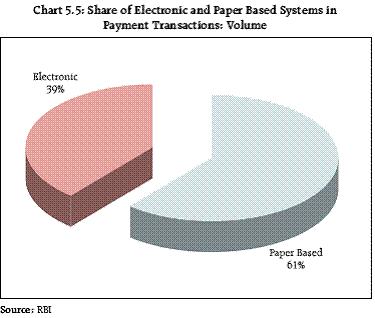 |
5.78 Given that migration of a larger share of payment
transactions to electronic payment modes involve
significant challenges related to, inter alia, the
geographic expanse of the country and the social habits
and psyche of the participants, the Reserve Bank has
been initiating a number of efforts aimed at enhancing
the efficiency of paper based clearing systems.
These, inter alia, include a phased introduction of the
Cheque Truncation System, standardisation of cheque
forms being used by banks and enhancement of
security features in cheque forms and introduction of
speed clearing.
5.79 Paper transactions in the country are cleared
and settled through a large network of 1150 clearing
houses across the geographic expanse of the country.
Certain difficulties involved in managing such large
network of clearing houses with a view to ensuring
robust risk management standards are sought to be
addressed through the prescription of the Uniform
Regulations and Rules for Bankers’ Clearing Houses,
Minimum Standards of operational efficiency for
MICR and non-MICR clearing houses and selfassessment
at periodic intervals. The clearing houses
are subject to oversight.
Operational Risk in payment and settlement systems
Operational risks closely managed and vulnerabilities
monitored
5.80 Operational disturbances in the functioning of
payment and settlement systems may impede timely processing of financial market transactions and result
in liquidity and other difficulties and could be a
powerful contagion for financial instability. The Core
Principles for Systemically Important Payment Systems
also emphasise the operational reliability of critical
financial market infrastructure and enunciate that “The
system should ensure a high degree of security and
operational reliability and should have contingency
arrangements for timely completion of daily
processing”.
5.81 Management of operational risks in payment and
settlement systems has been engaging the attention of
the Reserve Bank for some time. To test the business
continuity capabilities of critical payment system
applications, it has been conducting periodic disaster
recovery drills. Three such drills were successfully
conducted since the publication of the previous FSR.
5.82 The majority of critical payment and settlement
systems in the country ride on the backbone provided
by the Indian Financial Network (INFINET) which is
hosted by the Institute for Development and Research
in Banking Technology (IDRBT). The INFINET could
therefore potentially constitute a single point of failure.
The consequent vulnerability is sought to be addressed
through building up of adequate redundancies
including sourcing the telecommunication network
from two service providers.
5.83 The INFINET is designed as a closed user group.
This is a critical factor which ensures security of
payment and settlement systems from intrusion.
However, given the potentially huge impact of any
unauthorised intrusion on such systems, periodic
vulnerability assessment and penetration testing is an
important safeguard to prevent any disruptions to the
operations of these systems.
Systemically important payment systems
Large value transactions on Real Time Gross
Settlement (RTGS) or deferred net settlements
5.84 Migration of all large value payments to a real
time gross settlement system or to settlement on a
secured deferred net settlement basis through a CCP
and of securities settlement systems to a delivery
versus payment mechanism has to a large extent
mitigated risks of disruptions to the functioning of the financial market infrastructure in the country. As
mentioned above, these payment systems have been
functioning smoothly and with minimal disruptions.
Secured deferred net settlement systems in critical
markets ensure economic use of liquidity
5.85 In India, the development of large value payment
systems has been guided with a view to enhance both
security and efficiency. Settlement of all large value
transactions in the RTGS system carries with it the
benefits of a secure gross settlement system while the
liquidity saving benefits of netting are derived through
secure deferred net settlement of critical interbank
markets (Table 5.2). At present, in India, the settlement
of transactions relating to government securities,
market repos, Collateralised Borrowing and Lending
Obligation (CBLO) and foreign exchange (spot and
forwards) are settled on a guaranteed net settlement
basis through CCIL. For the capital market, the major
stock exchanges viz., National Stock Exchange (NSE) and
Bombay Stock Exchange (BSE) also have their own CCPs
(National Securities Clearing Corporation and Indian
Securities Clearing Corporation Limited respectively).
Table 5.2: Netting Efficiency |
|
G-Sec (Funds) (%) |
Forex (%) |
2008-09 |
84.43 |
94.42 |
2009-10 |
82.96 |
94.07 |
2010-11 (*) |
79.89 |
95.16 |
(*) Up to Sep 2010
Source: CCIL |
Comfortable liquidity position in the RTGS system
5.86 Data regarding usage of intra-day liquidity (IDL)
offered by the Reserve Bank (Table 5.3) also indicates
that the liquidity position in the payment system is
comfortable.
Table 5.3: Usage of Intra-day Liquidity |
|
IDL(*) |
Quarter ended Mar 2010 |
2.11 |
Quarter ended Jun 2010 |
2.67 |
Quarter ended Sep 2010 |
3.55 |
(*) IDL usage as a per cent of total transactions
Source: RBI |
Concentration risks in systemically important
payment and settlement systems evidenced
5.87 An analysis of transactions in the RTGS and CCIL
operated payment systems indicated that the largest
participant accounted for 15 per cent of all receipt and
payment transactions (Chart 5.6). A significant degree
of concentration was also witnessed in the transactions
share accounted for by the top five participants,
indicating a high degree of interconnectedness in
payment and settlement systems.
5.88 This is also demonstrated through the measure
of node risk18 i.e.
The index value for the five most active banks in the
system equals approximately 78 per cent with the most
active participant accounting for about 30 per cent. The
average risk index for the other banks is much smaller
suggesting that nearly 80 per cent of the payment
activity would be at risk if the five most active banks
experience difficulties.
5.89 Similar concentration was observed in CCIL
transactions wherein transactions were concentrated
in a few foreign banks (five largest participants were
all foreign banks). Such concentration of trades is a
clear pointer to trends in the underlying market and
indicates that despite significant growth in transaction
volumes, market participation remains skewed.
(Charts: 5.7 – 5.10).
CCP arrangements
CCPs emerging as the preferred mode for settlement
globally
5.90 In the wake of the financial crisis, the role of
CCPs in contributing to minimising systemic risk has
been increasingly realised. By reducing bilateral
interconnectedness between major financial
institutions, CCPs make an important contribution to
limiting contagion risk in the financial system. The
presence of CCPs also ensures that trades are collateralised. In fact, it typically recalculates new
collateral requirements on a daily (or more frequent)
basis. This represents a significant improvement from
the current position internationally – accordingly to an
International Swaps and Derivatives Association (ISDA)
survey, only 23 per cent of bilateral trades are
collateralised while the position about the remaining
77 per cent is unclear. Finally, a CCP contributes to
systemic stability through enhanced transparency, for
example, through periodic dissemination of trade
related information.
CCPs are not, however, a panacea for all deficiencies/
risks
5.91 But, as has also been realised, CCPs are not a
panacea for all products and for all markets. In particular,
CCP arrangements result in the concentration of
counterparty risks in one entity. In case of a sufficiently
large CCP, this concentration risk can become systemic
and the impact of the failure of such a CCP could be
potentially worrying. It is therefore imperative that
the risk management standards in a CCP, including
the legal framework of its operation, be robust and that
the CCP be subject to close oversight. Internationally,
the regulatory structure of a CCP needs to be applied
on a consistent basis across borders so as to pre-empt
scope for regulatory arbitrage and a potential erosion
of risk management standards. The Recommendations
for Central Counterparties19 , currently being reviewed
by the Committee for Payment and Settlement
Systems (CPSS) and the International Organisation for
Securities Commission (IOSCO), will attempt to
address these issues.
CCPs – the preferred settlement mechanism for many
large value transactions in India
5.92 In the Indian case, the guaranteed settlements
have been the preferred mode of settlement for large
value interbank transactions, wherever feasible. In the
money and government securities markets, the Reserve
Bank facilitated the establishment of the CCIL. CCIL
has been brought within the purview of the PSS Act
and is subject to close oversight. A few concerns in the
CCP arrangements in the country remain.
The design of CCIL as a multi product CCP presents
challenges while offering economies of scope and
scale
5.93 The design of CCIL, as it has emerged, is that of
a single CCP functioning in multiple markets/products.
This design brings with itself a number of benefits in
terms of economies of scale and scope. It also reduces
overall operational costs and access fees for the
participants.
5.94 However, the design also implies that the CCIL’s
network of counterparty exposures widens. In the
Indian context, this is especially critical as the same
participants operate in different market segments. The
model also brings to the fore, challenges in respect of
management of the aggregate risk exposure of the CCP
and makes it difficult to estimate the impact of tail
events. Assessment of the adequacy of the CCP’s default
fund and the efficacy of its loss absorption system
hence becomes difficult. The operational risks
associated with such an entity are also commensurately
large. A recent report by the BIS20 concluded that
“Specific market structures (for CCPs) may create
specific risks and amplify interdependencies between
systems and markets..... However, market structures
may also have risk reduction benefits and mitigate
interdependencies.”
5.95 From a stability perspective, a multi-product CCP
such as CCIL essentially becomes, and will need to be
treated as, an entity which is systemically important.
As it covers a wide range of markets and participants,
the spill over effects of defaults/disturbances in any
one market/product is likely to be greater. The oversight
mechanism for the institution will need to factor in
this aspect. The Reserve Bank, through its supervision
over CCIL, attempts to ensure that it’s risk management
standards are robust and that they meet international
best practices.
Access of the CCP to central bank liquidity remains
an open issue
5.96 An important question which arises in this
context is whether CCPs should have access to central
bank credit/liquidity facilities. The question, in fact, remains unresolved even at the international level
though a case to the effect is not difficult to build. “...
all CCPs should have access to at least a certain amount
of central bank facilities. If a CCP finds itself confronted
with a temporary liquidity shortage, access to intraday
central bank liquidity lines could take the sting out of
the tail, thereby reducing the likelihood of unnecessary
financial distress21 .” In some jurisdictions, CCPs have
been incorporated as ‘limited banks’ in order to ensure
that they have access to central bank facilities.
5.97 Instances for the need for central bank liquidity
by CCIL have not been frequent. This has largely been
facilitated by a robust risk management framework, on
the one hand, and by the fact that Indian financial
markets functioned relatively smoothly even during
periods of significant disturbances in global markets.
Going forward, as Indian markets become more
intertwined with global markets, market volatilities
may increase CCP liquidity needs beyond margins,
especially during situations of stress. Some kind of
access of CCIL to central bank facilities may become
necessary as CCIL has emerged as an essential market
infrastructure in a space characterised by lack of
competition. However, no such facility, if provided, can
be automatic. CCIL should be able to meet the same
(or equivalent) requirements as other counterparties
enjoying central bank facilities and the facilities will
need to be provided in such a manner that there is no
incentive for the dilution of controls.
A few issues of concern need to be addressed.
5.98 Some issues with respect to specific segments
also pose some concern in respect of the functioning
of CCIL. For example, while considerable risk
mitigation has been achieved by CCIL in respect of
the settlement of foreign exchange transactions, there
remains an element of Herstatt risk associated with
such settlements, especially with respect to the US
dollar leg of such settlements. In the CBLO segments,
large intra day positions are assumed by the five
settlement banks which cater to corporate mutual
funds and some co-operative banks. This could have
systemic implications in the event of failure of any
settlement bank. Again, in the CBLO segment, counterparty risk is managed by CCIL through the
imposition of a Single Order Limit (SOL). However,
the SOL, as a counterparty exposure management tool,
may not be as effective as a Net Debit Cap in ensuring
that counterparty positions remain within acceptable
limits. These issues are being examined.
Several initiatives have placed financial infrastructure
on a sounder legal footing
5.99 The enactment of the PSS Act, 2007 ensured
compliance with the first Core Principle for
Systemically Important Payment Systems which states
that “the system should have a well founded legal basis
under all relevant jurisdictions”. Several initiatives
under the aegis of this Act have been taken recently in
order to place the financial market infrastructure on a
stronger legal footing.
5.100 An important soft spot in Indian payment and
settlement systems was that the legal basis for the
determination of settlement obligation through netting
was provided through bilateral contracts and there was
no recognition for multilateral settlements under law.
This was addressed through the enactment of the
aforesaid Act and recently amplified through issue of a
directive on “Settlement and Default Handing
Procedures in Multilateral and Deferred Net Settlement
Systems”22 . The directive seeks to provide certainty and
predictability for the method of determining settlement
obligations of the participants and the point at which
the settlement of obligations is deemed final and
irrevocable.
Bankruptcy of participants in systems not covered by
the PSS Act could be disruptive
5.101 The PSS Act provides legal certainty for
multilateral settlement arrived in payment and
settlement systems authorised by the Reserve Bank
under the Act. However, similar legal certainty is not
in place in case of systems outside the purview of this
Act viz., the equity market settlements. Further, banks
are the back stop liquidity providers even for these
systems. The implications arising from instances of
failure to pay or bankruptcy of any participant could
potentially be disruptive to the system at large.
OTC markets
Weaknesses in OTC derivative markets need to be
addressed to reap the potential benefits of such
products
5.102 Setting up of resilient OTC derivatives market
infrastructure has been a widely shared key priority for
policy makers internationally. OTC derivatives benefit
financial markets and the wider economy by improving
the pricing of risk, adding to liquidity, and helping market
participants manage their respective risks. It is, however,
important to address the weaknesses in these markets
which had been instrumental in exacerbating the
financial crisis. A recent FSB report on OTC derivative
markets23 , made a range of recommendations aimed at
achieving the objectives set out by the G20 leaders in
Pittsburgh in September 2009, “All standardised OTC
derivative contracts should be traded on exchanges or
electronic trading platforms, where appropriate, and
cleared through central counterparties by end-2012 at
the latest. OTC derivative contracts should be reported
to trade repositories. Non-centrally cleared contracts
should be subject to higher capital requirements”.
5.103 The key international initiative in respect of the
OTC derivative markets has been to integrate these
markets into regulated and supervised market
infrastructures such as trading platforms, trade
repositories and CCPs. There is also a recognition that
there will always remain some contracts which cannot
be centrally cleared. It thus becomes imperative to
enhance the safety of OTC derivatives markets e.g.
through increasing transparency and by strengthening
the capital requirements for bilaterally cleared trades.
OTC derivative markets in India have developed
within a regulated space
5.104 In India, the OTC derivatives markets developed
within a regulated framework. A menu of OTC products
was introduced in the market in a phased manner
commensurate with developments in the broader
financial sector. The fundamental requirement for
access to the derivative market remains the existence
of an underlying commercial transaction or exposure.
The method adopted was to improve access to simple, transparent and easy to understand products.
Significant success in building up a reporting platform
and settlement of derivatives trades, including interest
rate derivatives, through a CCP was also achieved. OTC
forex and interest rate derivatives already attract higher
credit conversion factors than prescribed under the
Basel II framework and all exposures are reckoned on
a gross basis for capital adequacy purposes.
Many challenges and some concerns remain
5.105 The participation structure in many derivative
markets remains skewed with volumes concentrated
in a few participants, as discussed in paragraph 5.89 of
this Chapter. Volumes in some derivatives markets
remain relatively low making it challenging to mandate
guaranteed clearing for such products.
5.106 As new products get introduced [the most recent
initiative related to the proposed introduction of single
name Credit Default Swaps (CDS) products], similarly
robust infrastructural arrangements will need to be put
in place. But the transition phase will need to be carefully
managed. For example, in the early stages of introduction
of CDS, it would be difficult to mandate guaranteed
settlement, as discussed in Chapter III of this Report.
5.107 A further area for regulatory initiative in the
Indian markets would be greater standardisation of
OTC products and introduction of central clearing
arrangements for a greater number of such products.
However, given the vanilla nature of products permitted
in the country, standardisation of existing products
may not be very difficult.
International standards for Payment and Settlement
System
Globally, standards for financial market infrastructure
are being reviewed
5.108 Even as efforts are ongoing to strengthen core
financial market infrastructures including those related
to payment and settlement system infrastructures, the
importance of international standards against which
the infrastructures in various jurisdictions can
benchmark themselves has become critical.
Accordingly, a review of the standards for financial
market infrastructure viz., ‘Core Principles for Systemically Important Payment Systems’,
‘Recommendations for Securities Settlement Systems’
and ‘Recommendations for Central Counterparties’, has
been undertaken by the CPSS and the IOSCO.
Reserve Bank remains committed to adopting
international best practices, as and when finalised
5.109 The Reserve Bank strives to adopt international
best practices in various areas including payment and
settlements. As reported in the previous FSR, the
Committee on Financial Sector Assessment (CFSA) had,
inter alia, conducted a self assessment of the
compliance of the payment and settlement
infrastructure in the country with Core Principles for
Systemically Important Payment Systems and the
recommendations for Securities Settlement Systems
and CCPs. The Committee concluded that the country
was broadly compliant with the principles/
recommendations. The RTGS system in the country was
also assessed by a team of experts from the Swiss
National Bank at the invitation of the Reserve Bank.
This external assessment also observed the system to
be largely compliant with the Core Principles. As and
when the revised standards are introduced, the same
will be considered for incorporation in the Indian
framework suitably calibrated to domestic conditions.
DEPOSIT INSURANCE
5.110 The existence of a strong deposit insurance
system is an integral part of financial stability
arrangements in any economy. The recent financial
crisis reemphasised the fact that banks are susceptible
to problems of insolvency or illiquidity and reaffirmed
the need for deposit insurance in arresting a panic
reaction and restoring public confidence in the banking
system. The Fifth Report (2007-08) of the Treasury
Committee of the House of Commons (titled “Run on
the Rock”) succinctly concludes that “All banks and
building societies should be covered by a deposit
insurance scheme, such that, in cases such as Northern
Rock, or an even larger bank, the Government would
not be required to step in to protect depositors”.
5.111 Historically too, the emergence of deposit
insurance has been motivated by financial stability
concerns24 . As deposit insurance matured and progressed along the value chain, consumer protection,
and more specifically protection of depositors’ interest
emerged as the other major public policy objective of
the safety net infrastructure. Principle 1 of the Core
Principles of Effective Deposit Insurance System25 states “The principal objectives for deposit insurance
systems are to contribute to the stability of the financial
system and protect depositors”.
5.112 The recent financial crisis has exposed the
inadequacies and weaknesses in a number of deposit
insurance systems around the world and set into
motion many efforts to improve the efficacy of such
systems. Against the backdrop of the experiences
during the crisis, the BCBS and the International
Association of Deposit Insurers (IADI) jointly developed
the Core Principles for Effective Deposit Insurance
Systems, which was published in June 2009. IADI has
also come out with the draft methodology for
assessment of the compliance with these principles.
Deposit insurance system in India– robust but some
critical issues remain
5.113 In India, DICGC was set up in 1962 thus making
it the second oldest deposit insurance corporation in the
world. As outlined in the first FSR, deposit insurance
in India is mandatory for all banks (commercial/cooperative/
RRBs/Local Area Banks (LABs)26 . It covers all
deposits except those of foreign governments, Central/
State Governments, inter-bank, deposits received
abroad and those specifically exempted by DICGC with
prior approval of the Reserve Bank.
5.114 Some of the key challenges faced by the deposit
insurance system in India include ensuring the
adequacy of the deposit insurance fund, reducing the
time taken to reimburse depositors, improving the
coverage of the deposit insurance system and
broadening the mandate of DICGC to include bank
resolution. Ensuring compliance with the Core
Principles for Effective Deposit Insurance Systems would remain a challenge pending reforms in the
deposit insurance system in India.
Funding of deposit insurance systems: a challenging
task
5.115 Adequate funding of deposit insurance systems,
typically measured through Fund Ratio / Reserve Ratio
(Fund Size to Total Insured Deposits), is a critical issue
for ensuring the solvency of the fund and maintaining
public confidence. The Reserve Ratio for DICGC at end-
March 2010 was relatively low at 0.85 per cent though
there is no clear international benchmark in this regard.
While no deposit insurance system can be designed to
deal with systemic risk of the proportions that was
witnessed during the recent financial crisis, it is
important that given the contagious nature of bank
failures, the deposit insurance funds factor in the
possibility of several banks failing simultaneously27 .
In this context, a stress testing of the Deposit Insurance
Fund (DIF) of DICGC was undertaken.
5.116 The stress tests were undertaken based on three
scenarios – first, projecting claims on the basis of the
average growth in claims settled during the last five
years, second, estimating insured deposit of all the
weak UCBs if they were to be liquidated and third, if
the commercial banks which have been amalgamated
(during 2003-2006) with other banks were to be
liquidated. The stress tests revealed that under each of
these scenarios, the DICGC would be in a position to
meet the claims, although under the latter two
scenarios, the reserve ratio would drop sharply.
Cross subsidisation raises the issue of moral hazard
5.117 The previous FSR discussed in detail the issue
of cross subsidisation of premium in the Indian
context. The extent of cross subsidisation can be
illustrated by considering that in 2009-10, commercial
banks contributed 93 per cent of the premium received
by DICGC though no claims from the depositors of these
banks were required to be settled. In contrast, the ratio of claims settled to premium received in the case of
co-operative banks stood at 220 per cent. The cross
subsidisation obviously raises the issue of moral
hazard. While introduction of risk-based premium is
an option, in India, a certain amount of forbearance
in this respect has been employed in response to an
assessment of trade off between minimising moral
hazard and placing additional burden on banks that
are already weak and yet serve the very important
objective of financial inclusion.
Increasing the deposit insurance premium will need
to factor in impact on weak banks
5.118 The deposit insurance regime in India is a low
insurance premium regime. With a view to
strengthening the DIF, the issue of increasing the
deposit insurance premium becomes relevant. In this
context, an empirical exercise was undertaken to study
the impact on reserve ratio with increase in premium
rate from 10 basis points to 30 basis points. The exercise
revealed that every 5 paisa increase in premium would
lead to an increase in the reserve ratio by 0.06
percentage points. However, any increase in premium
would need to factor in the impact of such increase on
the weak banks in the system. Further, given the element
of cross-subsidisation, the commercial banks would
have to bear a disproportionate share of the burden.
Recovery Performance continues to be poor
5.119 The previous FSR had highlighted that the poor
recovery performance of DICGC vis-à-vis claim
settlements has been a major bottleneck for the
regeneration and resilience of the DIF. There has been
little improvement in the functioning of the
Corporation in this respect with recoveries constituting
a mere 14 per cent of claims settled as on March 31,
2010. Legislative disputes challenging the priority of
the Corporation in recoveries have hindered the
recovery process and build-up of funds. A number of
other factors - increasing investment income by
expanding the scope of investment options, issues of
taxation (taxing the deposit corporation is not a
common practice across the world) and a backup line
of credit from the central bank (currently the line of
credit is restricted to ` 5.00 crore) - are important in
ensuring the adequacy and resilience of the DIF and
increasing the Reserve Ratio and will require careful
consideration.
Reducing the time taken to settle claims remains a
tough proposition
5.120 For deposit insurance to be credible, it is
important that claims are settled at the earliest possible
in the wake of a bank failure. In this context, the Fifth
Report (2007-08) of the Treasury Committee of the
House of Commons (titled “Run on the Rock”) has
observed that “There should be requirement in law that
all insured deposits should have to be paid within a
few days of a bank failing and calling on the deposit
protection scheme”.
5.121 As per the DICGC Act, currently, DICGC is
required to pay the amount payable in respect of the
deposits of each depositor within two months from the
date of receipt of the claim list from the liquidator. The
liquidator is given three months to prepare the claim
lists. While the Corporation is able to disburse the
claim amounts within the stipulated period of two
months, there are tremendous delays in submission
of information by the liquidators. Thus, the average
time taken between deregistration of a bank and claim
settlement extends to more than a year. Putting in place
a robust delivery system to reduce the time taken to
effect payments well within the stipulated time, in fact,
to even reduce the stipulated time to pay claims,
presents a huge challenge given the geographic spread
of the country and the unsatisfactory quality of data in
respect of particulars of depositors. The process will
require leveraging on technology to improve record
keeping - the Corporation has already initiated early
steps in this direction; and in putting in place an
effective system of accountability of liquidators to
ensure timely flow of information to the Corporation.
Low levels of coverage could impair effectiveness of
the deposit insurance system
5.122 The global financial crisis prompted a number
of countries to shift the focus of their coverage from
protecting small depositors to stabilising the financial
system. As a result, the deposit insurance coverage was
increased in many countries, in most cases on a
permanent basis. In India, however, no compelling case
for increasing the deposit insurance cover was felt given
that, under the existing insurance coverage, about 90
per cent of the deposit accounts (number–wise) and
about around 55 per cent of total assessable deposits
(value-wise) are insured. Nevertheless, the coverage ratio of deposit insurance in the country remains one
of the lowest in terms of per capita income. The need
for increasing the cover needs to be examined carefully.
Mandate of the deposit insurance requires to be
broadened
5.123 Another critical issue faced by the deposit
insurance system in India is to improve its efficacy
by upgrading the existing pay box mandate given to
DICGC to an extended mandate with powers for least
cost resolution, as was observed in the previous FSR.
This may, however, require amendment to the DICGC
Act, 1961.
Compliance with international norms – some gaps
will need to be addressed
5.124 Paragraph 5.112 of this Chapter discussed the
draft methodology being finalised by the IADI for the
purpose of assessment of compliance with the Core
Principles for Effective Deposit Insurance Systems.
Before finalisation of the methodology, the IADI
conducted its field testing for which DICGC was one of
the deposit insurance providers selected.
5.125 The field testing observed that the deposit
insurance system in India was compliant or largely
compliant in respect of a number of critical issues viz.,
public policy objectives, mitigation of moral hazard,
specification of mandate, empowerment and
governance, compulsory membership, coverage, public
awareness, legal protection and dealing with parties at
fault in a bank failure. However, some important areas,
as under, where the functioning of DICGC needed
improvement were also identified.
-
DICGC has very limited resolution options available:
liquidation or merger/amalgamation. A system for
early detection of problem banks exists but early
intervention is not in the law. DICGC is not
informed of problem bank status or activities until
the bank’s license is revoked.
-
DICGC does not receive information necessary to
effect prompt reimbursement to insured depositors
on a timely basis.
-
The deposit insurance fund would be inadequate
were a larger bank to fail.
-
Foreign branches’ deposits are covered by DICGC.
There are no reciprocal agreements requiring
coordination with deposit insurance systems in
other countries.
-
While the role and priorities of the DICGC is clearly
defined in law, legal obstacles prevent the accurate
distribution of recoveries, particularly in the case
of urban cooperative banks.
Concluding Remarks
5.126 Fault lines in the regulatory and supervisory
architecture permitted the cyclical build up of risks and
allowed development of institutions which were “too
big to fail”. In the aftermath of the crisis, the
international community has made substantial progress
in putting together a set of reforms which are aimed at
increasing the resilience of the global financial system.
Going forward, the challenge is going to be in rolling out
the reforms agenda in an environment where the global
recovery is still fragile, the financial system remains
vulnerable, banks in advanced countries continue to face
funding risks and sovereign debt of the European
countries remains a source of threat to financial stability.
5.127 India weathered the headwinds of the financial
crisis with relative equanimity. The financial sector
remained resilient, fostered by a well capitalised and well
regulated banking system, though the real sector was
affected through real, financial and confidence channels.
For emerging economies like India, the implementation
of the Basel III reforms comes at a time when structural
factors are expected to ensure pick up in credit demand.
Simultaneously meeting the requirements of additional
capital buffers and the sharply growing credit needs of
the economy at an affordable cost will be no easy task.
However, the comfortable capital adequacy position of
the banks in India under Basel II norms means that the
Basel III requirements, once fully calibrated, will not
unduly stress banks in India.
5.128 Adoption of international norms – in respect of
convergence of accounting standards, adoption of
compensation principles, reducing reliance on credit
rating agencies – will be challenging and will require
concerted efforts and suitable calibration to domestic
conditions. Concerted efforts to improve the availability
of accurate, timely and granular data will also be
necessary.
5.129 Interconnectedness between various segments
of the financial markets and between financial market
participants has emerged as an important element of
macroprudential supervision.Closer supervision of
institutions which are highly interconnected in
payment and settlement systems or through inter-bank
liabilities may be warranted.
5.130 Internationally, wide ranging efforts are on going
to reduce the moral hazard associated with large and
complex financial institutions, improve the resolution
capacity of firms and develop effective resolution
regimes for cross border financial institutions. In India,
domestic banks are unlikely to be classified as global
SIFIs. Regardless, policies for domestic SIFIs will need
to be strengthened drawing on international policy
developments in this respect.
5.131 An assessment of the scope of regulation and its
perimeter is critical in view of the role played by the shadow banking sector during the crisis. It assumes
greater criticality as the regulatory requirements for
the banking industry are tightened. In India,
strengthening the regulatory framework for NBFCs
within the regulatory ambit of the Reserve Bank is a
continuing effort. The present system of entity
regulation could leave some regulatory gaps, which will
need to be addressed.
5.132 CCP arrangements have been the preferred
settlement mode for critical markets, wherever feasible.
The risks arising out of concentration of risks in CCP
will need to be carefully managed on an ongoing basis.
The payment and settlement system infrastructure
functioned smoothly but some soft spots remain. Safety
net arrangements are in place but face a number of
challenges viz., increasing the mandate of the deposit
insurance system, improving funding and reducing the
time taken to settle claims.
1 http://www.bis.org/publ/bcbs179.pdf
2“Post-crisis Reforms to Banking Regulation and Supervision – Think Global, Act Local’, Inaugural address by Dr. D. Subbarao, Governor,
Reserve Bank of India, at the FICCCI-IBA Conference on Global Banking: A paradigm Shift”, September 2010
3 Reserve Bank of India, Report on Trends and Progress in Banking, 2009 - 2010
( http://rbi.org.in/scripts/PublicationsView.aspx?id=12975 )
4“The value of “too big to fail” big bank subsidy”, D. Baker and T. McArthur, CEPR Issue Brief, 2009
5 IMF: “Guidance to assess the systemic importance of financial institutions, markets and instruments”, 2009
6 In terms of the Banking Regulation Act, 1947
7“Principles on Sound Compensation Practices”, FSB, April 2009
8 What is Systemic Rick Today ? Oliver De Bandt and Philip Hartmann
9 Defining and measuring systemic risk-Stefan Gerlach
10“Implementing a macroprudential framework: Blending boldness and realism”, Claudio Borio, BIS, July 2010
11“Macroprudential instruments and frameworks: a stock taking of issues and experiences”, CGFS, BIS, May, 2010
12 IMF, “Assessing the Systemic Implications of Financial Linkages”, Global Financial Stability Report, April 2009; ECB, “The Concept of Systemic Risk”, Financial Stability Review, December 2009 and “Financial Networks and Financial Stability”, Financial Stability Review, June 2010
13 Rethinking the Financial Network- Andrew G Haldane, April 2009
14 See Prasanna Gai and Sujit Kapadia, ‘Contagion in Financial Networks’
15 Sheri Markose, Workshop on Financial Network Analysis, Reserve Bank of India, August 2010
16 http://www.rbi.org.in/scripts/NotificationUser.aspx?Id=5743&Mode=0
17“A Framework for Assessing Systemic risk”, Miquel Dijkman, World Bank Policy Research Working Paper 5282, April 2010
18 Each node represents a participant in a payment and settlement system with the participant making payments to other participants as also being the recipient of payments from other participants.
19 http://www.bis.org/publ/cpss64.htm
20“Market structure developments in the clearing industry: implications for financial stability”, November 2010
21 Nout Wellink, “Mitigating systemic risk in OTC derivatives markets”,
22 http://rbi.org.in/scripts/NotificationUser.aspx?Id=6018&Mode=0
23 http://www.financialstabilityboard.org/publications/r_101025.pdf
24 At the time when deposit insurance was first introduced in the United States in 1933, the main purpose was to “restore public confidence in the nation’s banking system” in the wake of large scale bank failures that occurred in the 1920s and 1930s.
25 http://www.bis.org/publ/bcbs156.pdf.
26 Deposit insurance is not applicable to co-operative banks where the Cooperative Societies Act under which they are registered does not comply with the provisions of Section 2 (gg) of the DICGC Act, 1961. Extension of the scheme to the co-operative banks in the three Union Territories (Chandigarh, Lakshadweep and Dadra and Nagar Haveli) is pending as the concerned State Governments are yet to introduce necessary legislative changes in their respective Cooperative Societies Acts. There are no co-operative banks at present in Lakshadweep and Dadra and Nagar Haveli.
27“Funding of Deposit Insurance Systems”, Usha Thorat, January 2010 |