Rakesh
Mohan* Introduction
In most of the period since the mid-1990s,
external sector developments in India have been marked by strong capital flows.
Capital flows to India, which were earlier mainly confined to small official concessional
finance, gained momentum from the 1990s after the initiation of economic reforms.
Apart from increase in size, capital flows to India have undergone a compositional
shift from predominantly official and private debt flows to non-debt creating
flows in the post reform period. Private debt flows have begun to increase again
in the more recent period. Though capital flows are generally seen to be beneficial
to an economy, a large surge in flows over a short span of time in excess of the
domestic absorptive capacity can, however, be a source of stress to the economy
giving rise to upward pressures on the exchange rate, overheating of the economy,
and possible asset price bubbles. In India, capital flows in the past few years
have recorded a sharp increase and have been well above the current account deficit,
which has largely remained modest. This has posed new challenges for monetary
and exchange rate management. This paper elaborates on various aspects of the
capital flows to India and their policy implications. The sections have been arranged
as follows: Section I provides a historical backdrop to the evolution of capital
flows to India. Section II highlights various aspects of capital flows to India,
anlaysing their trend, magnitude, and composition. Section III deals with issues
on management of capital flows into India and their implications for the conduct
of monetary and exchange rate policies. Section IV highlights some of the major
issues and challenges for the central bank and Section V concludes with the future
outlook. I. Historical Backdrop
For the first four decades after independence in 1947, the economic policies
of the Indian government were characterized by planning, control and regulation.
Until the 1980s, India’s development strategy was focused on self-reliance and
import substitution. There were periodic attempts at market-oriented reform, usually
following balance of payments pressures, which induced policy responses that combined
exchange rate depreciation and an easing of restrictions on foreign capital inflows.
However, the latter were relatively narrow in scope and had little impact on actual
inflows, which remained small. The situation changed dramatically with the onset
of reform programs introduced in the early 1990s in the aftermath of the balance
of payments crisis of 1991. Broadly speaking, India’s approach towards external
capital flows could be divided into three main phases. In the first phase, starting
at the time of independence and spanning upto the early 1980s, India’s reliance
on external flows was mainly restricted to multilateral and bilateral concessional
finance. Subsequently, however, in the context of a widening current account deficit
during the 1980s, India supplemented this traditional external source of financing
with recourse to external commercial loans including short term borrowings and
deposits from non-resident Indians (NRIs). As a result, the proportion of short
term debt in India’s total external debt increased significantly by the late 1980s.
The third phase was marked by the balance of payments crisis of 1991 and the initiation
of reform process. The broad approach to reform in the external sector was based
on the recommendations made in the Report of the High Level Committee on Balance
of Payments (Chairman: C. Rangarajan), 1991. The objectives of reform in the external
sector were conditioned by the need to correct the deficiencies that led to payment
imbalances in the 1991. Recognizing that an inappropriate exchange rate regime,
unsustainable current account deficit and a rise in short term debt in relation
to the official reserves were amongst the key contributing factors to the crisis,
a series of reform measures were put in place. The measures included a swift transition
to a market determined exchange rate regime, dismantling of trade restrictions,
moving towards current account convertibility and gradual opening up of the capital
account. While liberalizing the private capital inflows, the Committee recommended,
inter alia, a compositional shift in capital flows away from debt to non-debt
creating flows; strict regulation of external commercial borrowings, especially
short term debt; discouraging volatile element of flows from non-resident Indians;
and gradual liberalization of outflows. Among the components, since the
1990s, the broad approach towards permitting foreign direct investment has been
through a dual route, i.e., automatic and discretionary, with the ambit of automatic
route progressively enlarged to almost all the sectors, coupled with higher sectoral
caps stipulated for such investments. Portfolio investments are restricted to
institutional investors. The approach to external commercial borrowings has been
one of prudence, with self imposed ceilings on approvals and a careful monitoring
of the cost of raising funds as well as their end use. In respect of NRI deposits,
some modulation of inflows is exercised through specification of interest rate
ceilings and maturity requirements. In respect of capital outflows, the approach
has been to facilitate direct overseas investment through joint ventures and wholly
owned subsidiaries and provision of financial support to exports, especially project
exports from India. Ceilings on such outflows have been substantially liberalized
over time. The limits on remittances by domestic individuals have also been eased.
With progressive opening up of its capital account since the early 1990s, the
state of capital account in India today can be considered as the most liberalized
it has ever been in its history since the late 1950s. In India, capital
account liberalisation is considered as a process and it is managed by keeping
in view the elasticities of supply and other responses in the economy, and vulnerabilities
or potential for shocks. The issue of capital account liberalization is handled
with extreme caution given the potential for sudden capital reversal. The Report
of the Committee on Capital Account Convertibility, 1997 (Chairman: S.S. Tarapore)
provided the initial framework for liberalization of capital account transactions
in India. The Committee recommended a phased implementation of capital account
convertibility in India to be completed by the year 1999-2000. Taking lessons
from the international experience, the Committee suggested a number of pre-conditions,
attainment of which was considered necessary for the success of the capital account
liberalization programme in India. Fiscal consolidation, lower inflation and a
stronger financial system were seen as crucial signposts for India. It is interesting
to note that the Committee did not recommend unlimited opening up of the capital
account, but preferred a phased liberalization of controls on outflows and inflows
over a three-year period. Even at the end of the three-year period, capital account
was not to be fully open and some flows, especially debt flows, would continue
to be managed. The issue of capital account liberalization was re-examined
by the Committee on Fuller Capital Account Convertibility (Chairman Shri S.S.Tarapore)
(2006), which made several recommendations on the development of financial markets
in addition to addressing issues related to interaction of monetary policy and
exchange rate management, regulation/supervision of banks and the timing and sequencing
of capital account liberalization measures (details in Section III.3). The Committee
has recommended that at the end of the five-year period ending 2010-11, there
should be a comprehensive review to chalk out the future course of action.
II. Trend, Magnitude
and Composition of Capital Flows to India
II.1 Trend Since
the introduction of the reform process in the early 1990s, India has witnessed
a significant increase in cross-border capital flows, a trend that represents
a clear break from the previous two decades. The size of net capital flows to
India increased from US $ 7.1 billion in 1990-91 to US $ 45.8 billion in 2006-07,
and further to US $ 108.0 billion during 2007-08 (Chart 1).
India has one of the highest net capital flows among the emerging market economies
(EMEs) of Asia. II. 2
Magnitude
Net capital flows to India, which
increased from 2.2 per cent of GDP in 1990-91 to around 9 per cent in 2007-08,
however, do not reflect the true magnitude of capital flows to India. Gross capital
inflows to India, as a percent of GDP, have undergone a more than five-fold increase
from 7.2 per cent in 1990-91 to 36.6 per cent in 2007-08. Much of this increase
has been offset by corresponding capital outflows, largely on account of foreign
institutional investors’ (FIIs) portfolio investment transactions, Indian investment
abroad and repayment of external borrowings. Capital outflows increased from 5.0
per cent of GDP in 1990-91 to 27.4 per cent of GDP in 2007-08. The gross volume
of capital inflows amounted to US $ 428.7 billion in 2007-08 as against an outflow
of US $ 320.7 billion.
Strong
capital flows to India in the recent period reflect the sustained momentum in
domestic economic activity, better corporate performance, positive investment
climate, long term view of India as an investment destination and favourable liquidity
and interest rates in the global market. Apart from this, the prevailing higher
domestic interest rate along with a higher and stable growth rate have created
a lower risk perception, which has attracted higher capital inflows.
The
large excess of capital flows over and above that required to finance the current
account deficit (which is currently around 1.5 per cent of GDP) resulted in reserve
accretion of US $ 110.5 billion during the financial year 2007-08. India’s total
foreign exchange reserves were US$ 308.4 billion as on July 4, 2008.
II.3 Composition As
regards the composition of capital flows, the thrust of the policy reform in India
in the aftermath of the balance of payment crisis was to encourage non-debt creating
flows and discourage short term debt flows. Accordingly, the composition of capital
inflows to India clearly reflects a shift towards non-debt creating flows. The
substantial contribution of external aid towards the capital account in the 1950s,
1960s, 1970s and 1980s has dwindled steadily since the 1990s (excluding IMF loans
in 1991 and 1992) as the official flows started getting replaced by private equity
flows and external commercial borrowing (Table 1). Although
non-debt flows, particularly private foreign investments have gained in importance,
there is also a significant rise in the debt creating flows in last two years
mainly on account of rise in external commercial borrowings by Indian corporates
(Table 2). Non-debt
flows Equity flows
under foreign direct investment (FDI) and foreign portfolio investments constitute
the major forms of non-debt creating capital flows to India. There has been a
marked increase in the magnitude of FDI inflows to India since the early 1990s,
reflecting the liberal policy regime and growing investors’ confidence. India’s
share in global FDI flows increased from 2.3 per cent in 2005 to 4.5 per cent
in 2006. Inflows under FDI were particularly high during the last two years, though
a large part of it was offset by significant outflows on account of overseas investment
by Indian corporates. | (US
$ million) | |
|
1990-91 |
2000-01 |
2003-04 |
2005-06 PR |
2006-07 P |
2007-08 P | |
Current Account Balance |
-9,680 |
-2,666 |
14,083 |
-9,902 |
-9,766 |
-17,407 | |
As a percentage of GDP |
-3.1 |
-0.6 |
2.3 |
-1.2 |
-1.1 |
-1.5 | |
Net Capital Flows |
7,056 |
8,840 |
16,736 |
25,470 |
45,779 |
108,031 | |
of which | | | | | | |
| 1.
Foreign Direct Investment | | | | | | |
| Inflows |
107 |
4,101 |
4,464 |
9,178 |
22,959 |
34,924 | |
Outflows |
10 |
829 |
2,076 |
6,144 |
14,480 |
19,379 | |
Net |
97 |
3,272 |
2,388 |
3,034 |
8,479 |
15,545 | |
2. Foreign Portfolio Investment | | | | | | |
| Inflows |
6 |
13,619 |
28,218 |
68,120 |
109,622 |
235,630 | |
Outflows |
0 |
11,029 |
16,862 |
55,626 |
102,560 |
206,369 | |
Net |
6 |
2,590 |
11,356 |
12,494 |
7,062 |
29,261 | |
3. External Assistance | | | | | | |
| Inflows |
3,397 |
2,941 |
3,350 |
3,607 |
3,747 |
4,241 | |
Outflows |
1,193 |
2,531 |
6,208 |
1,841 |
1,960 |
2,127 | |
net |
2,204 |
410 |
-2,858 |
1,766 |
1,787 |
2,114 | |
4. External Commercial Borrowings | | | | | | |
| Inflows |
4,282 |
9,621 |
5,228 |
14,343 |
20,973 |
29,851 | |
Outflows |
2,028 |
5,318 |
8,153 |
11,835 |
4,818 |
7,686 | |
net |
2,254 |
4,303 |
-2,925 |
2,508 |
16,155 |
22,165 | |
5. NRI Deposits | | | | | | |
| Inflows |
7,348 |
8,988 |
14,281 |
17,835 |
19,914 |
29,321 | |
Outflows |
5,811 |
6,672 |
10,639 |
15,046 |
15,593 |
29,142 | |
net |
1,537 |
2,316 |
3,642 |
2,789 |
4,321 |
179 |
PR:
Partially Revised. P: Preliminary.
Note:
1.
Figures for foreign direct investment and foreign portfolio investment include
gross inflows and gross outflows on account of foreign investments in India as
also Indian investment abroad. Similarly, figures for external assistance and
external commercial borrowings include gross inflows and gross outflows on account
of foreign borrowings as well as overseas lending by Indian entities. 2.
Large outflows under external commercial borrowings during the year 2005-06 reflect
one-off effect of the principal repayment of US $ 5.2 billion on account of redemption
of India Millennium Deposit bonds .
Source:
Reserve Bank of India. Table
2: Composition of Capital Inflows to India | |
|
1990-91 |
2000-01 |
2003-04 |
2005-06 |
2006-07 P |
2007-08P | |
Net Capital Flows (US
$ million) | 7,056 |
8,840 |
16,736 |
25,470 |
45,779 |
108,031 | |
of which (in per cent) | | | | | | |
| 1.
Non-Debt Creating Flows |
1.5 |
66.3 |
82.1 |
73.6 |
34.5 |
41.5 | |
a) Foreign Direct Investment |
1.4 |
37.0 |
14.3 |
20.2 |
18.8 |
14.4 | |
b)Foreign Portfolio Investment |
0.1 |
29.3 |
67.9 |
53.4 |
15.7 |
27.1 | |
2. Debt Creating Flows |
71.1 |
30.3 |
7.7 |
29.6 |
51.2 |
49.6 | |
a) External Assistance |
31.2 |
4.6 |
-17.1 |
7.2 |
3.9 |
1.9 | |
b) External Commercial
Borrowings* |
31.9 |
48.7 |
-17.5 |
11.6 |
35.8 |
20.5 | |
c) Short-term Credits |
15.2 |
6.2 |
8.5 |
7.3 |
7.3 |
16.4 | |
d) Banking Capital |
9.7 |
-22.2 |
36.0 |
5.9 |
4.6 |
10.9 | |
of which | | | | | | |
| NRI
Deposits | 21.8 |
26.2 |
21.8 |
11.9 |
8.7 |
0.2 | |
e) Rupee Debt Service |
-16.9 |
-7.0 |
-2.2 |
-2.4 |
-0.4 |
-0.1 | |
3. Other Capital
# | 27.4 |
3.3 |
10.2 |
-3.2 |
14.2 |
8.9 | |
Total (1+2+3) |
100.0 |
100.0 |
100.0 |
100.0 |
100.0 |
100.0 |
P:
Provisional. * Refers to medium and long-term borrowings. #
Includes leads and lags in exports (difference between the custom and the banking
channel data), Indian Investment abroad and India's subscription to International
Institution and quota. Source:
Annual Report, Reserve Bank of India, 2006-07. In
a major break from the past, the spurt in FDI flows to India in the recent period
has been accompanied by a jump in outward equity investment as Indian firms establish
production, marketing and distribution networks overseas to achieve global scale
along with access to new technology and natural resources. Investment in joint
ventures (JV) and wholly owned subsidiaries (WOS) abroad has emerged as an important
vehicle for facilitating global expansion by Indian companies.
Overseas direct equity investment from India
jumped to US $ 11.3 billion in 2006-07 from US $ 3.8 billion in 2005-06. Overseas
direct equity investment amounted to US $ 12.5 billion during 2007-08. Overseas
investment, though started off initially with the acquisition of foreign companies
in the IT and related services sector, has now spread to other areas such as non-financial
services. A
marked feature of FDI flows to India is that unlike the dominance of manufacturing
in the East Asian economies, the FDI to India has concentrated in the services
sector. This reflects the service led growth of the economy and comparative advantage
in international trade in services. It may be mentioned that information technology
has enabled greater tradability of a number of business and professional services.
With greater potential for growth in such services, FDI has also emerged as a
vehicle to delivery of services to the international markets. Moreover, within
services sector, financing, insurance, real estate and business services have
witnessed a large increase in their share in FDI flows to India between 2002-03
and 2007-08. Computer services also remains a key sector for FDI as the mode of
captive BPO/subsidiaries have been principal instruments for facilitating offshore
delivery of computer services and IT enabled services. Like
FDI, India’s share in net portfolio flows to emerging market and developing countries
has expanded. India has witnessed a dominance of portfolio flows over FDI flows
during various periods of time, which is in contrast to developing and emerging
market economies in most parts of the world, where FDI constituted the main source
of equity flows (Chart 2). However, unlike FDI flows, which
exhibited a more or less steady upward trend over the years, portfolio flows are
more volatile, moving in tandem with domestic and international market sentiments.
Accordingly, a sharp rise in portfolio investment into India in the recent period
reflects both global and domestic factors. The search for yield in view of very
low real long term rates in advanced economies has been an important factor driving
portfolio flows to emerging market economies as a group and India also has attracted
such flows. Domestic factors, such as strong macroeconomic fundamentals, resilient
financial sector, deep and liquid capital market, improved financial performance
of the corporate sector and attractive valuations also attracted large portfolio
flows. Consistent with the principle of hierarchy of capital flows, India has
been making efforts towards encouraging more inflows through FDI and enhancing
the quality of portfolio flows by strict adherence to ‘know your investor’ principle
(Reddy 2005). Debt-creating
Flows External
assistance, external commercial borrowings (ECBs), trade credits and non-repatriable
component of NRI deposits constitute the major portion of the external debt in
India. 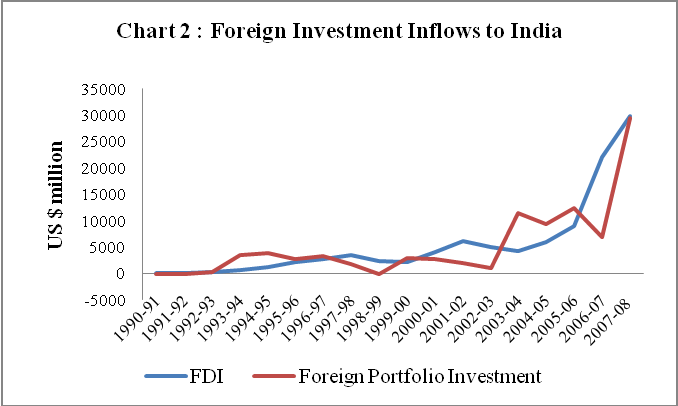
External
assistance, which consists of external aid flows from bilateral and multilateral
sources, constituted the major source of external financing for India in the 1950s
and 1960s. The importance of external assistance in India’s capital flows has
declined steadily during the last three decades as it gave way to private capital
flows. The share of external assistance in India’s total capital flows has declined
from 31.2 per cent in 1990-91 to 1.9 per cent in 2007-08. India, on the other
hand has started extending assistance to other countries, mainly in the form of
grants and loans. India provided aid mainly in the form of technical co-operation
and training, with the grant component dominating external aid with a share of
over 90 per cent. The major beneficiaries of the assistance during 2006-07 were
Bhutan, Nepal and Sri Lanka. The recourse to external commercial
borrowings by Indian corporates, though initiated in the early the 1970s, remained
modest due to the dominance of concessional, non-market based finance in the form
of external assistance from bilateral sources and multilateral agencies. Towards
the end of the 1970s, the concessionality in the aid flows dwindled. Thus, with
the rising external financing requirements beginning with the 1980s and the recognition
that reliance on external assistance was not favourable, commercial borrowings
from international capital markets were preferred. Commercial borrowings after
experiencing some slowdown in the aftermath of the balance of payments crisis,
rose significantly in the latter half of the 1990s, responding to the strong domestic
investment demand, favourable global liquidity conditions, upgrade of sovereign
credit rating, lower risk premia on emerging market bonds, and an upward phase
of capital flow cycle to the EMEs. During this period, ECBs constituted about
30 per cent of the net capital flows to India. Towards the late 1990s and the
early 2000s, the demand for ECB remained subdued due to a host of factors such
as global economic slowdown, reversal of a rising phase of capital flows to developing
countries and lower domestic investment demand. The period beginning 2003-04 marked
the resumption of debt flows to developing countries, which was a combined outcome
of the higher interest rate differential emanating from ample global liquidity
and the robust growth expectations and low risk perception towards the emerging
markets. Net inflows under ECB increased from US $ 2.5 billion in 2005-06 to US
$ 16.2 billion in 2006-07 and further to US $ 22.2 billion during 2007-08. ECB
contributed to about 20.5 per cent of the net capital flows to India in 2007-08.
Higher ECB drawals during the past few years reflect sustained domestic investment
demand, import demand, hardening of domestic interest rate as also greater risk
appetite of global investors for emerging market bonds. The policy on ECB is kept
under constant review and changes are made as needed. In
the 1970s, the two oil shocks shifted substantial resources towards oil exporting
countries, which provided investment and employment opportunities in the oil-rich
countries. The Reserve Bank devised specific deposit schemes to tap the savings
of non-resident Indians employed in these countries. Non-Resident Indians/Overseas
Corporate Bodies were allowed to open and maintain bank accounts in India under
special deposit schemes-both rupee and foreign currency denominated. NRI deposits
have been a generally stable source of support to India’s balance of payments
through the 1990s, although the external payment difficulties of the 1990-91 demonstrated
the vulnerability that can be associated with these deposits in times of difficulty
and drastic changes in perceptions. Since the 1990s, the Reserve Bank has aligned
the interest rates on these deposits with international rates, fine-tuned the
reserve requirements, end-use specifications and other concomitant factors influencing
these deposits in order to modulate these flows consistent with overall macroeconomic
management. As a whole, India’s external debt stock stood
at US $ 221.2 billion at the end of March 2008. Consolidation of India’s external
debt position is reflected in terms of steady improvement in India’s debt sustainability
and liquidity indicators. While the ratio of India’s external debt to GDP has
declined over the years from 38.7 per cent in 1991-92 to 18.8 per cent in 2007-08,
the debt service ratio declined from 30.2 per cent to 5.4 per cent during the
same period (Chart 3). At the end of March 2008, India’s foreign
exchange reserves at US $ 309.7 billion provided a cover of 140 per cent to total
external debt, though there has been a increase in the short term debt in recent
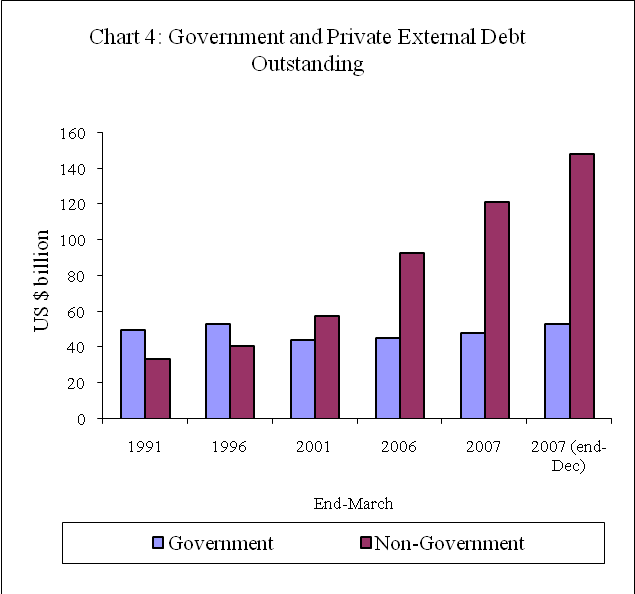
years. As regards the composition of external debt, there has been a distinct
decline in the share of Government debt in total external debt as it has gone
down from 43.4 per cent to 26.3 per cent of total external debt between end-March
2001 and end-December 2007, giving way to non-government private external borrowings
(Chart 4). 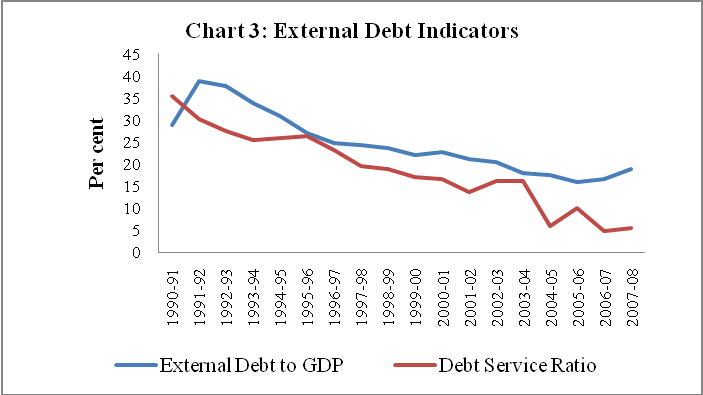
India’s
net international liabilities increased from US $ 47.2 billion at the end of March
2004 to US $ 73.9 billion at the end of December 2007, as the increase in international
liabilities (US $ 222.5 billion) exceeded the increase in international assets
(US $ 195.7 billion) during the period (Chart 5). While the
increase in the liabilities was mainly due to large capital flows under portfolio
investment, FDI and external commercial loans, the increase in international assets
was mainly on account of an increase in reserve assets, followed by direct investment
abroad. A major part of the liabilities, such as direct and portfolio investment
reflects cumulative inflows, which are provided at historical prices. The value
of the liabilities would be much higher if marked to market at current prices.
The share of non-debt liabilities to total external financial liabilities has
witnessed an increasing trend since end-June 2006. It has increased from 42.3
per cent at end June 2006 to 50.8 per cent at end-December 2007 due to large capital
inflows under direct and portfolio equity investments. On the other hand debt
liabilities, which include portfolio investment in debt securities and other investment
(trade credits, loans, currency and deposits and other liabilities) declined from
57.7 per cent to 49.2 per cent during the same period. 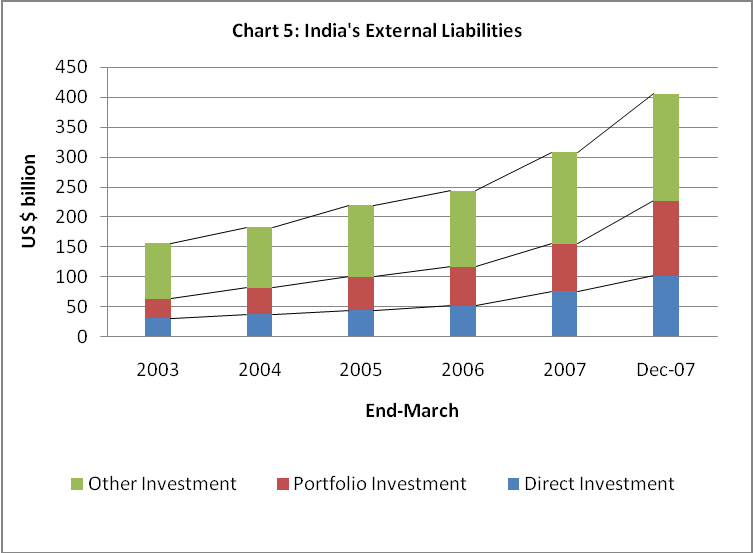
III. Management of Capital Flows in India
The
recent episode of capital flows, which has occurred in the backdrop of current
account surplus in most of the emerging Asian economies, highlights the importance
of absorption of capital flows. A large surge in capital flows over a short span
of time in excess of domestic absorptive capacity of the economy can lead to upward
pressure on the exchange rate, possible overheating of the economy and asset price
bubbles. They can also pose the risk of an abrupt reversal, which may have potential
negative real economic effects. The absorption of capital flows is limited by
the extant magnitude of the current account deficit, which has traditionally been
low in India, and seldom above 2 per cent of GDP. Given this situation, large
capital inflows in excess of a sustained current account deficit are a stress
on the real economy through pressures on exchange rate appreciation and sterilization.
This not only affects exporters, but also affects the profitability of the domestic
producers through pressures on domestic prices, unless productivity goes up commensurately.
Real appreciation of the exchange rate leading to widening of the trade deficit
could also lead to a slowdown in economic and industrial growth. Thus, the combination
of low domestic absorption and high capital inflows have posed new challenges
for monetary and exchange rate management in India. In
the medium term, a continued focus on financial market development would mitigate
the challenge of capital flows. However, it is important to recognize that maturation
of financial markets takes time. Hence, capital flows have to be managed through
other tools in the short term, while continuing to work on development of financial
markets (Reddy 2008a). In response to net capital flows remaining well in excess
of the current account financing need, a multi-pronged approach has been followed
in India to deal with such flows. The policy responses have included, inter alia,
phased liberalization of the policy framework in relation to current as well as
capital account outflows; foreign exchange market intervention and subsequent
sterilization; lowering interest rate ceilings on NRI deposits; management of
external debt through pre-payment and moderation in the access of corporates and
intermediaries to additional external debt; and greater flexibility in exchange
rate movements. III.1
Capital Flows and Exchange Rate Management
In India, with gradual removal of restrictions on international
capital flows and greater integration of financial markets with global financial
markets, the task of understanding the precise nature of casual relationship among
capital flows, exchange rate, interest rate and reactions of monetary policy has
certainly become more complex. The response lag of the exchange rate and domestic
liquidity to monetary policy actions in the form of direct intervention in the
exchange market as well as changes in the short-term policy rates has important
implications for the stability of foreign exchange markets and external price
competitiveness. The importance of capital flows in determining exchange rate
movements has increased considerably, rendering some of the earlier guideposts
of monetary policy formulation possibly anachronistic (Mohan 2007 a). On a day-to-day
basis, it is capital flows which influence the exchange rate and interest rate
arithmetic of the financial markets. Instead of the real factors underlying trade
competitiveness, it is expectations and reactions to news which drive capital
flows and exchange rates, often out of alignment with fundamentals. Capital flows
have been observed to cause overshooting of exchange rates as market participants
act in concert while pricing information. In the Indian case, notwithstanding
the persistence of a large trade deficit, capital flows have led to appreciation
of the exchange rate, indicating the dominance of capital inflows in determining
the exchange rate movements (Chart 6). 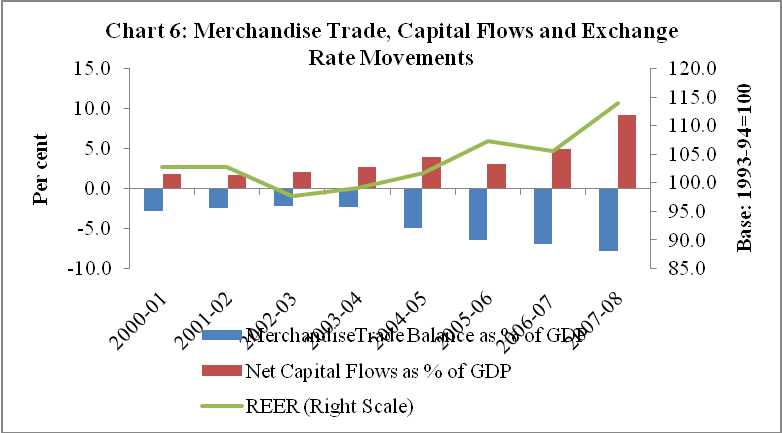
The
experience with capital flows has important lessons for the choice of the exchange
rate regime. The advocacy for corner solutions – a fixed peg without monetary
policy independence or a freely floating exchange rate retaining discretionary
conduct of monetary policy – is distinctly on the decline. The weight of experience
seems to be tilting in favour of intermediate regimes with country-specific features,
without targets for the level of the exchange rate and exchange market interventions
to fight extreme market turbulence. In general, emerging market economies have
accumulated massive foreign exchange reserves as a circuit breaker for situations
where unidirectional expectations become self-fulfilling (Mohan 2006). In
India, since a market-determined exchange rate system was set in place in March,
1993, the exchange rate is largely determined by demand and supply conditions
in the market. The exchange rate policy in recent years has been guided by the
broad principles of careful monitoring and management of exchange rates with flexibility,
without a fixed target or a preannounced target or a band, while allowing the
underlying demand and supply conditions to determine the exchange rate movements
over a period in an orderly way. Subject to this predominant objective, the exchange
rate policy is guided by the need to reduce excess volatility, prevent the emergence
of destabilising speculative activities, maintain adequate level of reserves,
and develop an orderly foreign exchange market. The Indian foreign exchange market,
like other developing countries markets, is not yet very deep and broad, and can
sometimes be characterised by uneven flow of demand and supply over different
periods. In this situation, the Reserve Bank of India has been prepared to make
sales and purchases of foreign currency in order to even out lumpy demand and
supply in the relatively thin forex market and to smoothen jerky movements. However,
such intervention is not governed by a predetermined target or band around the
exchange rate. Over the years, transactions in the Indian
foreign exchange market have experienced tremendous growth. The increase in foreign
exchange market turnover in India, between April 2004 and April 2007 was the highest
amongst the 54 countries covered in the Triennial Central Bank Survey of Foreign
Exchange and Derivatives Market Activity conducted by the Bank for International
Settlements in 2007. According to the survey, the daily average turnover in India
jumped almost 5-fold from US $ 7 billion in April 2004 to US $ 34 billion in April
2007, whereas global turnover over the same period increased by only 66 per cent
from US $ 2.4 trillion to US $ 4.0 trillion. Reflecting these trends, the share
of India in global foreign exchange market turnover trebled from 0.3 per cent
in April 2004 to 0.9 per cent in April 2007. The average daily turnover in Indian
foreign exchange market has almost doubled from US $ 25.8 billion in 2006-07 to
US $ 48.0 billion in 2007-08 (Table 3). Component-wise, the share of the spot
market in total foreign exchange market turnover has declined marginally in the
recent years due to a pick-up in turnover in derivative segment. The merchant
segment of the spot market is generally dominated by the Government of India,
select public sector units, such as Indian Oil Corporation (IOC), and the FIIs.
As the foreign exchange demand on account of public sector units and FIIs tends
to be lumpy and uneven, resultant demand-supply mismatches entail occasional pressures
on the foreign exchange market, warranting market interventions by the Reserve
Bank to even out lumpy demand and supply. However, as noted earlier, such intervention
is not governed by a predetermined target or band around the exchange rate.
Table
3: Average Daily Volume of
Transactions in the Indian Forex Market |
| (US
$ billion) | |
Year |
Spot |
Derivatives* |
Total | |
1997-98 |
2.6 |
2.4 |
5.0 | |
2000-01 |
2.8 |
3.0 |
5.8 | |
2003-04 |
4.3 |
4.4 |
8.7 | |
2004-05 |
5.8 |
5.8 |
11.6 | |
2005-06 |
8.9 |
8.7 |
17.6 | |
2006-07 |
13.4 |
12.4 |
25.8 | |
2007-08 |
23.8 |
24.2 |
48.0 |
*: Includes swap and forward transactions.
Source: Reserve Bank of India. The
public sector oil companies are among the important participants in the financial
markets in India. Therefore, the liquidity and other related issues currently
faced by these entities arising from the unprecedented escalation in international
crude prices have systemic implications for the smooth functioning of financial
markets and for overall financial stability in India. Accordingly, in order to
minimise the potential adverse consequences for financial markets, the Reserve
Bank of India has since end-May 2008 put in place Special Market Operations (SMO),
under which, it (i) conducts open market operations (outright or repo at the discretion
of the Reserve Bank) in the secondary market through designated banks in oil bonds
held by public sector oil marketing companies in their own accounts, currently
subject to an overall ceiling of Rs.15 billion on any single day; and (ii) provides
equivalent foreign exchange through designated banks at market exchange rates
to the oil companies. The SMOs constitute only a fraction of the total turnover
in the money and foreign exchange markets in India but are intended to have the
impact of reducing volatility. Further, the SMOs are likely to improve the access
of public sector oil companies to domestic liquidity and alleviate the lumpy demand
in the foreign exchange market in the current extraordinary situation. Despite
interventions by the Reserve Bank of India in the face of large capital flows,
exchange rate movement in India in the recent period is marked by significant
bi-directional movement, implying greater flexibility (Table 4).
The IMF has observed in its Article IV Consultation Paper: "since the start
of 2007, the BRICs (Brazil, Russia, India and China) have experienced significant
REER appreciation. Most of the real appreciation in 2007 for India and Brazil
came from nominal appreciation, whereas China and Russia had inflation-led appreciation".
Moreover, the volatility of the exchange rate of India has become almost similar
to the volatilities of exchange rates observed from the countries with managed
float exchange rate regime over the years. Table
4: Movements of Indian Rupee | |
Year |
Range
(Rs per US $) |
Average
(Rs per US $) |
Standard Deviation |
| 1993-94 |
31.21-31.49 |
31.37 |
0.05 | |
1994-95 |
31.37-31.97 |
31.40 |
0.12 | |
1995-96 |
31.37-37.95 |
33.45 |
0.56 | |
1996-97 |
34.14-35.96 |
35.50 |
0.21 | |
1997-98 |
35.70-40.36 |
37.16 |
0.37 | |
1998-99 |
39.48-43.42 |
42.07 |
0.24 | |
1999-00 |
42.44-43.64 |
43.33 |
0.10 | |
2000-01 |
43.61-46.89 |
45.68 |
0.15 | |
2001-02 |
46.56-48.85 |
47.69 |
0.13 | |
2002-03 |
47.51-49.06 |
48.40 |
0.07 | |
2003-04 |
43.45-47.46 |
45.92 |
0.19 | |
2004-05 |
43.36-46.46 |
44.95 |
0.31 | |
2005-06 |
43.30-46.33 |
44.28 |
0.22 | |
2006-07 |
43.14-46.97 |
45.28 |
0.27 | |
2007-08 |
39.26-43.15 |
40.24 |
0.38 |
III.
2 Capital Flows and Monetary Management Capital
flows and Liquidity Management In
the recent period, in India, one of the most serious challenges to the conduct
of monetary policy emerges from capital flows in view of significantly higher
volatility of such flows as well as the fact that capital flows in gross terms
are much higher than those in net terms. Swings in capital flows can have significant
impact on exchange rates, domestic monetary and liquidity conditions and overall
macroeconomic and financial stability (Mohan 2007a). This has warranted appropriate
monetary operations to obviate wide fluctuations in market rates and ensure reasonable
stability consistent with the monetary policy stance. In fact, the Indian experience
illustrates the tight link between external sector management and domestic monetary
management (Mohan 2006). In India, with a view to neutralising
the impact of excess forex flows on account of large capital account surplus,
the central bank has intervened in the foreign exchange market in regular intervals.
But unsterilised forex market intervention can result in inflation, loss of competitiveness
and attenuation of monetary control. The loss of monetary control could be steep
if such flows are large. Therefore, it is essential that the monetary authorities
take measures to offset the impact of such foreign exchange market intervention,
partly or wholly, so as to retain the intent of monetary policy through such intervention.
Most techniques to offset the impact of forex inflows can be classified as either
market based or non-market based approaches. The market based approach involves
financial transactions between the central bank and the market, which leads to
withdrawal or injection of liquidity, as the case may be. The non-market based
approach involves the use of quantitative barriers, rules or restrictions in market
activity, which attempt to keep the potential injection of liquidity outside the
domestic financial system. The market based approach aimed at neutralising part
or whole of the monetary impact of foreign inflows is termed as sterilisation. In
India, the liquidity impact of large capital inflows was traditionally managed
mainly through the repo and reverse repo auctions under the day-to-day Liquidity
Adjustment Facility (LAF). The LAF operations were supplemented by outright open
market operations (OMO), i.e. outright sales of the government securities, to
absorb liquidity on an enduring basis. In addition to LAF and OMO, excess liquidity
from the financial system was also absorbed through the building up of surplus
balances of the Government with the Reserve Bank, particularly by raising the
notified amount of 91-day Treasury Bill auctions, and forex swaps. The
market-based operations led to a progressive reduction in the quantum of securities
with the Reserve Bank. This apart, as per those operations, the usage of the entire
stock of securities for outright open market sales was constrained by the allocation
of a part of the securities for day-to-day LAF operations as well as for investments
of surplus balances of the Central Government, besides investments by the State
Governments in respect of earmarked funds (CSF/GRF) while some of the government
securities were also in non-marketable lots. In the face of large capital flows
coupled with declining stock of government securities, the Reserve Bank of India
introduced a new instrument of sterilisation, viz., the Market Stabilisation Scheme
(MSS) to sustain market operations (Box I). Since its introduction
in April 2004, the MSS has served as a very useful instrument for medium term
monetary and liquidity management.
Box
I : Introduction of MSS In
view of the finite stock of government securities available with the Reserve Bank
for sterilisation, particularly, as the option of issuing central bank securities
is not permissible under the RBI Act, the Working Group on Instruments of Sterilisation
(2004) recommended that the Central Government could issue a special variety of
bills/bonds for sterilisation purposes. Unlike in the case of central bank securities
where the cost of sterilisation is borne indirectly by the fisc, the cost of issuance
of such instruments by the Government would be directly and transparently borne
by the fisc. The Committee recommended that to operationalise such a new instrument
of sterilisation and ensure fiscal transparency, the Central Government may consider
setting up a Market Stabilisation Fund (MSF) to be created in the Public Account.
This Fund could issue new instruments called Market Stabilisation Bills/Bonds
(MSBs) for mopping up enduring surplus liquidity from the system over and above
the amount that could be absorbed under the day to day repo operations of LAF. Based
on above recommendation, a new instrument named as the Market Stabilisation Scheme
(MSS) has been made operational from April 2004. Under this scheme, which is meant
exclusively for sterilization purposes, the Reserve Bank has been empowered to
issue Government Treasury Bills and medium duration dated securities for the purpose
of liquidity absorption. The scheme works by impounding the proceeds of auctions
of Treasury bill and Government securities in a separate identifiable MSS cash
account maintained and operated by the RBI. The amounts credited into the MSS
cash Account are appropriated only for the purpose of redemption and / or buy
back of the Treasury Bills and / or dated securities issued under the MSS. MSS
securities are indistinguishable from normal Treasury Bills and Government dated
securities in the hands of the lender. The payments for interest and discount
on MSS securities are not made from the MSS Account, but shown in the Union budget
and other related documents transparently as distinct components under separate
subheads. The introduction of MSS has succeeded broadly in restoring LAF to its
intended function of daily liquidity management. Since
its introduction in April 2004, the MSS has served as a very useful instrument
for medium term monetary and liquidity management. It has been unwound at times
of low capital flows and built up when excess capital flows could lead to excess
domestic liquidity (Mohan 2006). MSS
Balances (Rs.
billion) | | | 2004-05 | 2005-06 | 2006-07 | 2007-08 | | Interest
Payments | 20.6 | 34.2 | 26.1 | 83.5 | | Outstanding
Amount | 642.1 | 290.6 | 629.7 | 1,683.9 |
Note:
MSS Outstanding balance as on July 11, 2008 was Rs. 1,714.8 billion.
Source:
Union Finance Accounts, Union Budget Documents
and Reserve Bank of India. |
In India, in
addition to various market-based instruments of sterilization, such as, LAF, OMO,
MSS, balances of Government of India with the Reserve Bank, Forex swaps and private
placements for pre-payment of external loans, the RBI has also taken recourse
to increasing the cash reserve ratio for banks for withdrawing excess liquidity
from the system. In recognition of the cumulative and lagged effects of monetary
policy, pre-emptive monetary tightening measures have also been put in effect
since September 2004 and continued during 2006-07, 2007-08 and 2008-09 in part,
to manage monetary effects of excess capital flows. Since September 2004, the
repo rate and the reverse repo rate have been increased by 250 and 150 basis points,
respectively, while the cash reserve ratio (CRR) has been raised by 400 basis
points. In the context of large capital inflows and implications for liquidity
and monetary management, the interest rate ceilings on various non-resident deposit
schemes have been reduced by 75-100 basis points since January 2007 to discourage
greater inflows in these accounts.
Cost of Sterilisation In
the choice of instruments for sterilisation, it is important to recognise the
benefits from and the costs of sterilisation in general and the relative costs/benefits
in the usage of a particular instrument. The various instruments have differential
impact on the balance sheets of the central bank, government and the financial
sector. For example, in the case of OMO sales, the differential between the yield
on government securities and return on foreign exchange assets is the cost to
the Reserve Bank. Sales of government securities under OMO also involve a transfer
of market risks to the financial intermediaries, mostly banks. The repo operations
under LAF have a direct cost to the Reserve Bank. In the context of an increase
in CRR, the cost is borne by the banking sector if CRR balances are not remunerated.
However, if the CRR balances are remunerated, the cost could be shared between
the banking sector and the Reserve Bank. The extent of capital flows to be sterilised
and the choice of instruments, thus, also depend upon the impact on the balance
sheets of these entities. The cost of sterilisation in India
is shared by the Central Government (the cost of MSS), Reserve Bank (sterilization
under LAF) and the banking system (in case of increase in the reserve requirements).
Since surpluses of the Reserve Bank are transferred to the Central Government,
on a combined balance sheet basis, the relative burdens of cost between the Government
and Reserve Bank are not of great relevance. However, the direct cost borne by
the Government is transparently shown in its budget accounts. Owing to the difference
between international and Indian interest rates, there is a positive cost of sterilisation
but the cost has to be traded-off with the benefits associated with market stability,
export competitiveness and possible crisis avoidance in the external sector. Sterilized
interventions and interest rate policy are generally consistent with overall monetary
policy stance that is primarily framed on the basis of the domestic macro-economic
outlook. III. 3 Capital Account Liberalisation
It is interesting to note that a number of empirical studies
do not find evidence that greater openness and higher capital flows lead to higher
growth (eg. Prasad, Rajan and Subramanian, 2007). These authors find that there
is a positive correlation between current account balances and growth among nonindustrial
countries, implying that a reduced reliance on foreign capital is associated with
higher growth. Alternative specifications do not find any evidence of an increase
in foreign capital inflows directly boosting growth. The results could be attributed
to the fact that even successful developing countries have limited absorptive
capacity for foreign resources, either because their financial markets are underdeveloped,
or because their economies are prone to overvaluation caused by rapid capital
inflows. Thus, a cautious approach to capital account liberalization would be
useful for macroeconomic and financial stability (Mohan 2008). Henry
(2007) argues that the empirical methodology of most of the existing studies is
flawed since these studies attempt to look for permanent effects of capital account
liberalisation on growth, whereas the theory posits only a temporary impact on
the growth rate. Once such a distinction is recognised, empirical evidence suggests
that opening the capital account within a given country consistently generates
economically large and statistically significant effects, not only on economic
growth, but also on the cost of capital and investment. The beneficial impact
is, however, dependent upon the approach to the opening of the capital account,
in particular, on the policies in regard to liberalisation of debt and equity
flows. Recent research demonstrates that liberalization of debt flows—particularly
short-term, dollar-denominated debt flows—may cause problems. On the other hand,
the evidence indicates that countries derive substantial benefits from opening
their equity markets to foreign investors. India has cautiously
opened up its capital account since the early 1990s as the policy makers realized
that to meet the huge investment needs of the country domestic savings needs to
be supplemented with foreign savings. However, in liberalizing its capital account,
India has adopted a discriminatory approach towards various forms of capital flows.
The Ministry of Finance, in its review of the trends in receipts and expenditures
at the end of the second quarter of the financial year 2007-08 mentioned that
direct foreign investment is the most preferred form of foreign capital flow.
Investments in Indian firms through the stock market and by venture capital firms
in unlisted companies are also potentially beneficial. External commercial borrowings
and other short term flows are areas where one can introduce an element of control
to moderate sudden surges. Accordingly, the thrust of policy reform in India was
in favour of a compositional shift in capital flows away from debt to non-debt
creating flows, viz., FDI and foreign portfolio investment; strict regulation
of external commercial borrowings, especially short term debt; discouraging volatile
element of flows from non-resident Indians; and gradual liberalization of outflows.
The present status of the various policy measures taken in India to manage the
capital account is given at Annex 1A and 1B. India
has followed a gradualist approach to liberalization of its capital account. The
status of capital account convertibility in India for various non-residents is
as follows: for foreign corporate and foreign institutions, there is a reasonable
amount of convertibility; for non-resident Indians (NRIs) there is approximately
an equal amount of convertibility, but one accompanied by some procedural and
regulatory impediments. For non-resident individuals other than NRIs there is
near-zero convertibility. Movement towards fuller capital account convertibility
(FCAC) implies that all non-residents (corporate and individuals) should be treated
equally. As mentioned earlier, recognising the merits in moving towards fuller
capital account convertibility, the Reserve Bank of India in consulation with
the Government of India, appointed the Committee on Fuller Capital Account Convertibility
in March 2006. The Committee has set out the conditions that would be concomitant
to move towards fuller capital account convertibility. The Committee has made
several recommendations on the development of financial markets in addition to
addressing issues related to interaction of monetary policy and exchange rate
management, regulation/supervision of banks and the timing and sequencing of capital
account liberalization measures. Measures towards fuller capital account convertibility
as recommended by the Committee are provided at Annex 2.
Accordingly, the Reserve
Bank of India has implemented a number of measures, e.g., enhancement of limit
of the remittance, liberalization of Exchange Earners' Foreign Currency Accounts,
liberalization of procedures for project and service exports, enhancement of banks'
overseas borrowings, increase in access of ECBs, establishment of corporate offices
abroad, enhancement of FIIs' investment in Government Securities, enhancement
of ceiling on Mutual Funds overseas investment, and liberalization of forward
contract regulations, etc based on the recommendations made by the Committee.
In view of the large capital
flows during the last few years, recently, the Government of India and the Reserve
Bank have taken some additional capital account measures aimed at limiting the
implications of forex flows for the conduct of domestic monetary policy. In February
2003, the Government pre-paid a part of its high cost external debt amounting
to US $ 3.03 billion to the Asian Development Bank and the World Bank by privately
placing marketable securities with the Reserve Bank. This apart, relaxations were
effected in regard to outflows, both under the current and capital accounts (Box
II). At the same time measures were taken to manage debt inflows, especially
ECB and NRI deposits.
| Box
II: Recent Measures Towards Liberalization of Capital Outflows from India
- Investment in overseas
Joint Ventures (JV) / Wholly Owned Subsidiaries (WOS) by Indian companies have
been permitted up to 400 per cent of the net worth of the Indian company under
the Automatic Route.
- Indian companies have been allowed
to invest in energy and natural resources sectors such as oil, gas, coal and mineral
ores in excess of the current limits with the prior approval of the Reserve Bank
of India.
- Listed Indian companies have been allowed
for portfolio investment abroad up to 50 per cent of the net worth from the earlier
limit of 35 per cent of the net worth.
- The earlier
limit for prepayment of External Commercial borrowings (ECBs) without the Reserve
Bank approval have been increased from USD 400 million to USD 500 million, subject
to compliance with the minimum average maturity period as applicable to the loan.
- The
aggregate ceiling for overseas investments by mutual funds registered with SEBI
has been increased from USD 5 billion to USD 7 billion.
- The
earlier limit under Liberalised Remittance Scheme (LRS) has been enhanced from
USD 100,000 to USD 200,000 per financial year.
|
In
addition, changes in policies are made from time to time to modulate the debt-creating
capital flows depending on the financing needs of the corporate sector and vulnerability
of the domestic economy to external shocks. Recently, to facilitate easy access
of Indian corporates to foreign funds, the Reserve Bank of India has increased
the limit on ECBs for Rupee expenditure for permissible end-uses under the Approval
Route to US $ 100 million for borrowers in infrastructure sector and to US $ 50
million for other borrowers from earlier limit of US $ 20 million per financial
year, with effect from May 29, 2008. The all-in-cost interest rate ceiling for
ECBs and trade credits for imports into India have been raised upwards. Effective
from June 2, 2008, entities in the services sector, viz. hotels, hospitals and
software companies, are allowed to avail ECB up to US $ 100 million, per financial
year, for the purpose of import of capital goods under the Approval Route. The
limits for investment of the FIIs in the Indian debt market have been revised
upwards from US $ 4.7 billion (US $ 3.2 billion in G-secs and US $ 1.5 billion
in corporate bonds) to US $ 8.0 billion (US $ 5.0 billion in G-secs and US $ 3.0
billion in corporate bonds).
IV. Issues and Challenges
The management of capital
flows is a complex process encompassing a spectrum of policy choices, which inter
alia include: the appropriate level of reserves, monetary policy objectives related
to liquidity management and maintenance of healthy financial market conditions
with financial stability. The intensified pressures due to large and volatile
capital flows in the recent period in an atmosphere of global uncertainties make
the task significantly complex and critical (Reddy 2008b). India’s Finance Minister
while referring to "Managing Capital Flows" in the Mid-Year Review of
2007-08, dated December 7, 2007 stated that: "While
there are international experiences in this regard with some successful and painful
adjustment process, the specific Indian context requires innovative policy responses.
Going forward, this would be a major challenge". In
view of the above, some of the major issues as well as emerging challenges in
respect of management of capital flows to India include the following:
- In the face of large and volatile
capital flows, the problem for monetary management is two-fold. First, it had
to distinguish implicitly between durable flows and transient flows. If capital
flows are deemed to be durable and indefinite, questions arise regarding foreign
exchange management. If the flows are deemed to be semi-durable, essentially reflecting
the business cycle, the task of monetary and liquidity management is to smoothen
out their impact on the domestic economy, finding means to absorb liquidity in
times of surplus and to inject it in times of deficit. Second, in the short term,
daily, weekly or monthly volatility in flows needs to be smoothened to minimise
the effect on domestic overnight interest rates. In practice, ex-ante, it is difficult
to distinguish what is durable, what is semi-durable and what is transient. Hence
policy and practice effectively operates in an environment of uncertainty and
a variety of instruments have to be used to manage liquidity in this fluid scenario.
- The
challenges for monetary policy with an open capital account get exacerbated if
domestic inflation firms up. In the event of demand pressures building up, increases
in interest rates might be advocated to sustain growth in a non-inflationary manner
but such action increases the possibility of further capital inflows if a significant
part of these flows is interest sensitive and explicit policies to moderate flows
are not undertaken. These flows could potentially reduce the efficacy of monetary
policy tightening by enhancing liquidity. Such dilemmas complicate the conduct
of monetary policy in India if inflation exceeds the indicative projections. During
2006-07, 2007-08 and 2008-09 so far, as domestic interest rates in India hardened
on the back of withdrawal of monetary accommodation, external foreign currency
borrowings by domestic corporates witnessed a significant jump in India, leading
to even higher flows. In case, there are no restrictions on overseas borrowings
by banks and financial institutions, such entities could also annul the efforts
of domestic monetary tightening.
- As
far as the exchange rate is concerned, the large inflow of remittances and major
and sustained growth in software exports coupled with capital inflows have the
potential for possible overvaluation of the currency and the resultant erosion
of long-term competitiveness of other traditional and goods sectors – a problem
popularly known as the Dutch disease. Given the fact that more people are in the
goods sector, the human aspects of the exchange rate management should not be
lost sight of. The Dutch Disease syndrome has so far been managed by way of reserves
build-up and sterilisation, the former preventing excessive nominal appreciation
and the latter preventing higher inflation. However, the issue remains how long
and to what extent such an exchange rate management strategy would work given
the fact that we are faced with large and continuing capital flows apart from
strengthening current receipts on account of remittances and software exports.
This issue has assumed increased importance over the last year with increased
capital flows arising from the higher sustained growth performance of the economy
and significant enhancement of international confidence in the Indian economy
(Mohan 2007 a).
- A
related issue is whether there should be sterilised intervention and if so, the
timing and quantum of such interventions. There is usually a cost attached to
sterilisation operations. At the same time, it is also necessary to assess the
indirect cost of not sterilising if there are signs of a ‘Dutch disease’ caused
by flows in the capital account. Most often, it is not a question of whether to
sterilise or not, but how much to sterilise. That is an important issue of judgment
that needs to be made in conjunction with domestic monetary and liquidity conditions.
- Even
when capital flows are sterilised through open market operations the costs could
be large when sterilisation operations raise domestic interest rates and result
in the trap of even greater capital flows. The fiscal impact of sterilisation
also requires to be factored in, specially when a large stock of securities is
required to be issued for the purpose.
- Another
issue relates to the choice and an appropriate mix of instruments for sterilisation.
Each instrument, namely, MSS, LAF and CRR has different features and interactions.
Utilisation of each of these will also depend on what is the permanency of the
components of the flows and how they should be sterilised in the aggregate. Further,
each instrument can be used in different ways. The LAF is able to take care of
very short period flows. The MSS handles the longer term flows slightly better
than the LAF, and the CRR is more appropriate for addressing fairly longer term
flows. However, effectiveness of the MSS will depend more on the initiatives of
the market participants than on the decisions of the Reserve Bank. Operationally,
the issue is often not ‘which’ instrument but ‘how much’ of each instrument needs
to be utilised, with due regard to the capital flows, market conditions, and monetary
as well as credit developments.
- While
interventions are carried out with the objective of containing volatility in the
forex market, intervention over a long period, especially when the exchange rate
is moving in one direction, could make interventions less effective. However,
a critical question is what would be the impact on expectations about future movements
in forex markets if no intervention takes place. The challenges of intervention
and management of expectations will be particularly daunting when financial contagion
occurs, since such events are characterised by suddenness, high speed and large
magnitudes of unexpected flows, in either direction. The quintessence for a relevant
monetary policy is the speed of adjustment of the policy measures to rapidly changing
situations.
- A
further challenge for policy in the context of fuller capital account openness
will be to preserve the financial stability of the system as greater deregulation
is done on capital outflows and on debt inflows. This will require market development,
enhancement of regulatory capacity in these areas, as well as human resource development
in both financial intermediaries and non-financial entities.
- Another aspect of greater capital market openness
concerns the presence of foreign banks in India. With fuller capital account convertibility
and greater presence of foreign banks over time, a number of issues will arise.
First, if these large global banks have emerged as a result of real economies
of scale and scope, how will smaller national banks compete in countries like
India, and will they themselves need to generate a larger international presence?
Second, there is considerable discussion today on overlaps and potential conflicts
between home country regulators of foreign banks and host country regulators:
how will these be addressed and resolved in the years to come? Third, given that
operations in one country such as India are typically small relative to the global
operations of these large banks, the attention of top management devoted to any
particular country is typically low. Consequently, any market or regulatory transgressions
committed in one country by such a bank, which may have a significant impact on
banking or financial market of that country, is likely to have negligible impact
on the bank's global operations. It has been seen in recent years that even relatively
strong regulatory action taken by regulators against such global banks has had
negligible market or reputational impact on them in terms of their stock price
or similar metrics. Thus, there is loss of regulatory effectiveness as a result
of the presence of such financial conglomerates. Hence, there is inevitable tension
between the benefits that such global conglomerates bring and some regulatory
and market structure and competition issues that may arise.
V.
Outlook
Recent
global developments have considerably heightened the uncertainty surrounding the
outlook on capital flows to India, complicating the conduct of monetary and liquidity
management. In view of the strong fundamentals of the economy and massive injections
of liquidity by central banks in advanced economies, there could be sustained
inflows, as in the recent past. If the pressures intensify, it may necessitate
stepped up operations in terms of capital account management and more active liquidity
management with all instruments at the command of the Reserve Bank. At the same
time, it is necessary in the context of recent global events not to exclude the
possibility of reversals of capital flows due to any abrupt changes in sentiments
or global liquidity conditions. In this scenario, it is important to be ready
to deal with potentially large and volatile outflows along with spillovers. In
this context, there is headroom with the Reserve Bank to deal with both scenarios
in terms of the flexibility in the deployment of instruments such as the MSS,
the CRR, the SLR and the LAF for active liquidity management in both directions,
complemented by prudential regulations and instruments for capital account management.
Reference: Bank
for International Settlements (2007), The Triennial Central Bank Survey of Foreign
Exchange and Derivatives Market Activity. Government of
India (1993), High Level Committee on Balance of Payments (Chairman: C. Rangarajan),
Ministry of Finance. Government of India (2007), Mid-Year
Review 2007-08. Henry,
Peter Blair (2007), "Capital Account Liberalization: Theory, Evidence, and
Speculation", Journal of Economic Literature, Vol. XLV, December. Mohan,
Rakesh (2008), "The Growth Record of the Indian Economy, 1950-2008: A Story
of Sustained Savings and Investment", Keynote Address at the Conference "Growth
and Macroeconomic Issues and Challenges in India" organised by the Institute
of Economic Growth, New Delhi on February 14. Mohan, Rakesh
(2007a), "Capital Account liberalization and Conduct of Monetary Policy:
The Indian Experience", paper presented at an International Monetary Seminar
organized by Banque de France on Globalisation, Inflation and Financial Markets
in Paris on June 14. Mohan, Rakesh (2007b), " Monetary
Management in Emerging Market Economies: Concerns and Dilemmas", comments
made at Policy Panel at the NBER Conference on International Dimensions of Monetary
Policy at S’Agaro, Catalino, Spain on June 12, 2007. Mohan,
Rakesh (2006), "Monetary Policy and Exchange Rate Frameworks: The Indian
Experience", paper presented at the Second High Level Seminar on Asian Financial
Integration organised by the International Monetary Fund and Monetary Authority
of Singapore, in Singapore on May 25, 2006, RBI Bulletin. Mohan,
Rakesh (2005), "Some Apparent Puzzles for Contemporary Monetary Policy",
paper presented at the Conference on China’s and India’s Changing Economic Structures:
Domestic and Regional Implications, Beijing, China, RBI Bulletin, December. Prasad,
Eswar S., Raghuram G. Rajan and Arvind Subramanian (2007), "Foreign Capital
and Economic Growth", Brookings Papers on Economic Activity, 1. Reddy,
Y.V. (2008a), "Financial Globalisation, Growth and Stability: An Indian Perspective",
Lecture delivered at the International Symposium of the Banque de France on Globalisation,
Inflation and Monetary Policy, held in Paris on March 7, 2008. Reddy,
Y.V. (2008b), "Management of the Capital Account in India: Some Perspectives",
Inaugural address delivered at the Annual Conference of the Indian Econometric
Society, Hyderabad on January 3, 2008. Reddy, Y.V (2007),
"Monetary Policy Developments in India - an Overview", address made
at the Sveriges Riksbank, Stockholm, Sweden on September 7, 2007. Reddy,
Y.V (2005), "Overcoming Challenges in a Globalising Economy: Managing India’s
External Sector", lecture delivered at the Indian Programme of The Foreign
Policy Centre, London on June 23, 2005. Reserve Bank of
India (2008), Annual Policy Statement for the Year 2008-09. Reserve
Bank of India (2007), Annual Report for 2006-07. Reserve
Bank of India (2007), Handbook of Statistics on the Indian Economy, 2006-07. Reserve
Bank of India (2006), ‘Report of the Committee on Fuller Capital Account Convertibility’,
(Chairman: S.S. Tarapore). Reserve Bank of India (2004),
‘Report of the Working Group on Instruments of Sterilisation’ (Chairman: Smt.
Usha Thorat). Reserve Bank of India (1997), ‘Report of the
Committee on Capital Account Convertibility’, (Chairman: S.S. Tarapore).
Annex 1A: Measures
to Manage Capital Inflows
| Item |
Current Regulations |
| Foreign
Direct Investments |
FDI is permitted under the Automatic
Route in items / activities in all sectors up to the sectoral caps except in certain
sectors where investment is prohibited. Investments not permitted under
the automatic route require approval from Foreign Investment Promotion Board (FIPB).
The receipt of remittance has to be reported to RBI within 30 days from the date
of receipt of funds and the issue of shares has to be reported to RBI within 30
days from the date of issue by the investee company. | |
Advance against equity |
An Indian company issuing shares
to a person resident outside India can receive such amount in advance. The amount
received has to be reported within 30 days from the date of receipt of funds There
is no provision on allotment of shares within a specified time. The banks can
refund the amount received as advance, provided they are satisfied with the bonafides
of the applicant and they are satisfied that no part of remittance represents
interest on the funds received. |
| Foreign
Portfolio Investments -
FIIs | Investment
by non residents is permitted under the Portfolio Investment Scheme to entities registered
as FIIs and their sub accounts under SEBI (FII) regulations. Investment
by individual FIIs is subject to ceiling of 10 percent of the PUC of the company
and limit for aggregate FII investment is subject to limit of 24 percent of PUC
of the company. This limit can be increased by the company subject to the sectoral
limit permitted under the FDI policy. The transactions
are subject to daily reporting by designated ADs to RBI for the purpose of monitoring
the adherence to the ceiling for aggregate investments. | |
Foreign Portfolio Investments -
NRIs | The
investment by NRIs under the Portfolio Investment Scheme is restricted to 5% by
individual NRIs/OCBs and 10% in aggregate (which can be increased to 24 percent
by the company concerned). | |
Issue of ADR/GDR |
Indian companies are allowed to raise
resources through issue of ADR/GDR and the eligibility of the issuer company is
aligned with the requirements under the FDI policy. The
issue of Sponsored ADR/GDR requires prior approval of the Ministry of Finance. A
limited Two-way Fungibility scheme has been put in place by the Government of
India for ADRs/GDRs. Under this Scheme, a stock broker in India, registered with
SEBI, can purchase shares of an Indian company from the market for conversion
into ADRs/GDRs based on instructions received from overseas investors. Reissuance
of ADRs / GDRs would be permitted to the extent of ADRs/GDRs which have been redeemed
into underlying shares and sold in the Indian market. | |
Investment in Mutual Fund |
FIIs and NRIs are allowed to invest
in units of mutual fund without any limit. | |
Investments in Government Securities
and T-BIlls | FIIs
are eligible to invest in these instruments within an overall limit of US $ 5
billion. NRIs are allowed to invest in these instruments
without any limit (both on repatriation and non repatriation basis). Multilateral
institutions who have been allowed to float rupee bonds can invest in these instruments. |
| Investment
in Corporate Debt | FIIs
are permitted to invest in corporate debt within an overall limit of US $ 3 billion. |
| Investment
in Commercial Paper (CP) |
FIIs are allowed to invest in CPs
subject to the limit applicable to corporate debt. NRIs
are allowed to invest in CPs on non repatriation basis.
| | Investments
in Upper Tier-II instruments by Indian Banks |
Investment by FIIs in Upper Tier
II instruments raised in Indian Rupees is allowed subject to a separate ceiling
of US $ 500 million. | |
Investment in other debt instruments
| NRIs
are allowed to invest in non convertible debentures floated by Indian companies
by way of a public issue. There is no limit on investment by NRIs in these instruments. |
| Foreign
Venture Capital Investors (FVCI) |
FVCIs registered with SEBI are allowed
to invest in units of venture capital funds without any limit. FVCI
investment in equity of Indian venture capital undertakings is also allowed. The
limit for such investments would be based on the sectoral limits under the FDI
policy. FVCIs are also allowed to invest in debt instruments
floated by the IVCUs. There is no separate limit stipulated for investment in
such instruments by FVCIs. | |
ECB |
Under the Automatic Route, ECB up
to US $ 500 million per borrowing company per financial year is permitted only
for foreign currency expenditure for permissible end-uses of ECB. Borrowers
in infrastructure sector may avail ECB up to USD 100 million for Rupee expenditure
for permissible end-uses under the Approval Route. In case of other borrowers,
the limit for Rupee expenditure for permissible end-uses under the Approval Route
has been enhanced to USD 50 million from earlier limit of US $ 20 million. Entities
in the services sector, viz., hotels, hospitals and software companies have been
allowed to avail ECB up to US $ 100 million, per financial year, for the purpose
of import of capital goods under the Approval Route. The
all-in-cost interest ceiling for borrowings with maturity of 3-5 years has been
increased from 150 basis points over 6-month LIBOR to 200 basis points over 6-month
LIBOR. Similarly, the interest ceiling for loans maturing after 5 years period
has been raised to 350 basis points over 6-month LIBOR from 250 basis points over
6-month LIBOR. | |
Trade Credit |
Import linked short term loans (Trade
credit) up to US $20 million per import transaction for all permissible imports
with a maturity period of 1 year is allowed under the automatic route. Trade credit
up to US$20 million per import transaction with maturity period less than 3 years
is allowed for import of capital goods under the automatic route. |
| Delayed
Import Payments | In
case of delayed import payments due to disputes and financial difficulties, ADs
can remit the amount subject to all-in-cost ceiling of LIBOR plus 50 bps for period
up to 1 year and LIBOR plus 125 bps for period less than 3 years. However, interest
payment for delayed payment of trade credit can be made for period less than 3
years. | | Export
Advance | Export
advance can be availed for 12 months. Rate of Interest for export advance up to
1 year is LIBOR plus 100 bps. | |
Bank borrowing overseas |
Restricted to 25% of Tier I or US$
10 million whichever is higher. Borrowings for export finance and subordinated
debt are outside this ceiling. | |
Investments by NRIs in Immoveable
Property | The
NRIs are permitted to freely acquire immoveable property (other than agricultural
land, plantations and farmhouses). There are no restrictions regarding the number
of such properties to be acquired. The only restriction is that where the property
is acquired out of inward remittances, the repatriation is restricted to principal
amount for two residential properties. [There is no such restriction in respect
of commercial property] NRIs are also permitted to avail
of housing loans for acquiring property in India and repayment of such loans by
close relatives is also permitted. |
Annex
1B: Measures to Manage Capital Outflows
| Item
| Current
Regulations | |
Direct investment overseas by
corporates and registered partnerships |
Allowed up to 400% of the net worth
under automatic route. With a view to provide greater flexibility
to Indian parties for investment abroad, it has been decided to allow Indian companies
to invest in excess of 400 per cent of their net worth, as on the date of the
last audited balance sheet, in the energy and natural resources sectors such as
oil, gas, coal and mineral ores with the prior approval of the Reserve Bank. AD
Category–I banks may allow remittance up to 400 per cent of the net worth of the
Indian entities to invest in overseas unincorporated entities in oil sector after
ensuring that the proposal has been approved by the competent authority and is
duly supported by a certified copy of the Board Resolution approving such investment. |
| Direct
investment overseas by exporter proprietorships |
Specific approval subject to conditions. |
| Portfolio
investment by Indian listed companies |
Allowed up to 50% of the net worth
in listed shares and rated and listed debt instruments. | |
Individuals (i)
LRS
Foreign security acquisition (ii) Qualification shares
(iii) Shares of JV/WOS abroad by director of Indian employee/
parent (software only) (iv) ADR/GDR of Indian company in
knowledge based sector by employees/ working directors v)
ESOP, inheritance |
i) $200,000 for permissible
capital and current accounts during a financial year.
ii)
1% of share capital with remittance restricted to $20000 iii)
$10000 per employee in block of 5 years
iv)
$50000 in block of 5 years
v)
Permitted
| | Domestic
Mutual Funds in various overseas instruments |
The MF can now invest overseas upto
US $ 7 billion in a wide range of instruments. | |
Venture capital funds in venture
capital undertakings |
US$ 500 million. |
| ECB |
Prepayment of ECB up to US$ 500 million
can be allowed by AD Category - I banks without prior approval of the Reserve
Bank subject to compliance with the minimum average maturity period as applicable
to the loan. | |
Lending by Indian subsidiary to
overseas parent |
Case by case. | |
Bank lending overseas subsidiaries
of Indian companies |
Restricted to 20% of net worth and
to JVs/WOS of Indian companies with at least 51% Indian share holding. |
Annex
2 Measures
Towards Fuller Capital Account Convertibility Recommendations
by Tarapore Committee (2006) (i)
The Committee recommends that the overall ECB ceiling as also the ceiling for
automatic approval should be gradually raised. Rupee denominated ECB (payable
in foreign currency) should be outside the ECB ceiling. (ii)
The Committee has concerns about the volume of trade credit as there could be
sudden changes in the availability of such credit. Furthermore, there are concerns
as to whether the trade credit numbers are fully captured in the data even while
noting that suppliers’ credit of less than 180 days are excluded from these data.
Import-linked short-term loans should be monitored in a comprehensive manner.
The per transaction limit of US$ 20 million should be reviewed and the scheme
revamped to avoid unlimited borrowing. (iii) Recognising
that Indian industry is successfully building up its presence abroad, there is
a strong case for liberalising the present limits for corporate investment abroad.
The Committee recommends that the limits for such outflows should be raised in
phases from 200 per cent of net worth to 400 per cent of net worth. Furthermore,
for non-corporate businesses, it is recommended that the limits should be aligned
with those for corporates. (iv) EEFC Account holders should
be provided foreign currency current/savings accounts with cheque writing facility
and interest bearing term deposits. (v) Project exports
should be provided greater flexibility and these facilities should be also provided
for service exports. (vi) FIIs should be prohibited from
investing fresh money raised through PNs. Existing PN-holders may be provided
an exit route and phased out completely within one year. (vii)
The Committee recommends that non-resident corporates should be allowed to invest
in the Indian stock markets through SEBI-registered entities including mutual
funds and Portfolio Management Schemes who will be individually responsible for
fulfilling Know your Customer (KYC) and Financial Action Task Force (FATF) norms.
The money should come through bank accounts in India. (viii)
At present, only multilateral institutions are allowed to raise rupee bonds in
India. To encourage, selectively, the raising of rupee denominated bonds, the
Committee recommends that other institutions/corporates should be allowed to raise
rupee bonds (with an option to convert into foreign exchange) subject to an overall
ceiling which should be gradually raised. (ix) The banks’
borrowing facilities are at present restrictive though there are various special
facilities which are outside the ceiling. The Committee recommends that the limits
for borrowing overseas should be linked to paid-up capital and free reserves,
and not to unimpaired Tier I capital, as at present, and raised gradually to 100
per cent by 2010-11. Ultimately, all types of external liabilities of banks should
be within an overall limit. (x) At present, only mutual
funds are permitted to invest overseas subject to stipulations for each fund.
The Committee recommends that the various stipulations on individual fund limits
and the proportion in relation to NAV should be abolished. The overall ceilings
should be raised from the present level of US$ 2 billion to US$ 3 billion in Phase
I (2006-07), to US$ 4 billion in Phase II (by 2008-09) and to US$ 5 billion in
Phase III (by 2010-11). The Committee further recommends that these facilities
should be available, apart from Mutual Funds, to SEBI registered portfolio management
schemes. (xi) The present facility for individuals to freely
remit US$ 25,000 per calendar year enables individuals to open foreign currency
accounts overseas. The Committee recommends that this annual limit be successively
raised to US$ 50,000 in Phase I, US$ 100,000 in Phase II and US$ 200,000 in Phase
III. Difficulties in operating this scheme should be reviewed. Since this facility
straddles the current and capital accounts, the Committee recommends that where
current account transactions are restricted, i.e., gifts, donations and travel,
these should be raised to an overall ceiling of US$ 25,000 without any sub-limit.
(xii) At present only NRIs are allowed to maintain FCNR(B)
and NR(E)RA deposits. The Committee recommends that non-residents (other than
NRIs) should also be allowed access to these deposit schemes. Since NRIs enjoy
tax concessions on FCNR(B) and NR(E)RA deposits, it would be necessary to provide
FCNR(B)/NR(E)RA deposit facilities as separate and distinct schemes for non-residents
(other than NRIs) without tax benefits. In Phase I, the NRs (other than NRIs)
could be first provided the FCNR(B) deposit facility, without tax benefits, subject
to KYC/FATF norms. In Phase II, the NR(E)RA deposit scheme, with cheque writing
facility, could be provided to NRs (other than NRIs) without tax benefits after
the system has in place KYC/FATF norms. The present tax regulations on FCNR(B)
and NR(E)RA deposits for NRIs should be reviewed by the government. (xiii)
At present, only NRIs are allowed to invest in companies on the Indian stock exchanges
subject to certain stipulations. The Committee recommends that all individual
non-residents should be allowed to invest in the Indian stock market through SEBI
registered entities including mutual funds and Portfolio Management Schemes who
will be responsible for meeting KYC and FATF norms and that the money should come
through bank accounts in India.
*Paper
presented by Deputy Governor, Reserve Bank of India on February 1, 2008 at the
annual meeting of Deputy Governors held at the Bank for International Settlelemts,
Basel. Assistance of Dr. R.K.Pattnaik, Ms. Atri Mukherjee, and Mr. Harendra Behera
in preparing this paper is gratefully acknowledged. |
|