|
I. Introduction
Since the initiation of reforms
in the early 1990s, the Indian economy has achieved high growth in an environment
of macroeconomic and financial stability. The period has been marked by broad
based economic reform that has touched every segment of the economy. These reforms
were designed essentially to promote greater efficiency in the economy through
promotion of greater competition. The story of Indian reforms is by now well-documented
(e.g., Ahluwalia, 2002); nevertheless, what is less appreciated is that India
achieved this acceleration in growth while maintaining price and financial stability.
As a result of the growing openness, India was not insulated from exogenous
shocks since the second half of the 1990s. These shocks, global as well as domestic,
included a series of financial crises in Asia, Brazil and Russia, 9/11 terrorist
attacks in the US, border tensions, sanctions imposed in the aftermath of nuclear
tests, political uncertainties, changes in the Government, and the current oil
shock. Nonetheless, stability could be maintained in financial markets. Indeed,
inflation has been contained since the mid-1990s to an average of around five
per cent, distinctly lower than that of around eight per cent per annum over
the previous four decades. Simultaneously, the health of the financial sector
has recorded very significant improvement.
India's path of reforms has been
different from most other emerging market economies: it has been a measured,
gradual, cautious, and steady process, devoid of many flourishes that could
be observed in other countries. I shall argue in this paper that reforms in
the financial sector and monetary policy framework have been a key component
of the overall reforms that provided the foundation of an increased price and
financial stability. Reforms in these sectors have been well-sequenced, taking
into account the state of the markets in the various segments.
The main objective of the financial
sector reforms in India initiated in the early 1990s was to create an efficient,
competitive and stable financial sector that could then contribute in greater
measure to stimulate growth. Concomitantly, the monetary policy framework made
a phased shift from direct instruments of monetary management to an increasing
reliance on indirect instruments. However, as appropriate monetary transmission
cannot take place without efficient price discovery of interest rates and exchange
rates in the overall functioning of financial markets, the corresponding development
of the money market, Government securities market and the foreign exchange market
became necessary. Reforms in the various segments, therefore, had to be coordinated.
In this process, growing integration of the Indian economy with the rest of
the world also had to be recognised and provided for.
Against this backdrop, the
coverage of this paper is threefold. First, I will give a synoptic account of
the reforms in financial sector and monetary policy. Second, this is followed
by an assessment of these reforms in terms of outcomes and the health of the
financial sector. Finally, lessons emerging from the Indian experience for issues
of topical relevance for monetary authorities are considered in the final Section.
II. Financial Sector and Monetary
Policy: Objectives and Reforms
Till the early 1990s the Indian
financial sector could be described as a classic example of "financial
repression" a la McKinnon and Shaw. Monetary policy was subservient
to the fisc. The financial system was characterised by extensive regulations
such as administered interest rates, directed credit programmes, weak banking
structure, lack of proper accounting and risk management systems and lack of
transparency in operations of major financial market participants (Mohan, 2004b).
Such a system hindered efficient allocation of resources. Financial sector reforms
initiated in the early 1990s have attempted to overcome these weaknesses in
order to enhance efficiency of resource allocation in the economy.
Simultaneously, the Reserve Bank
took a keen interest in the development of financial markets, especially the
money, government securities and forex markets in view of their critical role
in the transmission mechanism of monetary policy. As for other central banks,
the money market is the focal point for intervention by the Reserve Bank to
equilibrate short-term liquidity flows on account of its linkages with the foreign
exchange market. Similarly, the Government securities market is important for
the entire debt market as it serves as a benchmark for pricing other debt market
instruments, thereby aiding the monetary transmission process across the yield
curve. The Reserve Bank had, in fact, been making efforts since 1986 to develop
institutions and infrastructure for these markets to facilitate price discovery.
These efforts by the Reserve Bank to develop efficient, stable and healthy financial
markets accelerated after 1991. There has been close co-ordination between the
Central Government and the Reserve Bank, as also between different regulators,
which helped in orderly and smooth development of the financial markets in India.
What have been the major contours
of the financial sector reforms in India? For the sake of completeness, it is
useful to have a quick run-down of these:
- Removal of the erstwhile existing financial
repression
- Creation of an efficient, productive and profitable
financial sector
- Enabling the process of price discovery by the
market determination of interest rates that improves allocative efficiency
of resources
- Providing operational and functional autonomy
to institutions
- Preparing the financial system for increasing
international competition
- Opening the external sector in a calibrated
manner; and
- Promoting financial stability in the wake of
domestic and external shocks.
The financial sector reforms since
the early 1990s could be analytically classified into two phases. The first
phase - or the first generation of reforms - was aimed at creating an efficient,
productive and profitable financial sector which would function in an environment
of operational flexibility and functional autonomy. In the second phase, or
the second generation reforms, which started in the mid-1990s, the emphasis
of reforms has been on strengthening the financial system and introducing structural
improvements. Against this brief overview of the philosophy of financial sector
reforms, let me briefly touch upon reforms in various sectors and segments of
the financial sector.
Banking Sector
The main objective of banking
sector reforms was to promote a diversified, efficient and competitive financial
system with the ultimate goal of improving the allocative efficiency of resources
through operational flexibility, improved financial viability and institutional
strengthening. The reforms have focussed on removing financial repression through
reductions in statutory pre-emptions, while stepping up prudential regulations
at the same time. Furthermore, interest rates on both deposits and lending of
banks have been progressively deregulated (Box I).
As the Indian banking system had
become predominantly government owned by the early 1990s, banking sector reforms
essentially took a two pronged approach. First, the level of competition was
gradually increased within the banking system while simultaneously introducing
international best practices in prudential regulation and supervision tailored
to Indian requirements. In particular, special emphasis was placed on building
up the risk management capabilities of Indian banks while measures were initiated
to ensure flexibility, operational autonomy and competition in the banking sector.
Second, active steps were taken to improve the institutional arrangements including
the legal framework and technological system. The supervisory system was revamped
in view of the crucial role of supervision in the creation of an efficient banking
system.
Measures to improve the health
of the banking system have included (i) restoration of public sector banks'
net worth through recapitalisation where needed; (ii) streamlining of the supervision
process with combination of on-site and off-site surveillance along with external
auditing; (iii) introduction of risk based supervision; (iv) introduction of
the process of structured and discretionary intervention for problem banks through
a prompt corrective action (PCA) mechanism; (v) institutionalisation of a mechanism
facilitating greater coordination for regulation and supervision of financial
conglomerates; (vi) strengthening creditor rights (still in process); and (vii)
increased emphasis on corporate governance.
Consistent with the policy approach
to benchmark the banking system to the best international standards with emphasis
on gradual harmonisation, all commercial banks in India are expected to start
implementing Basel II with effect from March 31, 2007 – though a marginal stretching
beyond this date should not be ruled out in view of the latest indications on
the state of preparedness (Reddy, 2006a). Recognising the differences in degrees
of sophistication and development of the banking system, it has been decided
that the banks will initially adopt the Standardised Approach for credit risk
and the Basic Indicator Approach for operational risk. After adequate skills
are developed, both by the banks and also by the supervisors, some of the banks
may be allowed to migrate to the Internal Rating Based (IRB) Approach. Although
implementation of Basel II will require more capital for banks in India, the
cushion available in the system - at present, the Capital to Risk Assets Ratio
(CRAR) is over 12 per cent - provides some comfort. In order to provide banks
greater flexibility and avenues for meeting the capital requirements, the Reserve
Bank has issued policy guidelines enabling issuance of several instruments by
the banks viz., innovative perpetual debt instruments, perpetual non-cumulative
preference shares, redeemable cumulative preference shares and hybrid debt instruments.
|
Box I
Reforms in the Banking Sector
A. Competition Enhancing
Measures
- Granting of operational autonomy to public
sector banks, reduction of public ownership in public sector banks by
allowing them to raise capital from equity market up to 49 per cent
of paid-up capital.
- Transparent norms for entry of Indian
private sector, foreign and joint-venture banks and insurance companies,
permission for foreign investment in the financial sector in the form
of Foreign Direct Investment (FDI) as well as portfolio investment,
permission to banks to diversify product portfolio and business activities.
- Roadmap for presence of foreign banks
and guidelines for mergers and amalgamation of private sector banks
and banks and NBFCs.
- Guidelines on ownership and governance
in private sector banks.
B. Measures Enhancing Role
of Market Forces
- Sharp reduction in pre-emption through
reserve requirement, market determined pricing for government securities,
disbanding of administered interest rates with a few exceptions and
enhanced transparency and disclosure norms to facilitate market discipline.
- Introduction of pure inter-bank call money
market, auction-based repos-reverse repos for short-term liquidity management,
facilitation of improved payments and settlement mechanism.
- Significant advancement in dematerialisation
and markets for securitised assets are being developed.
C. Prudential Measures
- Introduction and phased implementation
of international best practices and norms on risk-weighted capital adequacy
requirement, accounting, income recognition, provisioning and exposure.
- Measures to strengthen risk management
through recognition of different components of risk, assignment of risk-weights
to various asset classes, norms on connected lending, risk concentration,
application of marked-to-market principle for investment portfolio and
limits on deployment of fund in sensitive activities.
- 'Know Your Customer' and 'Anti Money Laundering'
guidelines, roadmap for Basel II, introduction of capital charge for
market risk, higher graded provisioning for NPAs, guidelines for ownership
and governance, securitisation and debt restructuring mechanisms norms,
etc.
D. Institutional and Legal
Measures
- Setting up of Lok Adalats (people’s
courts), debt recovery tribunals, asset reconstruction companies, settlement
advisory committees, corporate debt restructuring mechanism, etc.
for quicker recovery/ restructuring.
- Promulgation of Securitisation and Reconstruction
of Financial Assets and Enforcement of Securities Interest (SARFAESI)
Act, 2002 and its subsequent amendment to ensure creditor rights.
- Setting up of Credit Information Bureau
of India Limited (CIBIL) for information sharing on defaulters as also
other borrowers.
- Setting up of Clearing Corporation of
India Limited (CCIL) to act as central counter party for facilitating
payments and settlement system relating to fixed income securities and
money market instruments.
E. Supervisory Measures
- Establishment of the Board for Financial
Supervision as the apex supervisory authority for commercial banks,
financial institutions and non-banking financial companies.
- Introduction of CAMELS supervisory rating
system, move towards risk-based supervision, consolidated supervision
of financial conglomerates, strengthening of off-site surveillance through
control returns.
- Recasting of the role of statutory auditors,
increased internal control through strengthening of internal audit.
- Strengthening corporate governance, enhanced
due diligence on important shareholders, fit and proper tests for directors.
F. Technology Related Measures
- Setting up of INFINET as the communication
backbone for the financial sector, introduction of Negotiated Dealing
System (NDS) for screen-based trading in government securities and Real
Time Gross Settlement (RTGS) System.
|
Reforms in the Monetary Policy
Framework
The basic emphasis of monetary
policy since the initiation of reforms has been to reduce market segmentation
in the financial sector through increased interlinkages between various segments
of the financial market including money, government security and forex market.
The key policy development that has enabled a more independent monetary policy
environment as well as the development of Government securities market was the
discontinuation of automatic monetisation of the government's fiscal deficit
since April 1997 through an agreement between the Government and the Reserve
Bank of India in September 1994. In order to meet the challenges thrown by financial
liberalisation and the growing complexities of monetary management, the Reserve
Bank switched from a monetary targeting framework to a multiple indicator approach
from 1998-99. Short-term interest rates have emerged as the key indicators of
the monetary policy stance. A significant shift is the move towards market-based
instruments away from direct instruments of monetary management. In line with
international trends, the Reserve Bank has put in place a liquidity management
framework in which market liquidity is managed through a mix of open market
(including repo) operations (OMOs), changes in reserve requirements and standing
facilities, reinforced by changes in the policy rates, including the Bank Rate
and the short term (overnight) policy rate. In order to carry out these market
operations effectively, the Reserve Bank has initiated several measures to strengthen
the health of its balance sheet.
Over the past few years, the process
of monetary policy formulation has become relatively more articulate, consultative
and participative with external orientation, while the internal work processes
have also been re-engineered. A recent notable step in this direction is the
constitution of a Technical Advisory Committee on Monetary Policy comprising
external experts to advise the Reserve Bank on the stance of monetary policy
(Box II).
Following the reforms, the financial
markets have now grown in size, depth and activity paving the way for flexible
use of indirect instruments by the Reserve Bank to pursue its objectives. It
is recognised that stability in financial markets is critical for efficient
price discovery. Excessive volatility in exchange rates and interest rates masks
the underlying value of these variables and gives rise to confusing signals.
Since both the exchange rate and interest rate are the key prices reflecting
the cost of money, it is particularly important for the efficient functioning
of the economy that they be market determined and be easily observed. The Reserve
Bank has, therefore, put in place a liquidity management framework in the form
of a liquidity adjustment facility (LAF) for the facilitation of forex and money
market transactions that result in price discovery sans excessive volatility.
The LAF coupled with OMOs and the Market Stabilisation Scheme (MSS) has provided
the Reserve Bank greater flexibility to manage market liquidity in consonance
with its policy stance. The introduction of LAF had several advantages (Mohan,
2006b).
- First and foremost, it helped the transition
from direct instruments of monetary control to indirect and, in the process,
certain dead weight loss for the system was saved.
- Second, it has provided monetary authorities
with greater flexibility in determining both the quantum of adjustment as
well as the rates by responding to the needs of the system on a daily basis.
- Third, it enabled the Reserve Bank to modulate
the supply of funds on a daily basis to meet day-to-day liquidity mismatches.
- Fourth, it enabled the Reserve Bank to affect
demand for funds through policy rate changes.
- Fifth and most important, it helped stabilise
short-term money market rates.
|
BOX
II
Reforms in the Monetary Policy
Framework
Objectives
- Twin objectives of "maintaining price
stability" and "ensuring availability of adequate credit to
productive sectors of the economy to support growth" continue to
govern the stance of monetary policy, though the relative emphasis on
these objectives has varied depending on the importance of maintaining
an appropriate balance.
- Reflecting the increasing development
of financial market and greater liberalisation, use of broad money as
an intermediate target has been de-emphasised and a multiple indicator
approach has been adopted.
- Emphasis has been put on development of
multiple instruments to transmit liquidity and interest rate signals
in the short-term in a flexible and bi-directional manner.
- Increase of the interlinkage between various
segments of the financial market including money, government security
and forex markets.
Instruments
- Move from direct instruments (such as,
administered interest rates, reserve requirements, selective credit
control) to indirect instruments (such as, open market operations, purchase
and repurchase of government securities) for the conduct of monetary
policy.
- Introduction of Liquidity Adjustment Facility
(LAF), which operates through repo and reverse repo auctions, effectively
provide a corridor for short-term interest rate. LAF has emerged as
the tool for both liquidity management and also as a signalling devise
for interest rate in the overnight market.
- Use of open market operations to deal
with overall market liquidity situation especially those emanating from
capital flows.
- Introduction of Market Stabilisation Scheme
(MSS) as an additional instrument to deal with enduring capital inflows
without affecting short-term liquidity management role of LAF.
Developmental Measures
- Discontinuation of automatic monetisation
through an agreement between the Government and the Reserve Bank. Rationalisation
of Treasury Bill market. Introduction of delivery versus payment system
and deepening of inter-bank repo market.
- Introduction of Primary Dealers in the
government securities market to play the role of market maker.
- Amendment of Securities Contracts Regulation
Act (SCRA), to create the regulatory framework.
- Deepening of government securities market
by making the interest rates on such securities market related. Introduction
of auction of government securities. Development of a risk-free credible
yield curve in the government securities market as a benchmark for related
markets.
- Development of pure inter-bank call money
market. Non-bank participants to participate in other money market instruments.
- Introduction of automated screen-based
trading in government securities through Negotiated Dealing System (NDS).
Setting up of risk-free payments and system in government securities
through Clearing Corporation of India Limited (CCIL). Phased introduction
of Real Time Gross Settlement (RTGS) System.
- Deepening of forex market and increased
autonomy of Authorised Dealers.
Institutional Measures
- Setting up of Technical Advisory Committee
on Monetary Policy with outside experts to review macroeconomic and
monetary developments and advise the Reserve Bank on the stance of monetary
policy.
- Creation of a separate Financial Market
Department within the RBI.
|
LAF has now emerged as the principal
operating instrument of monetary policy. Although there is no formal targeting
of a point overnight interest rate, the LAF is designed to nudge overnight interest
rates within a specified corridor, the difference between the fixed repo and
reverse repo rates currently being 100 basis points. The evidence suggests that
this effort has been largely successful with the overnight interest rate moving
out of this corridor for only a few brief periods. The LAF has enabled the Reserve
Bank to de-emphasise targeting of bank reserves and focus increasingly on interest
rates. This has helped in reducing the cash reserve ratio (CRR) without loss
of monetary control.
Given the growing role played by
expectations, the stance of monetary policy and its rationale are communicated
to the public in a variety of ways. The enactment of the Fiscal Responsibility
and Budget Management Act, 2003 has strengthened the institutional mechanism
further: from April 2006 onwards, the Reserve Bank is no longer permitted to
subscribe to government securities in the primary market. The development of
the monetary policy framework has also involved a great deal of institutional
initiatives to enable efficient functioning of the money market: development
of appropriate trading, payments and settlement systems along with technological
infrastructure.
Financial Markets
The success of a framework that
relies on indirect instruments of monetary management such as interest rates,
is contingent upon the extent and speed with which changes in the central bank's
policy rate are transmitted to the spectrum of market interest rates and exchange
rate in the economy and onward to the real sector. Given the critical role played
by financial markets in this transmission mechanism, the Reserve Bank has taken
a number of initiatives to develop a pure inter-bank money market. A noteworthy
and desirable development has been the substantial migration of money market
activity from the uncollateralised call money segment to the collateralised
market repo and collateralised borrowing and lending obligations (CBLO) markets.
The shift of activity from uncollateralised to collateralised segments of the
market has largely resulted from measures relating to limiting the call market
transactions to banks and primary dealers only. This policy-induced shift is
in the interest of financial stability and is yielding results.
Concomitantly, efforts have been
made to broaden and deepen the Government securities market and foreign exchange
market so as to enable the process of efficient price discovery in respect of
interest rates and the exchange rate (Boxes III and IV).
It is pertinent to note that the
phased approach to development of financial markets has enabled RBI's withdrawal
from the primary market since April 1, 2006. This step completes the transition
to a fully market based system in the G-sec market. Looking ahead, as per the
recommendations of the Twelfth Finance Commission, the Central Government would
cease to raise resources on behalf of State Governments, who, henceforth, have
to access the market directly. Thus, State Governments' capability in raising
resources will be market determined and based on their own financial health.
In order to ensure a smooth transition to the new regime, restructuring of current
institutional processes has already been initiated (Mohan, 2006c). These steps
are helping to achieve the desired integration in the conduct of monetary operations.
Box III
Reforms in the Government Securities
Market
Institutional Measures
- Administered interest rates on government securities
were replaced by an auction system for price discovery.
- Automatic monetisation of fiscal deficit through
the issue of ad hoc Treasury Bills was phased out.
- Primary Dealers (PD) were introduced as market
makers in the government securities market.
- For ensuring transparency in the trading of
government securities, Delivery versus Payment (DvP) settlement
system was introduced.
- Repurchase agreement (repo) was introduced as
a tool of short-term liquidity adjustment. Subsequently, the Liquidity Adjustment
Facility (LAF) was introduced.
- LAF operates through repo and reverse repo auctions
and provide a corridor for short-term interest rate. LAF has emerged as the
tool for both liquidity management and also signalling device for interest
rates in the overnight market. The Second LAF (SLAF) was introduced in November
2005.
- Market Stabilisation Scheme (MSS) has been introduced,
which has expanded the instruments available to the Reserve Bank for managing
the enduring surplus liquidity in the system.
- Effective April 1, 2006, RBI has withdrawn from
participating in primary market auctions of Government paper.
- Banks have been permitted to undertake primary
dealer business while primary dealers are being allowed to diversify their
business.
- Short sales in Government securities is being
permitted in a calibrated manner while guidelines for ‘when issued’ market
have been issued recently.
Increase in Instruments in the
Government Securities Market
- 91-day Treasury bill was introduced for managing
liquidity and benchmarking. Zero Coupon Bonds, Floating Rate Bonds, Capital
Indexed Bonds were issued and exchange traded interest rate futures were introduced.
OTC interest rate derivatives like IRS/ FRAs were introduced.
- Outright sale of Central Government dated security
that are not owned have been permitted, subject to the same being covered
by outright purchase from the secondary market within the same trading day
subject to certain conditions.
- Repo status has been granted to State Government
securities in order to improve secondary market liquidity.
Enabling Measures
- Foreign Institutional Investors (FIIs) were
allowed to invest in government securities subject to certain limits.
- Introduction of automated screen-based trading
in government securities through Negotiated Dealing System (NDS).
- Setting up of risk-free payments and settlement
system in government securities through Clearing Corporation of India Limited
(CCIL).
- Phased introduction of Real Time Gross Settlement
System (RTGS).
- Introduction of trading in government securities
on stock exchanges for promoting retailing in such securities, permitting
non-banks to participate in repo market.
- Recent measures include introduction of NDS-OM
and T+1 settlement norms.
As regards the foreign exchange
market, reforms focused on market development with inbuilt prudential safeguards
so that the market would not be destabilised in the process (Reddy, 2002). The
move towards a market-based exchange rate regime in 1993 and the subsequent
adoption of current account convertibility were the key measures in reforming
the Indian foreign exchange market. Banks are increasingly being given greater
autonomy to undertake foreign exchange operations. In order to deepen the foreign
exchange market, a large number of products have been introduced and entry of
new players has been allowed in the market (Box IV).
Summing up, reforms
were designed to enable the process of efficient price discovery and induce
greater internal efficiency in resource allocation within the banking system.
While the policy measures in the pre-1990s period were essentially devoted to
financial deepening, the focus of reforms in the last decade and a half has
been engendering greater efficiency and productivity in the banking system.
Reforms in the monetary policy framework were aimed at providing operational
flexibility to the Reserve Bank in its conduct of monetary policy by relaxing
the constraint imposed by passive monetisation of the fisc.
Box iv
Reforms in the Foreign Exchange
Market
Exchange Rate Regime
- Evolution of exchange rate regime from a single-currency
fixed-exchange rate system to fixing the value of rupee against a basket of
currencies and further to market-determined floating exchange rate regime.
- Adoption of convertibility of rupee for current
account transactions with acceptance of Article VIII of the Articles of Agreement
of the IMF. De facto full capital account convertibility for non residents
and calibrated liberalisation of transactions undertaken for capital account
purposes in the case of residents.
Institutional Framework
- Replacement of the earlier Foreign Exchange
Regulation Act (FERA), 1973 by the market friendly Foreign Exchange Management
Act, 1999. Delegation of considerable powers by RBI to Authorised Dealers
to release foreign exchange for a variety of purposes.
Increase in Instruments in the
Foreign Exchange Market
- Development of rupee-foreign currency swap market.
- Introduction of additional hedging instruments,
such as, foreign currency-rupee options. Authorised dealers permitted to use
innovative products like cross-currency options, interest rate swaps (IRS)
and currency swaps, caps/collars and forward rate agreements (FRAs) in the
international forex market.
Liberalisation Measures
- Authorised dealers permitted to initiate trading
positions, borrow and invest in overseas market subject to certain specifications
and ratification by respective Banks’ Boards. Banks are also permitted to
fix interest rates on non-resident deposits, subject to certain specifications,
use derivative products for asset-liability management and fix overnight open
position limits and gap limits in the foreign exchange market, subject to
ratification by RBI.
- Permission to various participants in the foreign
exchange market, including exporters, Indians investing abroad, FIIs, to avail
forward cover and enter into swap transactions without any limit subject to
genuine underlying exposure.
- FIIs and NRIs permitted to trade in exchange-traded
derivative contracts subject to certain conditions.
- Foreign exchange earners permitted to maintain
foreign currency accounts. Residents are permitted to open such accounts within
the general limit of US $ 25, 000 per year.
III. Financial Sector and Monetary
Policy Reforms: An Assessment
Banking Sector
An assessment of the banking
sector shows that banks have experienced strong balance sheet growth in the
post-reform period in an environment of operational flexibility. Improvement
in the financial health of banks, reflected in significant improvement in capital
adequacy and improved asset quality, is distinctly visible. It is noteworthy
that this progress has been achieved despite the adoption of international best
practices in prudential norms. Competitiveness and productivity gains have also
been enabled by proactive technological deepening and flexible human resource
management. These significant gains have been achieved even while renewing our
goals of social banking viz., maintaining the wide reach of the banking
system and directing credit towards important but disadvantaged sectors of society.
A brief discussion on the performance of the banking sector under the reform
process is given below.
Spread of Banking
The banking system's wide reach,
judged in terms of expansion of branches and the growth of credit and deposits
indicates continued financial deepening (Table 1). The population per bank branch
has not changed much since the 1980s, and has remained at around 16,000.
|
Table 1: Progress of Commercial
Banking in India
|
|
|
|
1969
|
1980
|
1991
|
1995
|
2000
|
2005
|
|
|
1
|
2
|
3
|
4
|
5
|
6
|
9
|
|
1
|
No. of Commercial Banks
|
73
|
154
|
272
|
284
|
298
|
288
|
|
2
|
No. of Bank Offices
|
8,262
|
34,594
|
60,570
|
64,234
|
67,868
|
68,339
|
|
|
Of which
|
|
|
|
|
|
|
|
|
Rural and semi-urban bank offices
|
5,172
|
23,227
|
46,550
|
46,602
|
47,693
|
47491
|
|
3
|
Population per Office (’000s)
|
64
|
16
|
14
|
15
|
15
|
16
|
|
4
|
Per capita Deposit (Rs.)
|
88
|
738
|
2,368
|
4,242
|
8,542
|
16,699
|
|
5
|
Per capita Credit (Rs.)
|
68
|
457
|
1,434
|
2,320
|
4,555
|
10,135
|
|
6
|
Priority Sector Advances@ (per cent)
|
15
|
37
|
39
|
34
|
35
|
40
|
|
7
|
Deposits (per cent of National Income)
|
16
|
36
|
48
|
48
|
54
|
65
|
Source: Reserve Bank of India
In the post-reform period, banks
have consistently maintained high rates of growth in their assets and liabilities.
On the liability side, deposits continue to account for about 80 per cent of
the total liabilities. On the asset side, the shares of loans and advances on
the one hand and investments on the other hand have seen marked cycles, reflecting
banks' portfolio preferences as well as growth cycles in the economy. The share
of loans and advances declined in the second half of 1990s responding to slowdown
in investment demand as well as tightening of prudential norms. With investment
demand again picking up in the past 3-4 years, banks' credit portfolio has witnessed
sharp growth. Banks' investment in gilts have accordingly seen a significant
decline in the past one year, although it still remains above the minimum statutory
requirement. Thus, while in the 1990s, greater investments and aversion to credit
risk exposure may have deterred banks from undertaking their ‘core function’
of financial intermediation viz., accepting deposits and extending credit,
they seem to have struck a greater balance in recent years between investments
and loans and advances. The improved atmosphere for recovery created in the
recent years seems to have induced banks to put greater efforts in extending
loans.
Capital Position and Asset Quality
Since the beginning of reforms,
a set of micro-prudential measures have been stipulated aimed at imparting strength
to the banking system as well as ensuring safety. With regard to prudential
requirements, income recognition and asset classification (IRAC) norms have
been strengthened to approach international best practice. Initially, while
it was deemed to attain a CRAR of 8 per cent in a phased manner, it was subsequently
raised to 9 per cent with effect from 1999-2000.
The overall capital position
of commercial banks has witnessed a marked improvement during the reform period
(Table 2). Illustratively, as at end-March 2005, 86 out of the 88 commercial
banks operating in India maintained CRAR at or above 9 per cent. The corresponding
figure for 1995-96 was 54 out of 92 banks. Improved capitalisation of public
sector banks was initially brought through substantial infusion of funds by
government to recapitalise these banks. Subsequently, in order to mitigate the
budgetary impact and to introduce market discipline, public sector banks were
allowed to raise funds from the market through equity issuance subject to the
maintenance of 51 per cent public ownership. Ownership in public sector banks
is now well diversified. As at end-March 2005, the holding by the general public
in six banks ranged between 40 and 49 per cent and in 12 banks between 30 and
49 per cent. It was only in four banks that the Government holding was more
than 90 per cent.
Table 2: Distribution of
Commercial Banks According to Risk-weighted
Capital Adequacy
(Number of banks)
|
|
Year
|
Below 4
per cent
|
Between
4-9 per cent*
|
Between
9-10 per cent@
|
Above
10 per cent
|
Total
|
|
1
|
2
|
3
|
4
|
5
|
6
|
|
1995-96
|
8
|
9
|
33
|
42
|
92
|
|
2000-01
|
3
|
2
|
11
|
84
|
100
|
|
2004-05
|
1
|
1
|
8
|
78
|
88
|
|
* : Relates to 4-8 per cent before 1999-2000,
@: Relates to 8-10 per cent before
1999-2000.
Source: Reserve Bank of India.
|
Despite tightening norms, there
has been considerable improvement in the asset quality of banks. India transited
to a 90-day NPL recognition norm (from 180-day norm) in 2004. Nonetheless, non-performing
loans (NPLs), as ratios of both total advances and assets, have declined substantially
and consistently since the mid-1990s (Table 3). Improvement in the credit appraisal
process, upturn of the business cycle, new initiatives for resolution of NPLs
(including promulgation of the Securitisation and Reconstruction of Financial
Assets and Enforcement of Security Interest (SARFAESI) Act), and greater provisioning
and write-off of NPLs enabled by greater profitability, have kept incremental
NPLs low.
|
Table 3: Non-Performing
Loans (NPL) of Scheduled Commercial Banks
(Per cent)
|
|
|
Gross NPL/ advances
|
Gross NPL/ Assets
|
Net NPL/ advances
|
Net NPL/ Assets
|
|
1
|
2
|
3
|
4
|
5
|
|
1996-97
|
15.7
|
7
|
8.1
|
3.3
|
|
1997-98
|
14.4
|
6.4
|
7.3
|
3.0
|
|
1998-99
|
14.7
|
6.2
|
7.6
|
2.9
|
|
1999-00
|
12.7
|
5.5
|
6.8
|
2.7
|
|
2000-01
|
11.4
|
4.9
|
6.2
|
2.5
|
|
2001-02
|
10.4
|
4.6
|
5.5
|
2.3
|
|
2002-03
|
8.8
|
4
|
4.4
|
1.9
|
|
2003-04
|
7.2
|
3.3
|
2.9
|
1.2
|
|
2004-05
|
5.2
|
2.6
|
2
|
0.9
|
|
Source Reserve Bank of India.
|
Competition and Efficiency
In consonance with the objective
of enhancing efficiency and productivity of banks through greater competition
- from new private sector banks and entry and expansion of several foreign banks
- there has been a consistent decline in the share of public sector banks in
total assets of commercial banks. Notwithstanding such transformation, the public
sector banks still account for nearly three-fourths of assets and income. Public
sector banks have also responded to the new challenges of competition, as reflected
in their increased share in the overall profit of the banking sector. This suggests
that, with operational flexibility, public sector banks are competing relatively
effectively with private sector and foreign banks. Public sector bank managements
are now probably more attuned to the market consequences of their activities
(Mohan, 2006a). Shares of Indian private sector banks, especially new private
sector banks established in the 1990s, in the total income and assets of the
banking system have improved considerably since the mid-1990s (Table 4). The
reduction in the asset share of foreign banks, however, is partially due to
their increased focus on off-balance sheet non-fund based business.
|
Table 4: Bank Group-wise
Shares: Select Indicators
(Per cent)
|
|
|
1995-96
|
2000-01
|
2004-05
|
|
1
|
2
|
3
|
6
|
|
Public Sector Banks
|
|
Income
|
82.5
|
78.4
|
75.6
|
|
Expenditure
|
84.2
|
78.9
|
75.8
|
|
Total Assets
|
84.4
|
79.5
|
74.4
|
|
Net Profit
|
-39.1
|
67.4
|
73.3
|
|
Gross Profit
|
74.3
|
69.9
|
75.9
|
|
New Private Sector Banks
|
|
Income
|
1.5
|
5.7
|
11.8
|
|
Expenditure
|
1.3
|
5.5
|
11.4
|
|
Total Assets
|
1.5
|
6.1
|
12.9
|
|
Net Profit
|
17.8
|
10.0
|
15.0
|
|
Gross Profit
|
2.5
|
6.9
|
10.7
|
|
Foreign Banks
|
|
Income
|
9.4
|
9.1
|
7.0
|
|
Expenditure
|
8.3
|
8.8
|
6.6
|
|
Total Assets
|
7.9
|
7.9
|
6.8
|
|
Net Profit
|
79.8
|
14.8
|
9.7
|
|
Gross Profit
|
15.6
|
15.7
|
9.0
|
|
Source: Reserve Bank of India.
|
Efficiency gains are also reflected
in containment of the operating expenditure as a proportion of total assets
(Table 5). This has been achieved in spite of large expenditures incurred by
Indian banks in installation and upgradation of information technology and,
in the case of public sector banks, large expenditures under voluntary pre-mature
retirement of nearly 12 per cent of their total staff strength.
Table 5: Earnings and Expenses
of Scheduled Commercial Banks
(Rs. billion)
|
|
Year
|
Total Assets
|
Total Earnings
|
Interest Earnings
|
Total Expenses
|
Interest Expenses
|
Establishment Expenses
|
Net Interest Earning
|
|
1
|
2
|
3
|
4
|
5
|
7
|
8
|
9
|
|
1969
|
68
|
4
|
4
|
4
|
2
|
1
|
2
|
|
|
|
(6.2)
|
(5.3)
|
(5.5)
|
(2.8)
|
(2.1)
|
(2.5)
|
|
1980
|
582
|
42
|
38
|
42
|
27
|
10
|
10
|
|
|
|
(7.3)
|
(6.4)
|
(7.2)
|
(4.7)
|
(1.7)
|
(1.8)
|
|
1991
|
3,275
|
304
|
275
|
297
|
190
|
76
|
86
|
|
|
|
(9.3)
|
(8.4)
|
(9.1)
|
(5.8)
|
(2.3)
|
(2.6)
|
|
2000
|
11,055
|
1,149
|
992
|
1,077
|
690
|
276
|
301
|
|
|
|
(10.4)
|
(9.0)
|
(9.7)
|
(6.2)
|
(2.5)
|
(2.7)
|
|
2005
|
22,746
|
1,867
|
1,531
|
1,660
|
866
|
491
|
665
|
|
|
|
(8.2)
|
(6.7)
|
(7.3)
|
(3.8)
|
(2.2)
|
(2.9)
|
|
Note: Figures in brackets are ratios
to total assets.
Source: Reserve Bank of India.
|
Improvements in efficiency
of the banking system are also reflected, inter alia, in costs of intermediation.
which, defined as the ratio of operating expense to total assets, witnessed
a gradual reduction in the post reform period across various bank groups barring
foreign banks (Table 6). However, intermediation costs of banks in India still
tend to be higher than those in developed countries. Similarly, the cost income-ratio
(defined as the ratio of operating expenses to total income less interest expense)
of Indian banks has shown a declining trend during the post reform period. For
example, Indian banks paid roughly 45 per cent of their net income towards managing
labour and physical capital in 2004 as against nearly 72 per cent in 1993 (Mohan,
2006a). Indian banks thus recorded a net cost saving of nearly 27 per cent of
their net income during the post reform period.
|
Table 6: Intermediation
Cost* of Scheduled Commercial Banks: 1996-2005
(as percentage to total asset)
|
|
Year
(end-March)
|
Public Sector Banks
|
New Private Banks
|
Foreign
Banks
|
All Scheduled Commercial
Banks
|
|
1
|
2
|
3
|
4
|
5
|
|
1996
|
2.99
|
1.82
|
2.78
|
2.94
|
|
1997
|
2.88
|
1.94
|
3.04
|
2.85
|
|
1998
|
2.66
|
1.76
|
2.99
|
2.63
|
|
1999
|
2.65
|
1.74
|
3.40
|
2.65
|
|
2000
|
2.52
|
1.42
|
3.12
|
2.48
|
|
2001
|
2.72
|
1.75
|
3.05
|
2.64
|
|
2002
|
2.29
|
1.12
|
3.03
|
2.19
|
|
2003
|
2.25
|
1.95
|
2.79
|
2.24
|
|
2004
|
2.20
|
2.02
|
2.76
|
2.20
|
|
2005
|
2.03
|
2.06
|
2.85
|
2.09
|
|
* Intermediation cost = operating
expenses.
Source: Computed from Statistical
Tables relating to Banks in India, RBI, various years
|
Productivity
What is most encouraging is
the very significant improvement in the productivity of the Indian banking system,
in terms of various productivity indicators. The business per employee of Indian
banks increased over three-fold in real terms from Rs.5.4 million in 1992 to
Rs.17.3 million in 2005, exhibiting an annual compound growth rate of more than
9 per cent (Table 7). The profit per employee increased from Rs.20,000 to Rs.
130,000 over the same period, implying a compound growth of around 15.5 per
cent. Branch productivity also recorded concomitant improvements. These improvements
could be driven by two factors: technological improvement, which expands
the range of production possibilities and a catching up effect, as peer
pressure amongst banks compels them to raise productivity levels. Here, the
role of new business practices, new approaches and expansion of the business
that was introduced by the new private banks has been of the utmost importance.
|
Table 7: Select Productivity
Indicators of Scheduled Commercial Banks
(Rs. million at 1993-94
prices)
|
|
Year
|
Business per employee
|
Profit per employee
|
Business per branch
|
|
1
|
2
|
3
|
4
|
|
1992
|
5.4
|
0.02
|
109.9
|
|
1996
|
6.0
|
0.01
|
119.6
|
|
2000
|
9.7
|
0.05
|
179.4
|
|
2005
|
17.3
|
0.13
|
267.0
|
|
Source: Statistical Tables relating
to Banks in India.
|
Monetary Policy
What has been the impact of
the monetary policy? From the innumerable dimensions of impact of monetary policy,
let me focus on some select elements.
Inflation
Turning to an assessment of monetary
policy, it would be reasonable to assert that monetary policy has been largely
successful in meeting its key objectives in the post-reforms period. Just as
the late 1990s witnessed a fall in inflation worldwide, so too has India. Inflation
has averaged close to five per cent per annum in the decade gone by, notably
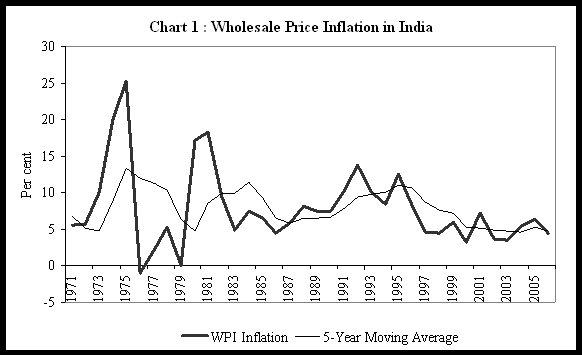
lower than that of eight per cent in the previous four decades (Chart 1). Structural
reforms since the early 1990s coupled with improved monetary-fiscal interface
and reforms in the Government securities market enabled better monetary management
from the second half of the 1990s onwards. More importantly, the regime of low
and stable inflation has, in turn, stabilised inflation expectations and inflation
tolerance in the economy has come down. It is encouraging to note that despite
record high international crude oil prices, inflation remains low and inflation
expectations also remain stable. Since inflation expectations are a key determinant
of the actual inflation outcome, and given the lags in monetary transmission,
we have been taking pre-emptive measures to keep inflation expectations stable.
As discussed further below, a number of instruments, both existing as well as
new, were employed to modulate liquidity conditions to achieve the desired objectives.
A number of other factors such as increased competition, productivity gains
and strong corporate balance sheets have also contributed to this low and stable
inflation environment, but it appears that calibrated monetary measures had
a substantial role to play as well.
Challenges posed by large capital
inflows
It is pertinent to note that inflation
could be contained since the mid-1990s, despite challenges posed by large capital
flows. Following the reforms in the external sector, foreign investment flows
have been encouraged. Reflecting the strong growth prospects of the Indian economy,
the country has received large investment inflows, both direct and portfolio,
since 1993-94 as compared with negligible levels till the early 1990s. Total
foreign investment flows (direct and portfolio) increased from US$ 111 million
in 1990-91 to US$ 17,496 million in 2005-06 (April-February). Over the same
period, current account deficits remained modest – averaging one per cent of
GDP since 1991-92 and in fact recorded small surpluses during 2001-04. With
capital flows remaining in excess of the current financing requirements, the
overall balance of payments recorded persistent surpluses leading to an increase
in reserves. Despite such large accretion to reserves, inflation could be contained
reflecting appropriate policy responses by the Reserve Bank and the Government.
The emergence of foreign exchange
surplus lending to continuing and large accretion to reserves since the mid
1990s has been a novel experience for India after experiencing chronic balance
of payment problems for almost four decades. These surpluses began to arise
after the opening of the current account, reduction in trade protection, and
partial opening of the capital account from the early to mid 1990s. The exchange
rate flexibility practiced since 1992-93 has been an important part of the policy
response needed to manage capital flows.
The composition of India's balance
of payments has undergone significant change since the mid 1990s. In the current
account, the growth of software exports and, more recently, of business process
outsourcing, has increased the share of service exports on a continuing basis.
Even more significant is the growth in remittances from non-resident Indians
(NRIs), now amounting to about 3 per cent of GDP. The latter exhibit a great
deal of stability. The remittances appear to consist mainly of maintenance flows
that do not seem to be affected by exchange rate, inflation, or growth rate
changes. Thus, the Indian current account exhibits only a small deficit, or
a surplus, despite the existence of merchandise trade deficit that has grown
from 3.2 per cent of GDP in the mid 1990s to 5.3 per cent in 2004-05. On the
capital account, unlike other emerging markets, portfolio flows have far exceeded
foreign direct investment in India in recent years. Coupled with other capital
flows consisting of official and commercial debt, NRI deposits, and other banking
capital, net capital flows now amount to about 4.4 per cent of GDP.
The downturn in the Indian business
cycle during the early part of this decade led to the emergence of a current
account surplus, particularly because the existence of the relative exchange
rate insensitive remittance flows. Consequently, foreign exchange reserves grew
by more than US $ 120 billion between April 2000 and April 2006.
The management of these flows involved
a mix of policy responses that had to keep an eye on the level of reserves,
monetary policy objectives related to the interest rate, liquidity management,
and maintenance of healthy financial market conditions with financial stability.
Decisions to do with sterilisation involve judgements on the character of the
excess forex flows: are they durable, semi-durable or transitory. This judgement
itself depends on assessments about both the real economy and of financial sector
developments. Moreover, at any given time, some flows could be of an enduring
nature whereas others could be of short term, and hence reversible.
On an operational basis, sterilisation
operations through open market operations (OMOs) should take care of durable
flows, whereas transitory flows can be managed through the normal daily operations
of the LAF.
By 2003-04, sterilisation operations,
however, started appearing to be constrained by the finite stock of Government
securities held by the Reserve Bank. The legal restrictions on the Reserve Bank
on issuing its own paper also placed constraints on future sterilisation operations.
Accordingly, an innovative scheme in the form of Market Stabilisation Scheme
(MSS) was introduced in April 2004 wherein Government of India dated securities/Treasury
Bills are being issued to absorb enduring surplus liquidity. These dated securities/Treasury
Bills are the same as those issued for normal market borrowings and this avoids
segmentation of the market. Moreover, the MSS scheme brings transparency in
regard to costs associated with sterilisation operations. Hitherto, the costs
of sterilisation were fully borne by the Reserve Bank in the first instance
and its impact was transmitted to the Government in the form of lower profit
transfers. With the introduction of the MSS, the cost in terms of interest payments
would be borne by the Government itself in a transparent manner.
It is relevant to note that the
MSS has provided the Reserve Bank the flexibility to not only absorb liquidity
but also to inject liquidity in case of need. This was evident during the second
half of 2005-06 when liquidity conditions became tight in view of strong credit
demand, increase in Government’s surplus with the Reserve Bank and outflows
on account of bullet redemption of India Millennium Deposits (about US $ 7 billion).
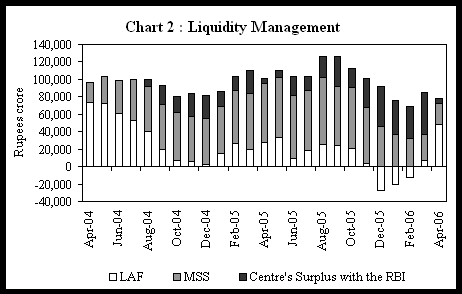
In view of these circumstances, fresh issuances under the MSS were suspended
between November 2005 and April 2006. Redemptions of securities/Treasury Bills
issued earlier – along with active management of liquidity through repo/reverse
repo operations under Liquidity Adjustment Facility - provided liquidity to
the market and imparted stability to financial markets (Chart 2). With liquidity
conditions improving, it was decided to again start issuing securities under
the MSS from May 2006 onwards. The issuance of securities under the MSS has
thus enabled the Reserve Bank to improve liquidity management in the system,
to maintain stability in the foreign exchange market and to conduct monetary
policy in accordance with the stated objectives.
The Indian experience highlights
the need for emerging market economies to allow greater flexibility in exchange
rates but the authorities can also benefit from having the capacity to intervene
in foreign exchange markets in view of the volatility observed in international
capital flows. A key lesson is that flexibility and pragmatism are required
in the management of the exchange rate and monetary policy in developing countries,
rather than adherence to strict theoretical rules.
Three overarching features marked
the transition of India to an open economy. First, the administered exchange
rate became market determined and ensuring orderly conditions in the foreign
exchange market became an objective of exchange rate management. Second, as
already indicated, vicissitudes in capital flows came to influence the conduct
of monetary policy. Third, lessons of the balance of payments crisis highlighted
the need to maintain an adequate level of foreign exchange reserves and this
in turn both enabled and constrained the conduct of monetary policy. From hindsight,
it appears that the strategy paid off with the exchange rate exhibiting reasonable
two-way movement (Chart 3).

Credit Delivery
Given that the Indian financial
system is still predominantly bank based, bank credit continues to be of great
importance for funding different sectors of the economy. Consequent to deregulation
of interest rates and substantial reduction in statutory pre-emptions, there
was an expectation that credit flow would be correspondingly enhanced. In the
event, banks continued to show a marked preference for investments in government
securities with no reduction in the proportion of their assets being held in
investments in government securities, until recently, when credit growth picked
up in 2003-04. With the shift in approach from micro management of credit through
various regulations, credit allocation targets, and administered interest rates,
to a risk based system of lending and market determined interest rates, banks
have to develop appropriate credit risk assessment techniques. Apart from promoting
healthy credit growth, this is also critical for the efficiency of monetary
management in view of the move to use of indirect instruments in monetary management.
The stagnation in credit flow observed
during the late 1990s, in retrospect, was partly caused by reduction in demand
on account of increase in real interest rates, turn down in the business cycle,
and the significant business restructuring that occurred during that period.
A sharp recovery has now taken place.
The stagnation during the 1990s
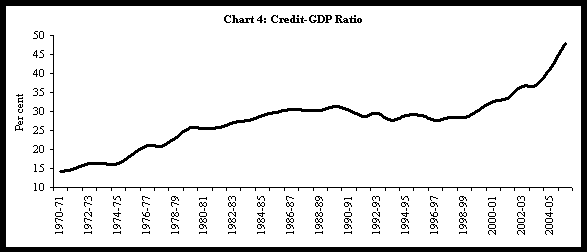
has seen a sharp recovery in the past few years. The credit-GDP ratio, after
moving in a narrow range of around 30 per cent between the mid-1980s and late
1990s, started increasing from 2000-01 onwards (Chart 4). It increased from
30 per cent during 1999-00 to 41 per cent during 2004-05 and further to 48 per
cent during 2005-06. However, sharp growth of credit in the past couple of years
has also led to some areas of policy concern and dilemmas, as discussed later.
How did the monetary policy support
the growth momentum in the economy? As inflation, along with inflation expectations,
fell during the earlier period of this decade, policy interest rates were also
brought down. Consequently, both nominal and real interest rates fell. The growth
rate in interest expenses of the corporates declined consistently since 1995-96,
from 25.0 per cent to a negative of 11.5 per cent in 2003-04 (Table 8). Such
decline in interest costs has significant implications for the improvement in
bottom lines of the corporates. Various indicators pertaining to interest costs,
which can throw light on the impact of interest costs on corporate sector profits
have turned positive in recent years.
|
Table 8: Monetary Policy
and Corporate Performance: Interest Rate Related Indicators
|
|
Year
|
Growth Rate in Interest Expenses
(%)
|
Debt Service to
Total uses of Funds
|
Interest Coverage Ratio (ICR)
#
|
|
1990-91
|
16.2
|
22.4
|
2.8
|
|
1991-92
|
28.7
|
28.3
|
2.7
|
|
1992-93
|
21.6
|
24.4
|
2.4
|
|
1993-94
|
3.1
|
20.9
|
2.9
|
|
1994-95
|
8.1
|
27.2
|
3.5
|
|
1995-96
|
25.0
|
21.5
|
3.6
|
|
1996-97
|
25.7
|
18.7
|
2.9
|
|
1997-98
|
12.5
|
8.1
|
2.8
|
|
1998-99
|
11.1
|
17.6
|
2.6
|
|
1999-00
|
6.7
|
17.6
|
2.8
|
|
2000-01
|
7.1
|
14.0
|
2.8
|
|
2001-02
|
-2.7
|
19.4
|
2.7
|
|
2002-03
|
-11.2
|
8.9
|
3.7
|
|
2003-04
|
-11.5
|
14.1
|
4.9
|
|
Note: This is based on a sample of non-government
non-financial public limited companied collected by the RBI.
# ICR is defined as earnings before interest,
taxes and depreciation (EBITD) over interest expenses.
|
IV. Some Emerging Issues
This review of financial sector
reforms and monetary policy has documented the calibrated and coordinated reforms
that have been undertaken in India since the 1990s. In terms of outcomes, this
strategy has achieved the broad objectives of price stability along with reduced
medium and long term inflation expectations; the installation of an institutional
framework and policy reform promoting relatively efficient price discovery of
interest rates and the exchange rate; phased introduction of competition in
banking along with corresponding improvements in regulation and supervision
approaching international best practice, which has led to notable improvement
in banking performance and financials. The implementation of these reforms has
also involved the setting up or improvement of key financial infrastructure
such as payment and settlement systems, and clearing and settlement systems
for debt and forex market functioning. All of this financial development has
been achieved with the maintenance of a great degree of financial stability,
along with overall movement of the economy towards a higher growth path.
With increased deregulation
of financial markets and increased integration of the global economy, the 1990s
were turbulent for global financial markets: 63 countries suffered from systemic
banking crises in that decade, much higher than 45 in the 1980s. Among countries
that experienced such crises, the direct cost of reconstructing the financial
system was typically very high: for example, recapitalisation of banks had cost
55 per cent of GDP in Argentina, 42 per cent in Thailand, 35 per cent in Korea
and 10 per cent in Turkey. There were high indirect costs of lost opportunities
and slow economic growth in addition (McKinsey & Co., 2005). It is therefore
particularly noteworthy that India could pursue its process of financial deregulation
and opening of the economy without suffering financial crises during this turbulent
period in world financial markets. The cost of recapitalisation of public sector
banks at less than 1 per cent of GDP is therefore low in comparison. Whereas
we can be legitimately gratified with this performance record, we now need to
focus on the new issues that need to be addressed for the next phase of financial
development.
That current annual GDP growth
of around 8 per cent can be achieved in India at an about 30 per cent rate of
gross domestic investment suggests that the economy is functioning quite efficiently.
We need to ensure that we maintain this level of efficiency and attempt to improve
on it further. As the Indian economy continues on such a growth path and attempts
to accelerate it, new demands are being placed on the financial system.
Growth Challenges for the Financial
Sector
Higher sustained growth is
contributing to the movement of large numbers of households into ever higher
income categories, and hence higher consumption categories, along with enhanced
demand for financial savings opportunities. In rural areas in particular, there
also appears to be increasing diversification of productive opportunities. Thus,
the banking system has to extend itself and innovate to respond to these new
demands for both consumption and production purposes. This is particularly important
since banking penetration is still low in India: there are only about 10-12
ATMs in India per million population, as compared with over 50 in China, 170
in Thailand, and 500 in Korea. Moreover, the deposit to GDP ratio or the loans/GDP
ratio is also low compared to other Asian countries (McKinsey & Co., 2005).
On the production side, industrial
expansion has accelerated; merchandise trade growth is high; and there are vast
demands for infrastructure investment, from the public sector, private sector
and through public private partnerships. Furthermore, it is the service sector
that has exhibited consistently high growth rates: the hospitality industry,
shopping malls, entertainment industry, medical facilities, and the like, are
all expanding fast. Thus a great degree of diversification is taking place in
the economy and the banking system has to respond adequately to these new challenges,
opportunities and risks.
In dealing with these new consumer
demands and production demands of rural enterprises and of SME's in urban areas,
banks have to innovate and look for new delivery mechanisms that economise on
transaction costs and provide better access to the currently under-served. Innovative
channels for credit delivery for serving these new rural credit needs, encompassing
full supply chain financing, covering storage, warehousing, processing, and
transportation from farm to market will have to be found. The budding expansion
of non-agriculture service enterprises in rural areas will have to be financed
to generate new income and employment opportunities. Greater efforts will need
to be made on information technology for record keeping, service delivery, reduction
in transactions costs, risk assessment and risk management. Banks will have
to invest in new skills through new recruitment and through intensive training
of existing personnel.
It is the public sector banks
that have the large and widespread reach, and hence have the potential for contributing
effectively to achieve financial inclusion. But it is also they who face the
most difficult challenges in human resource development. They will have to invest
very heavily in skill enhancement at all levels: at the top level for new strategic
goal setting; at the middle level for implementing these goals; and at the cutting
edge lower levels for delivering the new service modes. Given the current age
composition of employees in these banks, they will also face new recruitment
challenges in the face of adverse compensation structures in comparison with
the freer private sector. Meanwhile, the new private sector banks will themselves
have to innovate and accelerate their reach into the emerging low income and
rural market segments. They have the independence and flexibility to find the
new business models necessary for serving these segments.
A number of policy initiatives
are underway to aid this overall process of financial inclusion and increase
in banking penetration. The Parliament has passed the Credit Information Bureau
Act that will enable the setting up of credit information bureaus through the
mandatory sharing of information by banks. The Reserve Bank is in the process
of issuing guidelines for the formation of these bureaus. As this process gathers
force, it should contribute greatly in reducing the costs of credit quality
assessment. Second, considerable work is in process for promoting micro-finance
in the country, including the consideration of possible legislation for regulation
of micro-finance institutions. Third, the Reserve Bank has issued guidelines
to banks enabling the outsourcing of certain functions including the use of
agencies such as post offices for achieving better outreach. These are all efforts
in the right direction, but much more needs to be done to really achieve financial
inclusion in India.
The challenges that are emerging
are right across the size spectrum of business activities. On the one hand,
the largest firms are attaining economic sizes such that they are reaching the
prudential exposure limits of banks, even though they are still small relative
to the large global MNCs. On the other hand, with changes in technology, there
is new activity at the small and medium level in all spheres of activity. To
cope with the former, the largest Indian banks have to be encouraged to expand
fast, both through organic growth and through consolidation; and the corporate
debt market has to be developed to enable further direct recourse to financial
markets for the largest firms. For serving and contributing to the growth of
firms at the lower end, banks have to strengthen their risk assessment systems,
along with better risk management. Funding new entrepreneurs and activities
is a fundamentally risky business because of the lack of a previous record and
inadequate availability of collateral, but it is the job of banks to take such
risk, but in a measured fashion. Given the history of public sector banks outlined
earlier, such a change in approach requires a change in mind set, but also focused
training in risk assessment, risk management, and marketing.
Various policy measures are
in process to help this transition along. The Reserve Bank issued new guidelines
in 2004 on 'Ownership and Governance in Private Sector Banks'. These guidelines
have increased the minimum capital for private sector banks to Rs.3 billion;
provided enhanced guidance on the fit and proper nature of owners, board members
and top management of these banks; and placed limitations on the extent of dominant
shareholdings. These measures are designed to promote the healthy growth of
private sector banks and along with better corporate governance as they assume
greater weight in the economy. An issue of relevance here is that of financial
stability. To a certain extent, the predominance of government owned banks has
contributed to financial stability in the country. Experience has shown that
even the deterioration in bank financials does not lead to erosion of consumer
confidence in such banks. This kind of consumer confidence does not extend to
private sector banks. Hence, as they gain in size and share, capital enhancement
and sound corporate governance become essential for financial stability. Second,
the lending ability of banks has been potentially constrained by the existing
provisions for statutory pre-emption of funds for investment in government securities.
A bill has been introduced in Parliament to amend the existing Banking Regulation
Act to eliminate the minimum 25 per cent limit of investment in government securities.
As the fiscal situation improves consistent with the FRBM Act, it will then
be possible to reduce the statutory pre-emption, enabling greater fund flow
to the private sector for growth. Third, the bill also provides for raising
of capital through BASEL II consistent innovative instruments, enabling the
capital expansion of banks needed for their growth.
Greater Capital Market Openness:
Some Issues
An important feature of the Indian
financial reform process has been the calibrated opening of the capital account
along with current account convertibility. The Government and the Reserve Bank
have already appointed a Committee to advise on a roadmap for fuller capital
account convertibility. Decisions on further steps will be taken after that
committee submits its report in a couple of months. Meanwhile, we can note some
of the issues that will need attention as we achieve fuller capital account
openness.
A key component of Indian capital
account management has been the management of volatility in the forex market,
and of its consequential impact on the money market and hence on monetary operations
guided by the extant monetary policy objectives. This has been done, as outlined,
through a combination of forex market intervention, domestic liquidity management,
and administrative instructions on regulating external debt in different forms.
Correspondingly, progress has been made on the functioning of the government
securities market, forex market and money market and their progressive integration.
Particular attention has been given to the exposure of financial intermediaries
to foreign exchange liabilities, and of the government in their borrowing programme.
So far, some degree of success has been achieved in that the exchange rate responds
to the supply demand conditions in the market and exhibits two way flexibility;
the interest rate is similarly flexible and market determined; healthy growth
has taken place in trade in both goods and services; and inward capital flows
have been healthy.
We have to recognise that fuller
capital account openness will lead to a confrontation with the impossible trinity
of simultaneous attainment of independent monetary policy, open capital account,
and managed exchange rate. At best, only two out of the three would be feasible.
With a more open capital account as a `given' and if a choice is made of an
`anchor' role for monetary policy, exchange rate management will be affected.
A freely floating exchange rate should, in fact, engender the independence of
monetary policy. It needs to be recognised, however, that the impact of exchange
rate changes on the real sector is significantly different for reserve currency
countries and for developing countries like India. For the former which specialise
in technology intensive products the degree of exchange rate pass through is
low, enabling exporters and importers to ignore temporary shocks and set stable
product prices to maintain monopolistic positions, despite large currency fluctuations.
Moreover, mature and well developed financial markets in these countries, have
absorbed the risk associated with exchange rate fluctuations with negligible
spillover on the real activity. On the other hand, for the majority of developing
countries which specialise in labour-intensive and low and intermediate technology
products, profit margins in the intensely competitive markets for these products
are very thin and vulnerable to pricing power by large retail chains. Consequently,
exchange rate volatility has significant employment, output and distributional
consequences (Mohan, 2004a; 2005). In this context, managing exchange rate volatility
would continue to be an issue requiring attention.
A further challenge for policy
in the context of fuller capital account opennes will be to preserve the financial
stability of different markets as greater deregulation is done on capital outflows
and on debt inflows. The vulnerability of financial intermediaries can perhaps
be addressed through prudential regulations and their supervision; risk management
of non-financial entities will have to be through further developments in both
the corporate debt market and the forex market, which enable them to manage
their risks through the use of newer market instruments. This will require market
development, enhancement of regulatory capacity in these areas, as well as human
resource development in both financial intermediaries and non-financial entities.
Given the volatility of capital flows, it remains to be seen whether financial
market development in a country like India can be such that this volatility
does not result in unacceptable disruption in exchange rate determination with
inevitable real sector consequences, and in domestic monetary conditions. If
not, what will be the kind of market interventions that will continue to be
needed and how effective will they be?
Another aspect of greater capital
market openness concerns the presence of foreign banks in India. The Government
and Reserve Bank outlined a roadmap on foreign investment in banks in India
in February 2005, which provides guidelines on the extent of their presence
until 2009. This roadmap is consistent with the overall guidelines issued simultaneously
on ownership and governance in private sector banks in India. The presence of
foreign banks in the country has been very useful in bringing greater competition
in certain segments in the market. They are significant participants in investment
banking and in development of the forex market. With the changes that have taken
place in the United States and other countries, where the traditional barriers
between banking, insurance and securities companies have been removed, the size
of the largest financial conglomerates has become extremely large. Between 1995
and 2004, the size of the largest bank in the world has grown three-fold by
asset size, from about US $ 0.5 trillion to US $ 1.5 trillion, almost double
the size of Indian GDP. This has happened through a great degree of merger activity:
for example, J.P.Morgan Chase is the result of mergers among 550 banks and financial
institutions. The ten biggest commercial banks in the US now control almost
half of that country's banking assets, up from 29 per cent just 10 years ago
(Economist, 2006). Hence, with fuller capital account convertibility and greater
presence of foreign banks over time, a number of issues will arise. First, if
these large global banks have emerged as a result of real economies of scale
and scope, how will smaller national banks compete in countries like India,
and will they themselves need to generate a larger international presence? Second,
there is considerable discussion today on overlaps and potential conflicts between
home country regulators of foreign banks and host country regulators: how will
these be addressed and resolved in the years to come? Third, given that operations
in one country such as India are typically small relative to the global operations
of these large banks, the attention of top management devoted to any particular
country is typically low. Consequently, any market or regulatory transgressions
committed in one country by such a bank, which may have a significant impact
on banking or financial market of that country, is likely to have negligible
impact on the bank's global operations. It has been seen in recent years that
even relatively strong regulatory action taken by regulators against such global
banks has had negligible market or reputational impact on them in terms of their
stock price or similar metrics. Thus, there is loss of regulatory effectiveness
as a result of the presence of such financial conglomerates. Hence there is
inevitable tension between the benefits that such global conglomerates bring
and some regulatory and market structure and competition issues that may arise.
Along with the emergence of
international financial conglomerates we are also witnessing similar growth
of Indian conglomerates. As in most countries, the banking, insurance and securities
companies each come under the jurisdiction of their respective regulators. A
beginning has been made in organized cooperation between the regulators on the
regulation of such conglomerates, with agreement on who would be the lead regulator
in each case. In the United States, it is a financial holding company that is
at the core of each conglomerate, with each company being its subsidiary. There
is, as yet, no commonality in the financial structure of each conglomerate in
India: in some the parent company is the banking company; whereas in others
there is a mix of structure. For Indian conglomerates to be competitive, and
for them to grow to a semblance of international size, they will need continued
improvement in clarity in regulatory approach.
As the country's financial
system faces each of these challenges in the coming years, we will also need
to adapt monetary policy to the imperatives brought by higher growth and greater
openness of the economy.
High Credit Growth and Monetary
Policy
High and sustained growth of the
economy in conjunction with low inflation is the central concern of monetary
policy in India. As noted above, we have been reasonably successful in meeting
these objectives. In this context, one issue still remains: whether monetary
policy should have only price stability as its sole objective, as suggested
by proponents of inflation targeting. Several central banks, such as, Bank of
Canada, Bank of England, and the Reserve Bank of New Zealand, have adopted explicit
inflation targets. Others, whose credibility in fighting inflation is long established
(notably, the US Federal Reserve), do not set explicit annual inflation targets.
Central banks are thus clearly divided on the advisability of setting explicit
inflation targets. In view of the difficulties encountered with monetary targeting
and exchange rate pegged regimes, a number of central banks including some in
emerging economies have adopted inflation targeting frameworks.
The simple principle of inflation
targeting thus is also not so simple and poses problems for monetary policy
making in developing countries. Moreover, concentrating only on numerical inflation
objectives may reduce the flexibility of monetary policy, especially with respect
to other policy goals, particularly that of growth.
In India, we have not favoured
the adoption of inflation targeting, while keeping the attainment of low inflation
as a central objective of monetary policy, along with that of high and sustained
growth that is so important for a developing economy. Apart from the legitimate
concern regarding growth as a key objective, there are other factors that suggest
that inflation targeting may not be appropriate for India. First, unlike many
other developing countries we have had a record of moderate inflation, with
double digit inflation being the exception, and which is largely socially unacceptable.
Second, adoption of inflation targeting requires the existence of an efficient
monetary transmission mechanism through the operation of efficient financial
markets and absence of interest rate distortions. In India, although the money
market, government debt and forex market have indeed developed in recent years,
they still have some way to go, whereas the corporate debt market is still to
develop. Though interest rate deregulation has largely been accomplished, some
administered interest rates still persist. Third, inflationary pressures still
often emanate from significant supply shocks related to the effect of the monsoon
on agriculture, where monetary policy action may have little role. Finally,
in an economy as large as that of India, with various regional differences,
and continued existence of market imperfections in factor and product markets
between regions, the choice of a universally acceptable measure of inflation
is also difficult.
A contemporary issue in central
banking is the appropriate response of monetary policy to sharp asset price
movements, that may accompany high corporate growth. In an era of price stability
and well-anchored inflation expectations, imbalances in the economy need not
show up immediately in overt inflation. Increased central bank credibility is
a double-edged sword as it makes it more likely that unsustainable booms could
take longer to show up in overt inflation. For instance, unsustainable asset
prices artificially boost accounting profits of corporates and thereby mitigate
the need for price increases; similarly, large financial gains by employees
can partly substitute for higher wage claims. In an upturn of the business cycle,
self-reinforcing processes develop, characterised by rising asset prices and
loosening external financial constraints. 'Irrational exuberance' can drive
asset prices to unrealistic levels, even as the prices of currently traded goods
and services exhibit few signs of inflation (Crockett, 2001). These forces operate
in reverse in the contraction phase. In the upswing of the business cycle, financial
imbalances, therefore, get built-up. There is, thus, a 'paradox of credibility'
(Borio and White, 2003). In view of these developments, it is felt that credit
and monetary aggregates – which are being ignored by many central banks in view
of the perceived instability of money demand - need to be monitored closely
since sharp growth in these aggregates is a useful indicator of future instability.
In India, like other countries,
we have also seen large rallies in asset prices. Concomitantly, credit to the
private sector has exhibited sharp growth in the past two years – averaging
almost 30 per cent per annum. While the credit growth has been broad-based,
credit to the retail sector is emerging as a new avenue of deployment for the
banking sector led by individual housing loans. To illustrate, the share of
housing in incremental bank credit has increased from 2.9 per cent in 1995-96
to 11.1 per cent in 2004-05, while the share of industry went down from 64.9
per cent in 1995-96 to 25.6 per cent in 2004-05. Data for retail credit is not
available prior to 1998-99; its share too has increased from 19.4 per cent in
1998-99 to 24.3 per cent in 2004-05.
Nonetheless, in the
light of high credit growth, there is a need to ensure that asset quality is
maintained. Since
growth in credit was relatively higher in a few sectors such as retail credit
and real commercial estate, monetary policy faces a dilemma in terms of instruments.
An increase in policy rate across the board could adversely affect even the
productive sectors of the economy such as industry and agriculture. While policy
rates have indeed been raised, they have been mainly aimed at reining in inflation
expectations in view of continuing pressures from high and volatile crude oil
prices. Therefore, while ensuring that credit demand for the productive sectors
of the economy is met, the Reserve Bank has resorted to prudential measures
in order to engineer a ‘calibrated’ deceleration in the overall growth of credit
to the commercial sector. Accordingly, the Reserve Bank has raised risk weights
on loans to these sectors. It also more than doubled provisioning requirements
on standard loans for the specific sectors from 0.4 per cent to 1.0 per cent.
Thus, the basic objective has been to ensure that the growth process is facilitated
while ensuring price and financial stability in the economy.
It is in this context, and consistent
with the multiple indicator approach adopted by the Reserve Bank, that monetary
policy in India has consistently emphasised the need to be watchful about indications
of rising aggregate demand embedded in consumer and business confidence, asset
prices, corporate performance, the sizeable growth of reserve money and money
supply, the rising trade and current account deficits and, in particular, the
quality of credit growth. In retrospect, this risk sensitive approach has served
us well in containing aggregate demand pressures and second round effects to
an extent. It has also ensured that constant vigil is maintained on threats
to financial stability through a period when inflation was on the upturn and
asset prices, especially in housing and real estate, are emerging as a challenge
to monetary authorities worldwide. Significantly, it has also reinforced the
growth momentum in the economy. It is noteworthy that the cyclical expansion
in bank credit has extended over an unprecedented 30 months without encountering
any destabilising volatility but this situation warrants enhanced vigilance.
V. Concluding Observations
To conclude, the financial system
in India, through a measured, gradual, cautious, and steady process, has undergone
substantial transformation. It has been transformed into a reasonably
sophisticated, diverse and resilient system through well-sequenced and coordinated
policy measures aimed at making the Indian financial sector more competitive,
efficient, and stable. Concomitantly, effective monetary management has enabled
price stability while ensuring availability of credit to support investment
demand and growth in the economy. Finally, the multi-pronged approach towards
managing capital account in conjunction with prudential and cautious approach
to financial liberalisation has ensured financial stability in contrast to the
experience of many developing and emerging economies. This is despite the fact
that we faced a large number of shocks, both global and domestic. Monetary policy
and financial sector reforms in India had to be fine tuned to meet the challenges
emanating from all these shocks. Viewed in this light, the success in maintaining
price and financial stability is all the more creditworthy.
As the economy ascends a higher
growth path, and as it is subjected to greater opening and financial integration
with the rest of the world, the financial sector in all its aspects will need
further considerable development, along with corresponding measures to continue
regulatory modernization and strengthening. The overall objective of maintaining
price stability in the context of economic growth and financial stability will
remain.
References
Ahluwalia, M. S. (2002). "Economic
Reforms in India since 1991: Has Gradualism Worked?" Journal of
Economic Perspectives, 16, (3), 67-88.
Borio, Claudio and William
White (2003), 'Whither Monetary and Financial Stability? The Implications
of Evolving Policy Regimes', BIS Working Paper No. 147.
Crockett, A (2001), 'Monetary
Policy and Financial Stability, Lecture Delivered at the HKMA Distinguished
Lecture, February.
Mohan, Rakesh (2004a), 'Challenges
to Monetary Policy in a Globalising Context', Reserve Bank of India Bulletin,
January.
Mohan, Rakesh (2004b), 'Financial
Sector Reforms in India: Policies And Performance Analysis', Reserve
Bank of India Bulletin, October.
Mohan, Rakesh (2005), 'Some
Apparent Puzzles for Contemporary Monetary Policy', Reserve Bank of India
Bulletin, December.
Mohan, Rakesh (2006a), 'Reforms,
Productivity And Efficiency in Banking: The Indian Experience', Reserve
Bank of India Bulletin, March.
Mohan, Rakesh (2006b), 'Coping
with Liquidity Management in India: Practitioner's View', Reserve Bank
of India Bulletin, April.
Mohan, Rakesh (2006c), 'Recent
Trends in the Indian Debt Market and Current Initiatives', Reserve Bank
of India Bulletin, April.
Mohan, Rakesh (2006d), 'Evolution
of Central Banking in India', available at www.rbi.org.in.
Reddy, Y.V. (2006a), 'Challenges
and Implications of Basel II for Asia', available at www.rbi.org.in.
Reddy, Y.V. (2006b) 'Global
Imbalances-An Indian Perspective', available at www.rbi.org.in.
Reserve Bank of India (2004),
Report on Currency and Finance, 2003-04.
The Economist (2006), 'Special
Report on International Banking'. May 20-26, 2006.
McKinsey & Company (2005),
Indian Banking 2010: Towards a High Performing Sector New Delhi.
* Speech by Dr. Rakesh Mohan, Deputy Governor, Reserve
Bank of India at the Conference on Economic Policy in Asia at Stanford, organised
by Stanford Center for International Development and Stanford Institute for
Economic Policy Research, on June 2, 2006. |